Product range
Commercial Fishing Gear
Trawls, doors, netting, groundgear and floats — the components the loft rigs into a system.
Services
Bottom, shrimp and midwater trawls designed, built, repaired and rigged in our own lofts — doors, groundgear, netting and codends as one system.
The service
Doors, bridles, groundgear, netting, codend, floats and headline all have to agree with each other and with the vessel that tows them. For over forty years we have designed and built bottom trawls in Atlantic Canada, and the loft that builds a trawl is the loft that repairs and re-rigs it when the fishery changes.
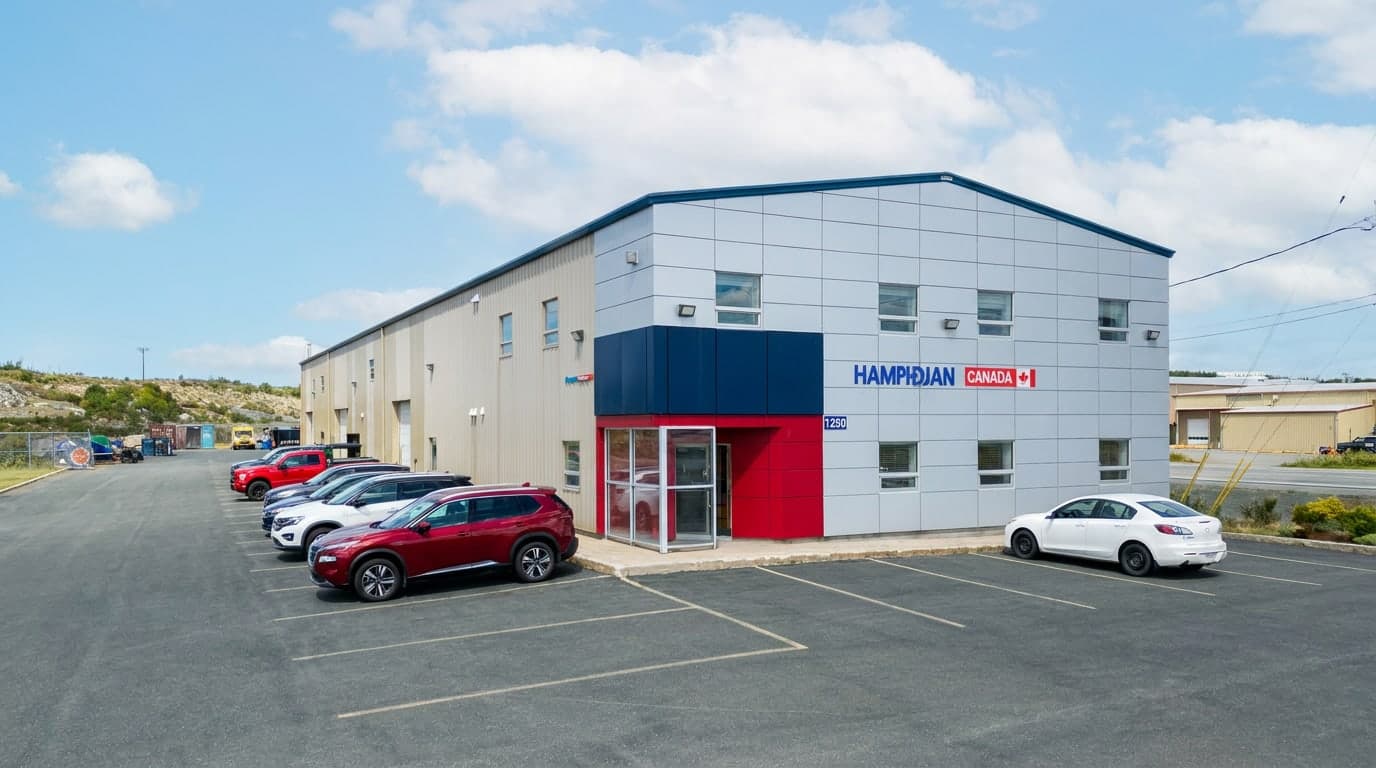
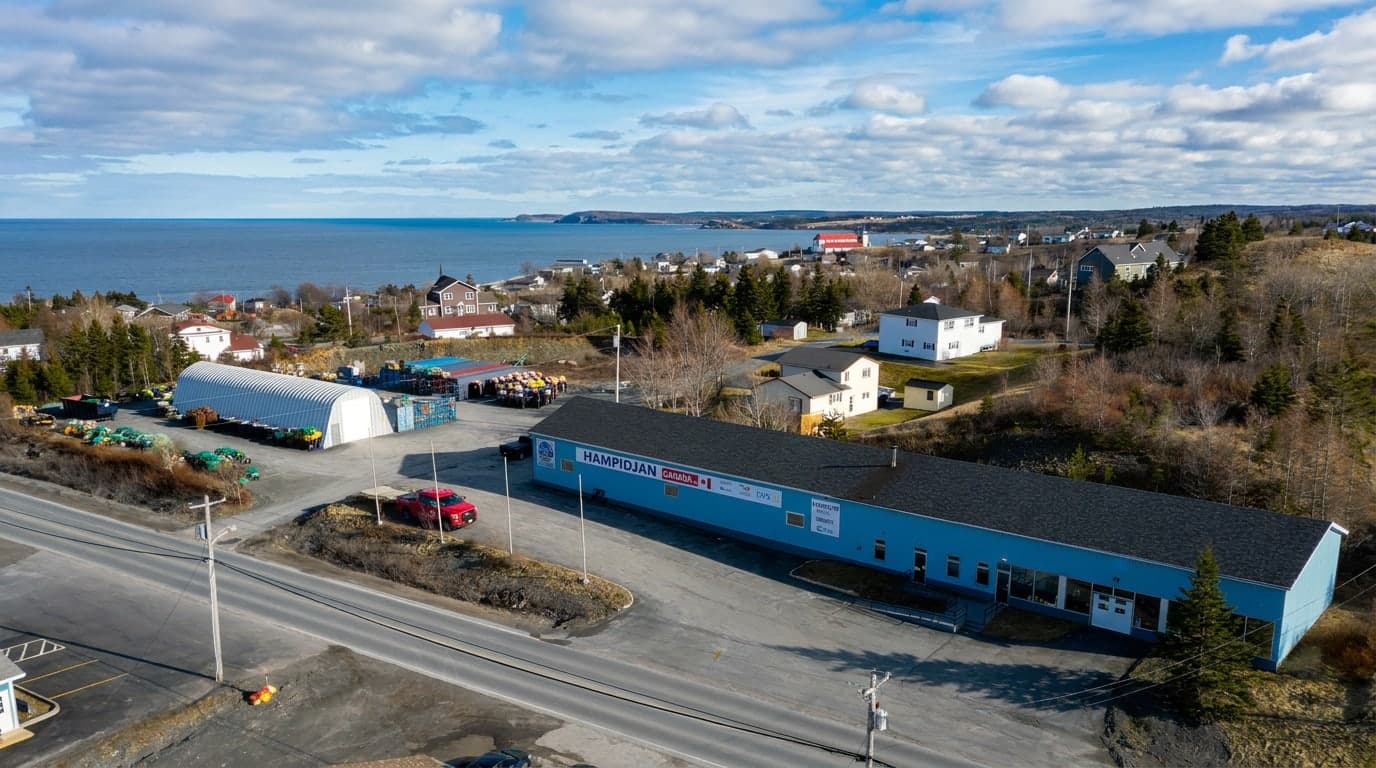
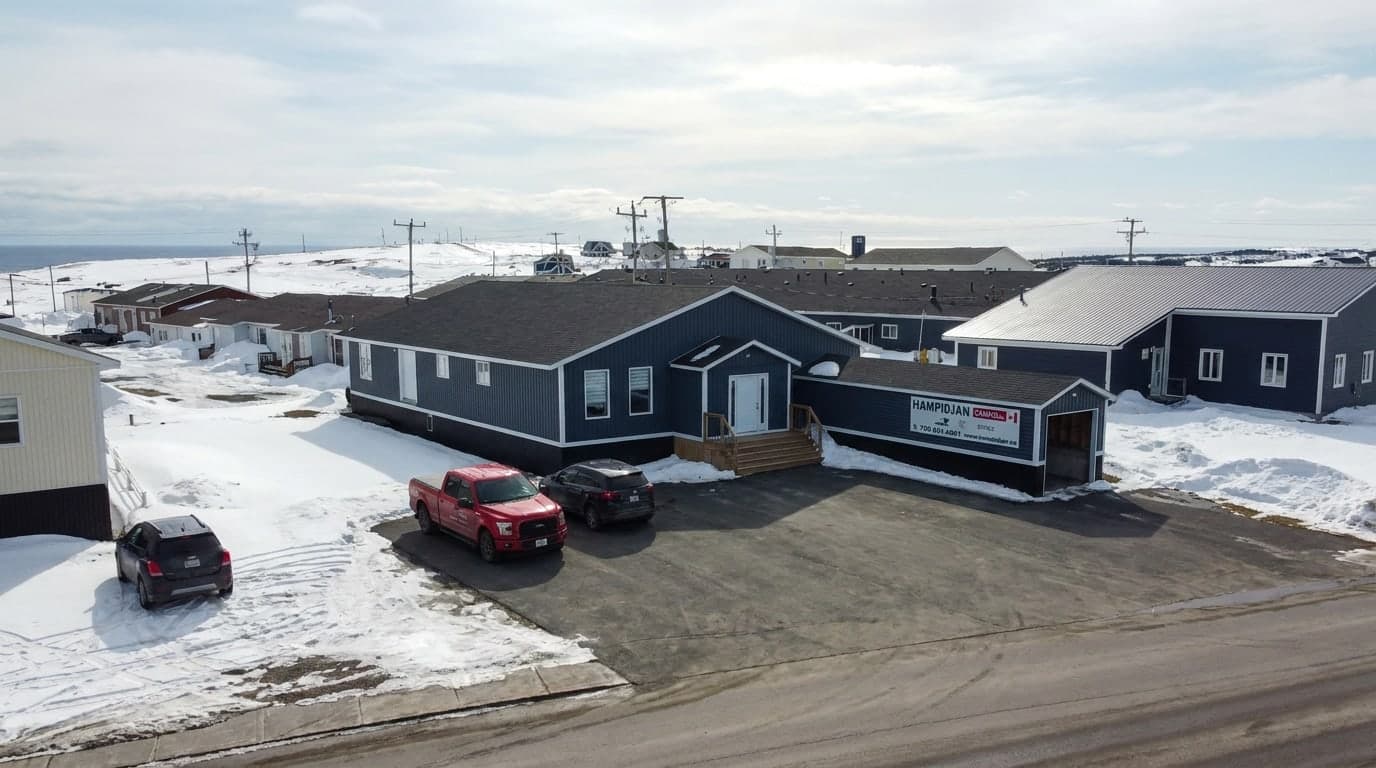
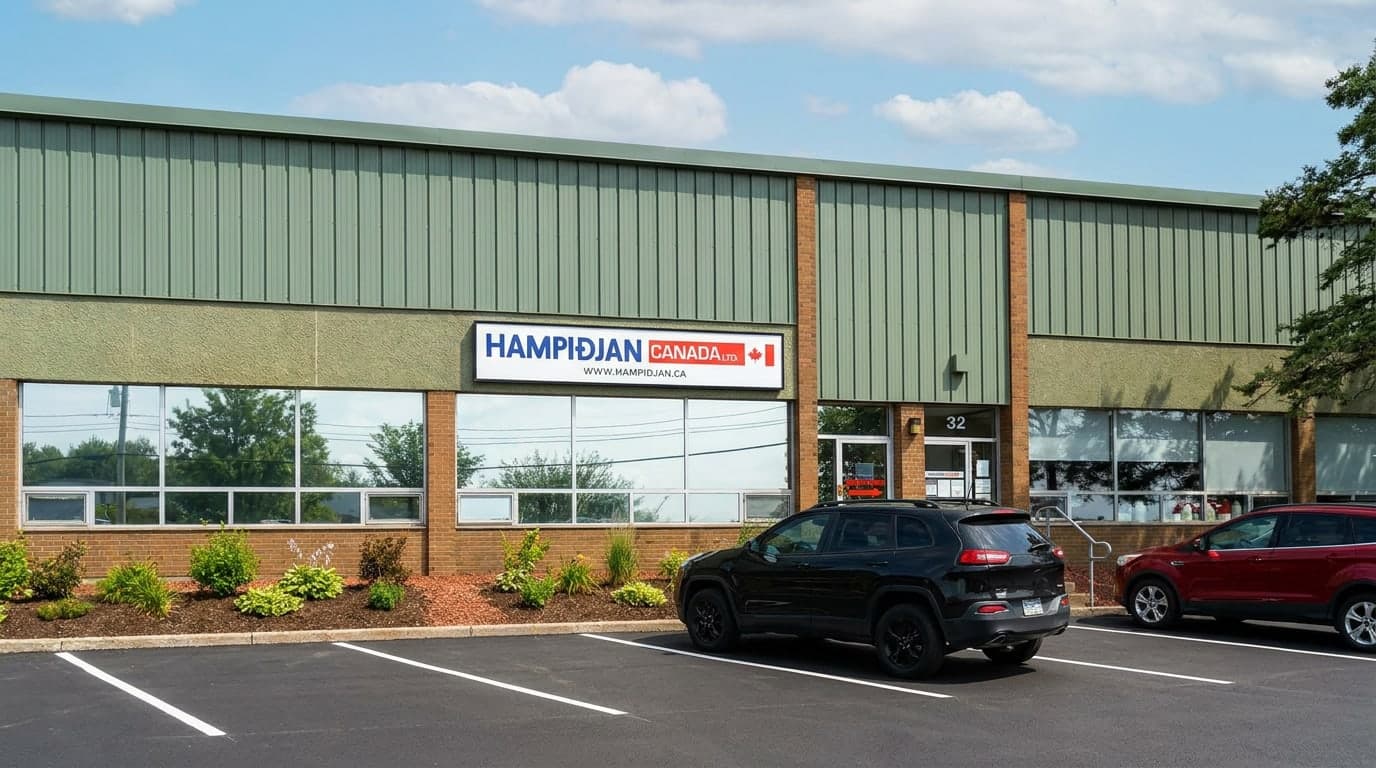
The netting, doors and rope come from the Hampidjan Group's own factories — Gloria trawl designs, Thyborøn doors, Magnet and Utzon netting, DynIce and steel warps. The cutting, hanging, rigging and repair is done here, at four shops in Newfoundland and Nova Scotia.
Capabilities
Trawl design, trawl repair and net loft services in Atlantic Canada — bottom trawls, shrimp trawls and midwater trawls built and re-rigged, with trawl doors, rockhopper groundgear, codends, floats and warps matched to the vessel.
New bottom, shrimp and midwater trawls designed to the vessel, the species and the tow — and built in our own loft.
Panels re-cut and swapped, damage mended, gear re-rigged as the fishery changes — in season, at the wharf where it matters.
Pelagic and bottom doors supplied, set up and rigged to the trawl they will spread.
Rockhopper and bobbin footropes built to order — discs, spacers, toggles and chain — for the bottom you actually fish.
Codends in the mesh size the species needs, T90 where it earns its place, and sorting grids in single, double and triple.
Floats and headline gear hung to the design; steel and DynIce warps measured, marked, spliced and fitted on board.
Repairs at the wharf and on the water while the gear is working.
The loft
Forty years of Atlantic Canadian fisheries, one gear type at a time. The designs come from the Hampidjan Group; the rigging, the repair and the loft are ours.
| Gear | Types we build and rig | Fisheries | Notes |
|---|---|---|---|
| Bottom trawls | Bottom, Hi-Lift, Balloon, Langoustine | Groundfish — cod, redfish, yellowtail flounder, skate, Greenland halibut | Over forty years of bottom trawl design in Atlantic Canada |
| Shrimp trawls | Shrimp trawls with sorting grids | Northern shrimp | Grids built in single, double and triple |
| Midwater and semi-pelagic | Midwater, semi-pelagic | Capelin, mackerel, herring | Gloria pelagic designs from the Group |
| Seines | Purse seine, beach seine | Pelagic and inshore | Rigged to the vessel |
| Codends | Mesh to the species; T90; four-panel | Any of the above | T90 turns the netting 90° so the mesh stays open under load |
| Trawl doors | Pelagic and bottom doors — Thyborøn | Trawl fisheries | Sized to spread the trawl they are rigged to |
| Groundgear | Rockhopper, bobbin, rubber and steel footropes | Bottom fisheries | Built to the bottom — discs, spacers, toggles, chain |
| Warps | Steel and DynIce | Any gear above | Measured, marked, spliced and fitted on board |
Scroll the table sideways for all 4 columns.
Crab and whelk gear comes through the same lofts, alongside the trawl fisheries above.
The trawl
Doors, groundgear, netting, codend, floats and headline — none of them fishes on its own. Every part is rigged to the others and to the vessel, and every part is built or repaired here. These are our shops and our wharves.
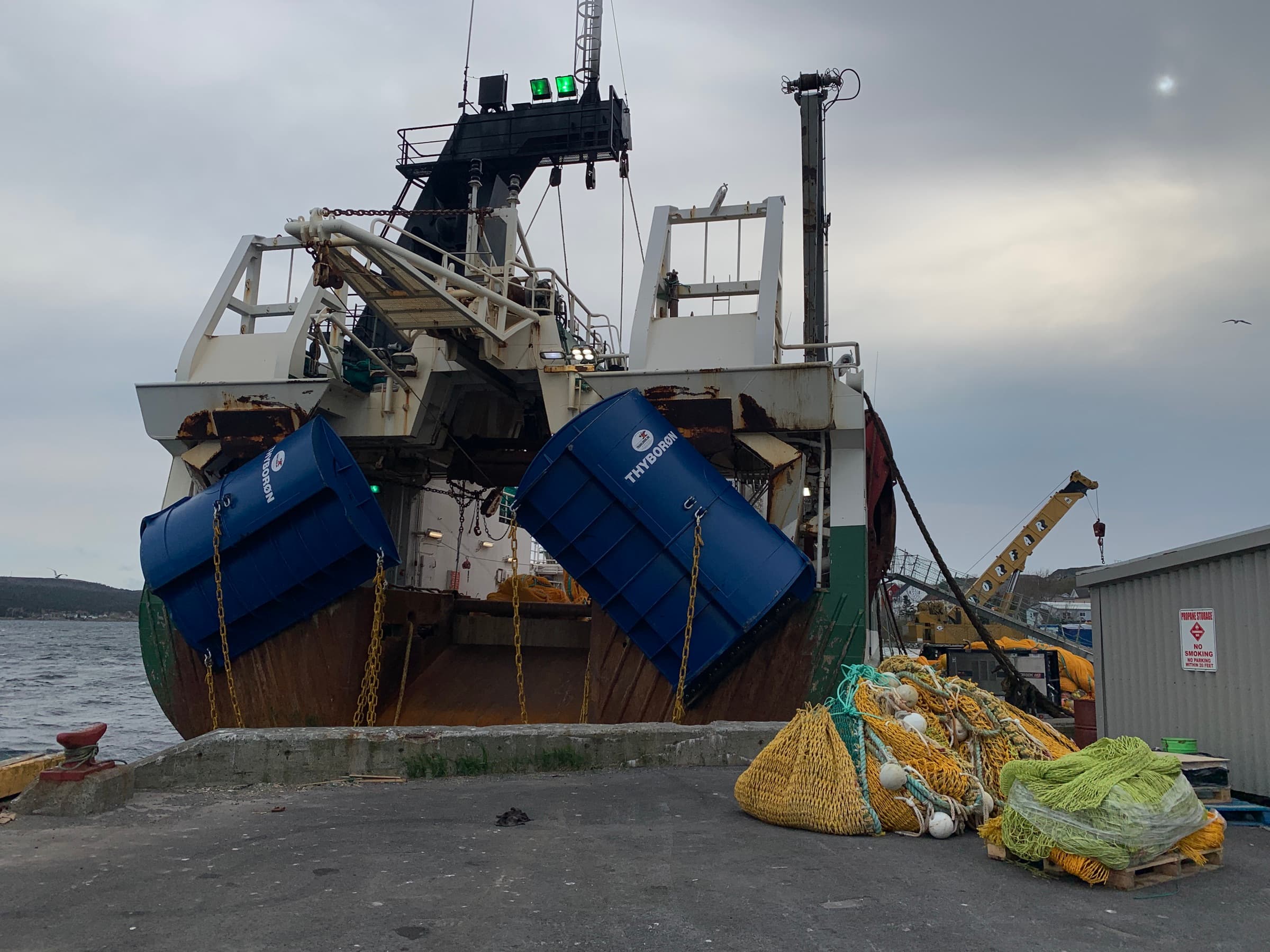
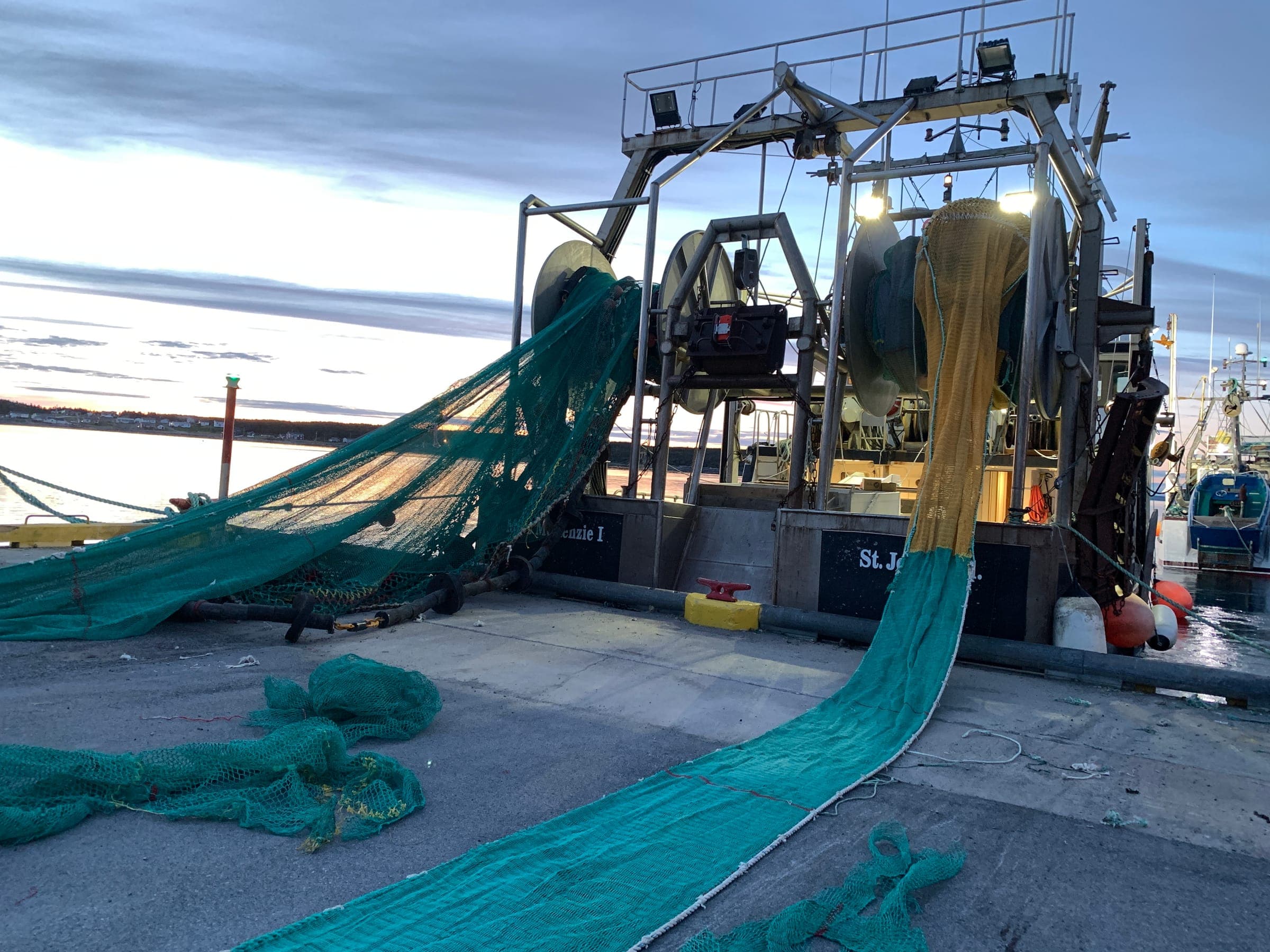
The doors spread the trawl, so they are sized to the trawl and not bought separately. Pelagic and bottom doors are supplied and set up in the shop, hung on the gantry, and adjusted at the wharf once the skipper has seen them fish.
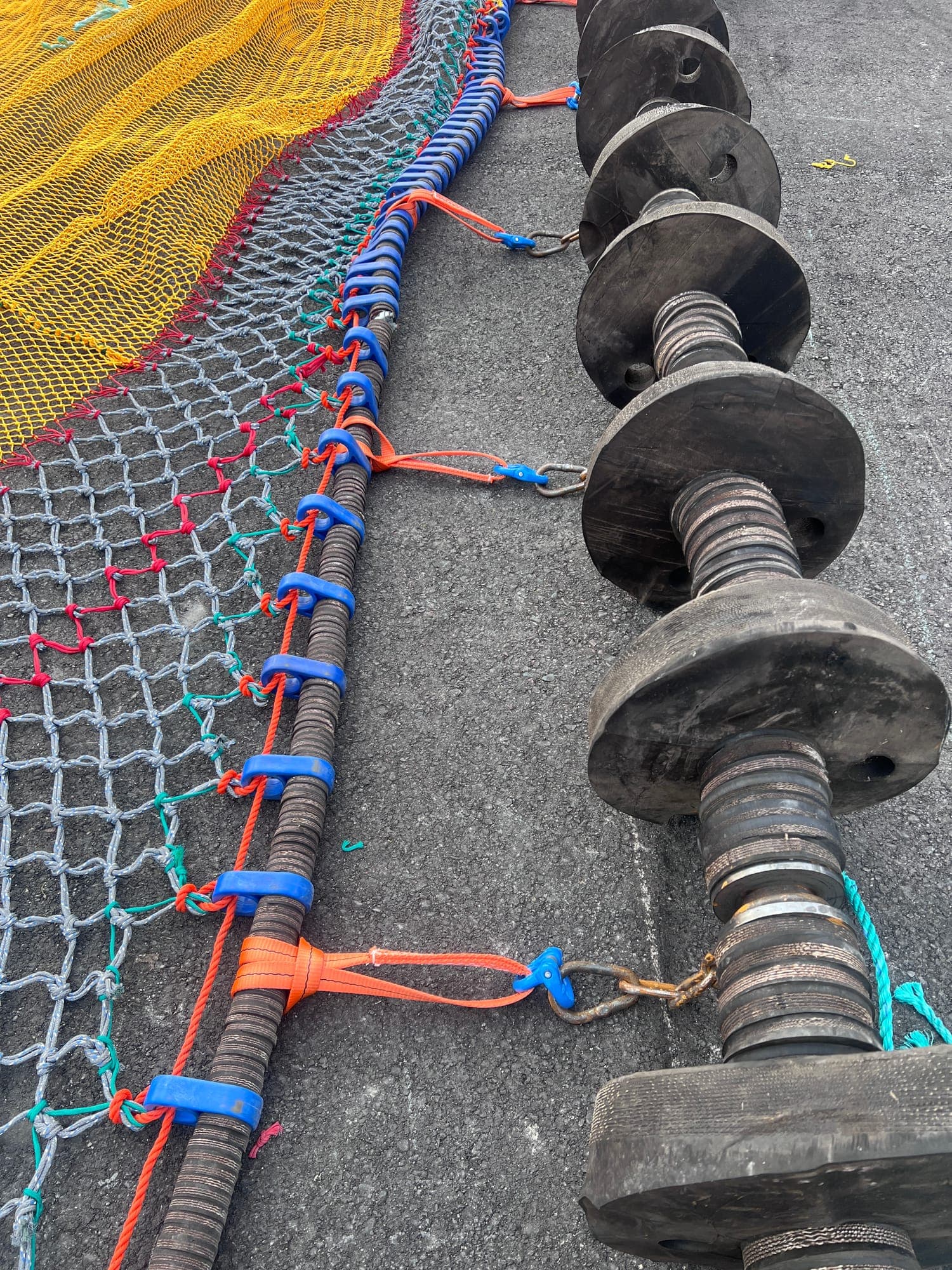
Rockhopper and bobbin footropes built to the bottom you tow over — discs, spacers, toggles and chain assembled here, to length, with the lashings colour-coded so the crew can read the rig on deck.
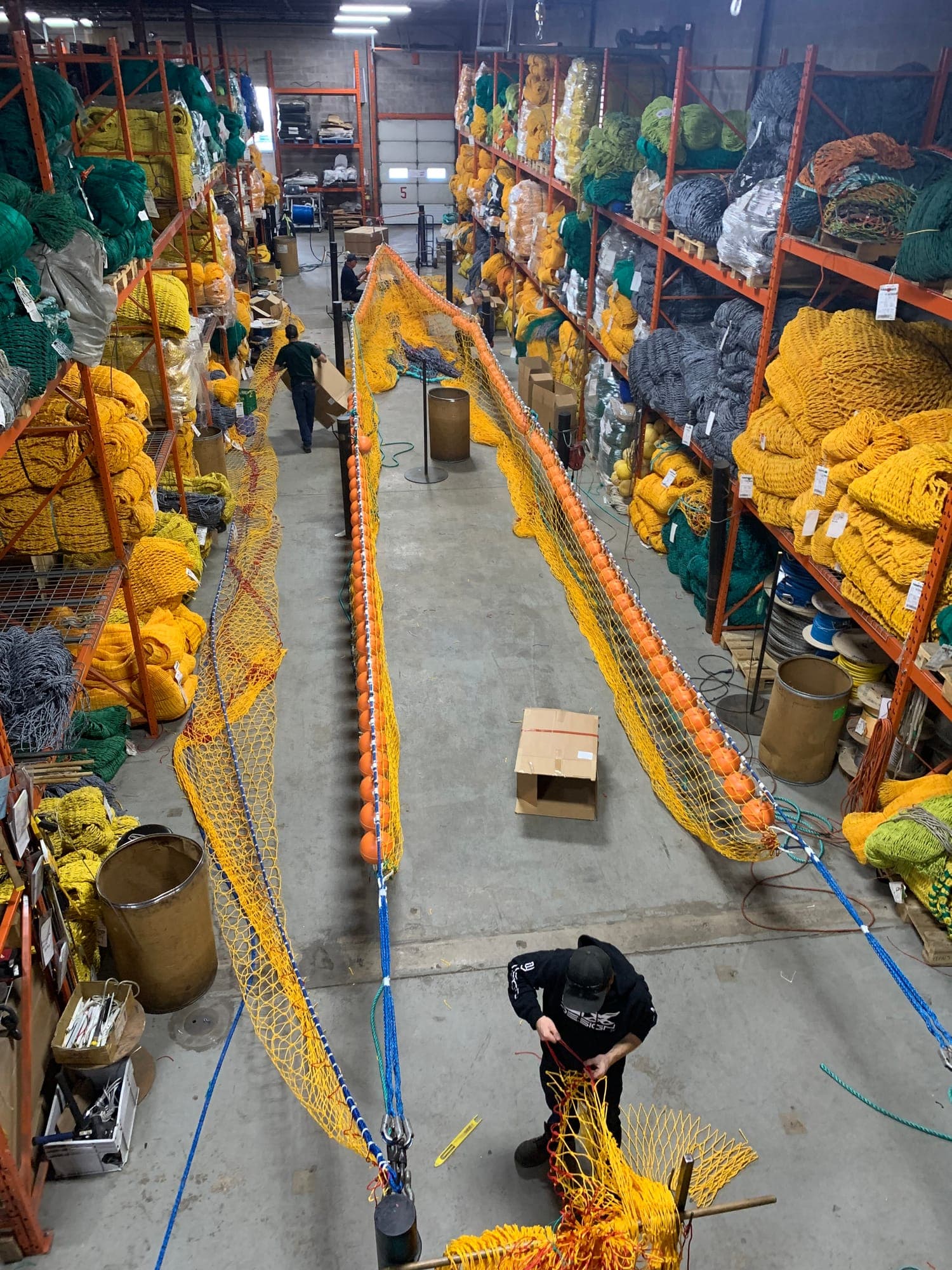
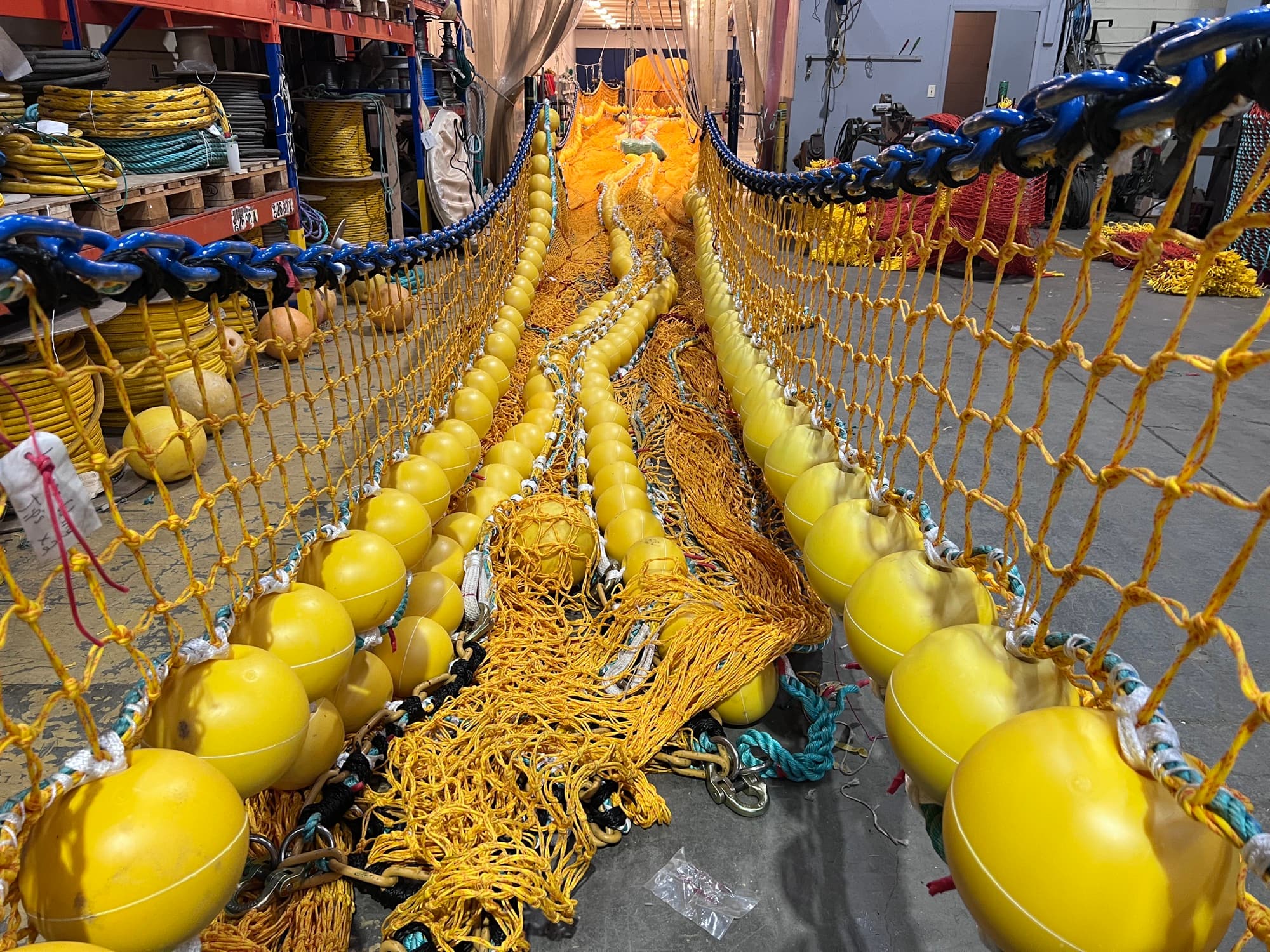
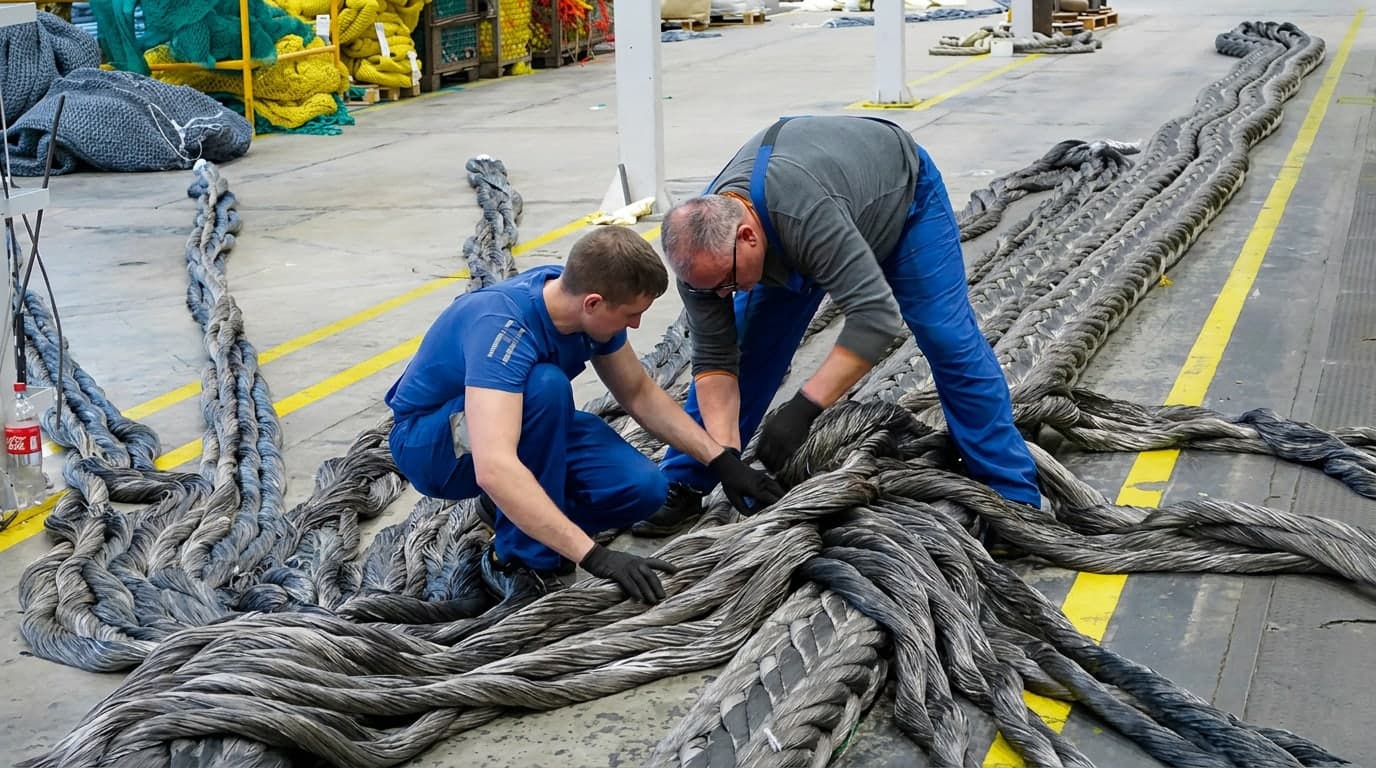
The floor it all happens on. A trawl laid out down its length, panels hung to the headline, and the same crew that built it re-cutting it when the fishery changes.
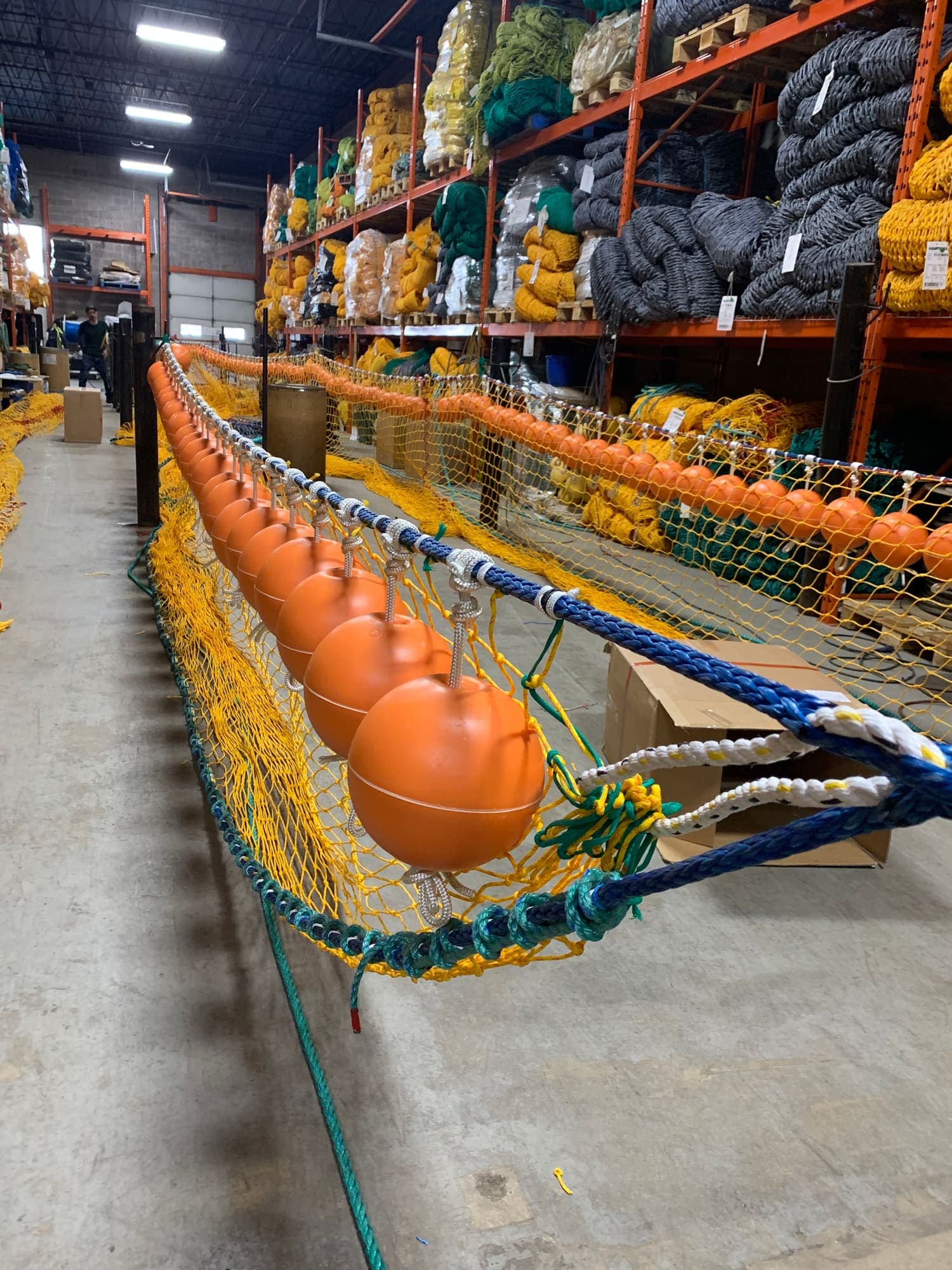
Headline gear rigged and floats hung to the design's opening. This is the difference between the trawl the drawing shows and the one that actually fishes.
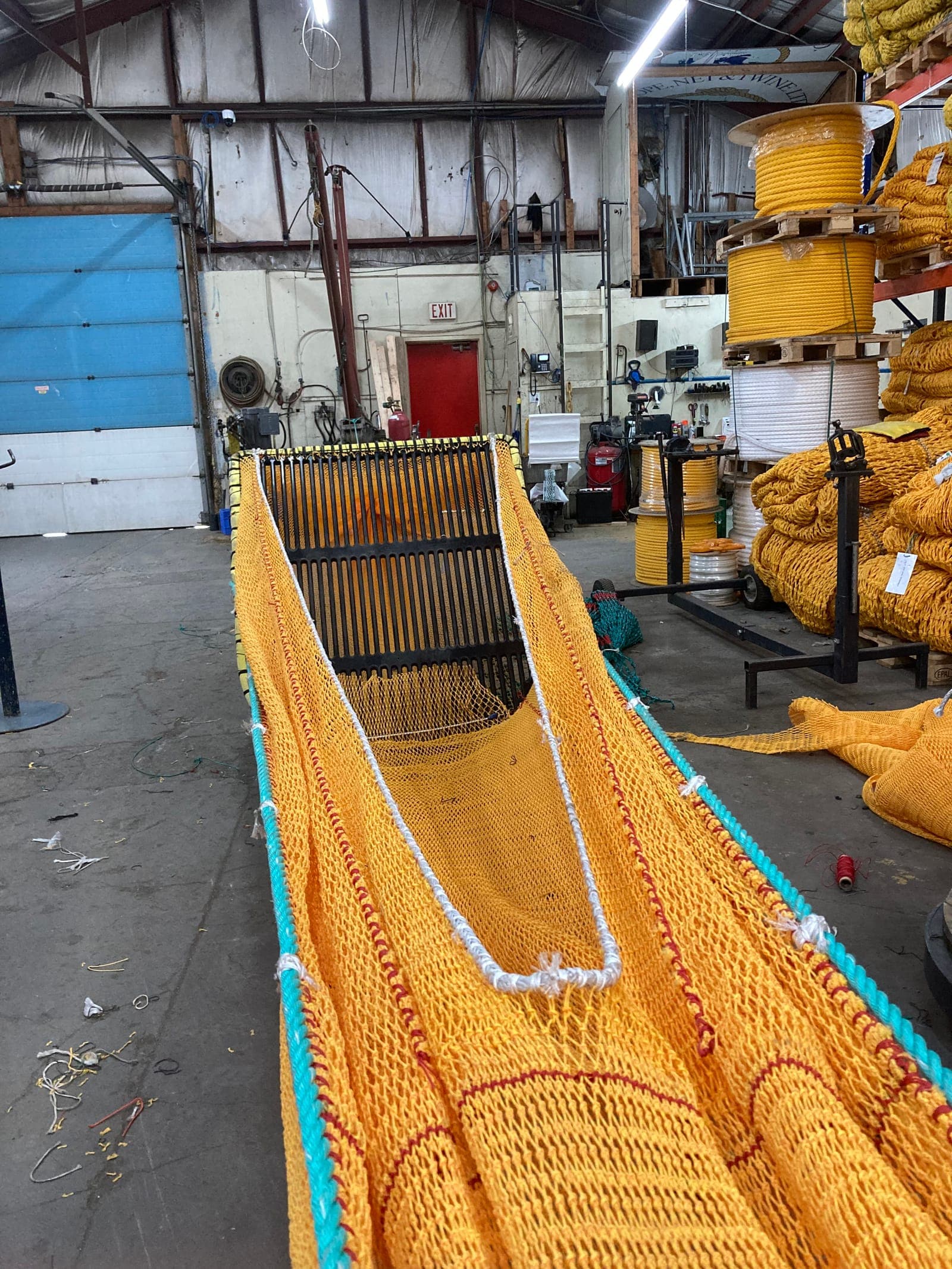
Panels cut and hung in the loft from Magnet and Utzon netting, codends in the mesh size the species needs, sorting grids built into the extension. T90 where it earns its place — the mesh stays open under load, and the fish come up in better shape.
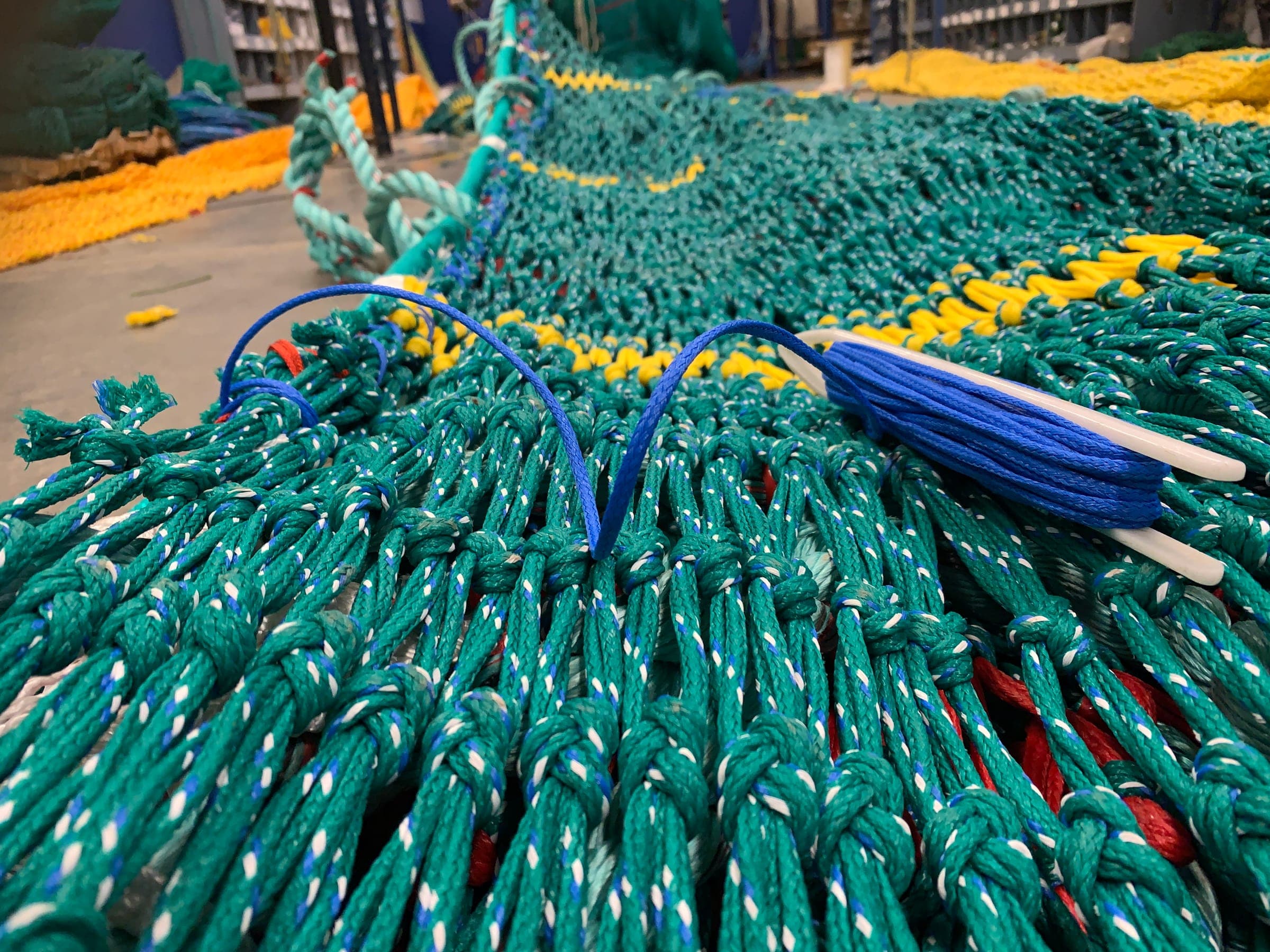
Most of what comes through the door is a trawl that fished last week and tore. The damaged panel is cut out, a new one hung in and the rig checked before it goes back — on the wharf when the vessel can't wait for the loft.
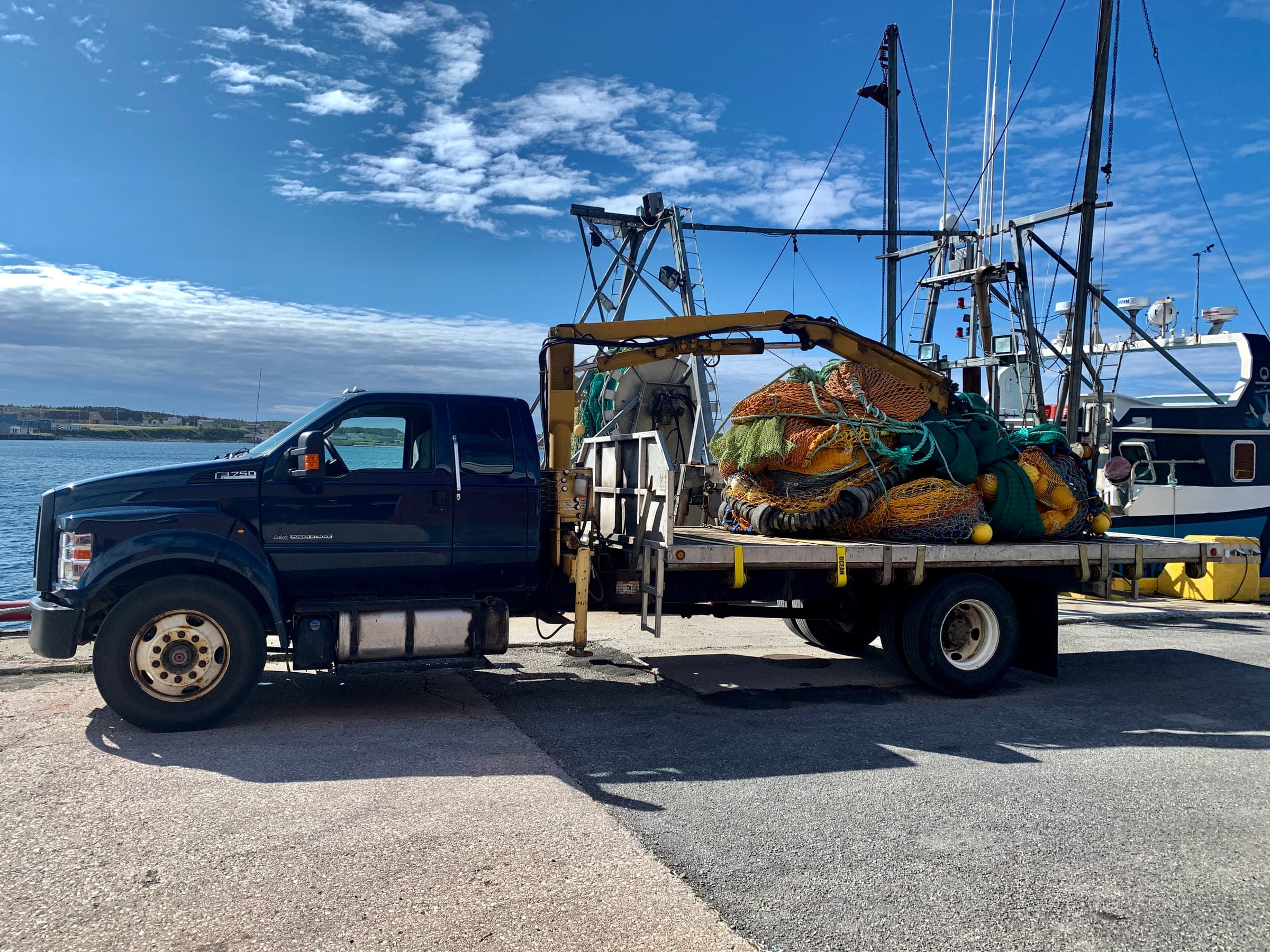
Finished gear goes out on the flatbed with the boom crane, because a trawl is not something a crew carries down the wharf by hand.
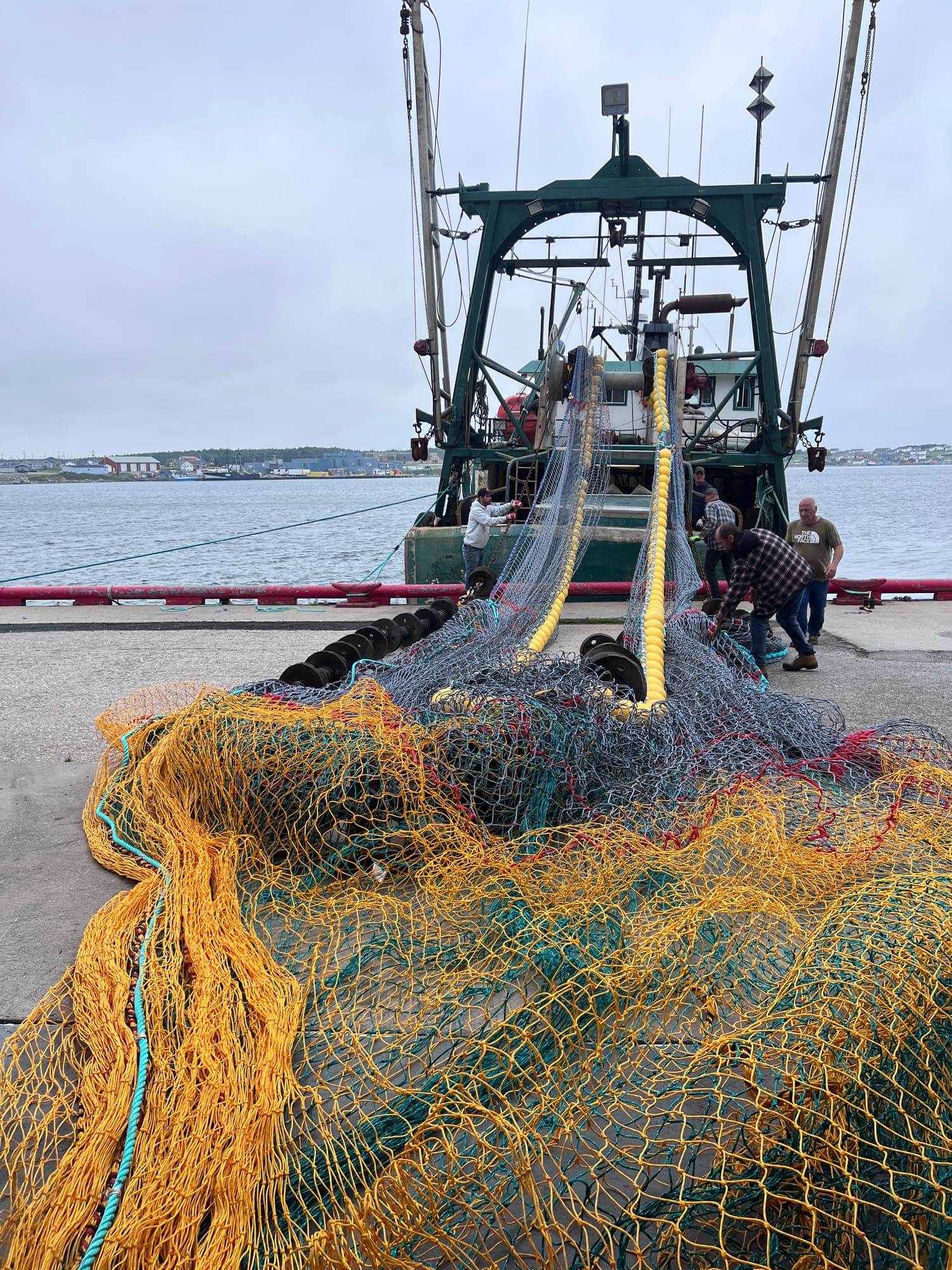
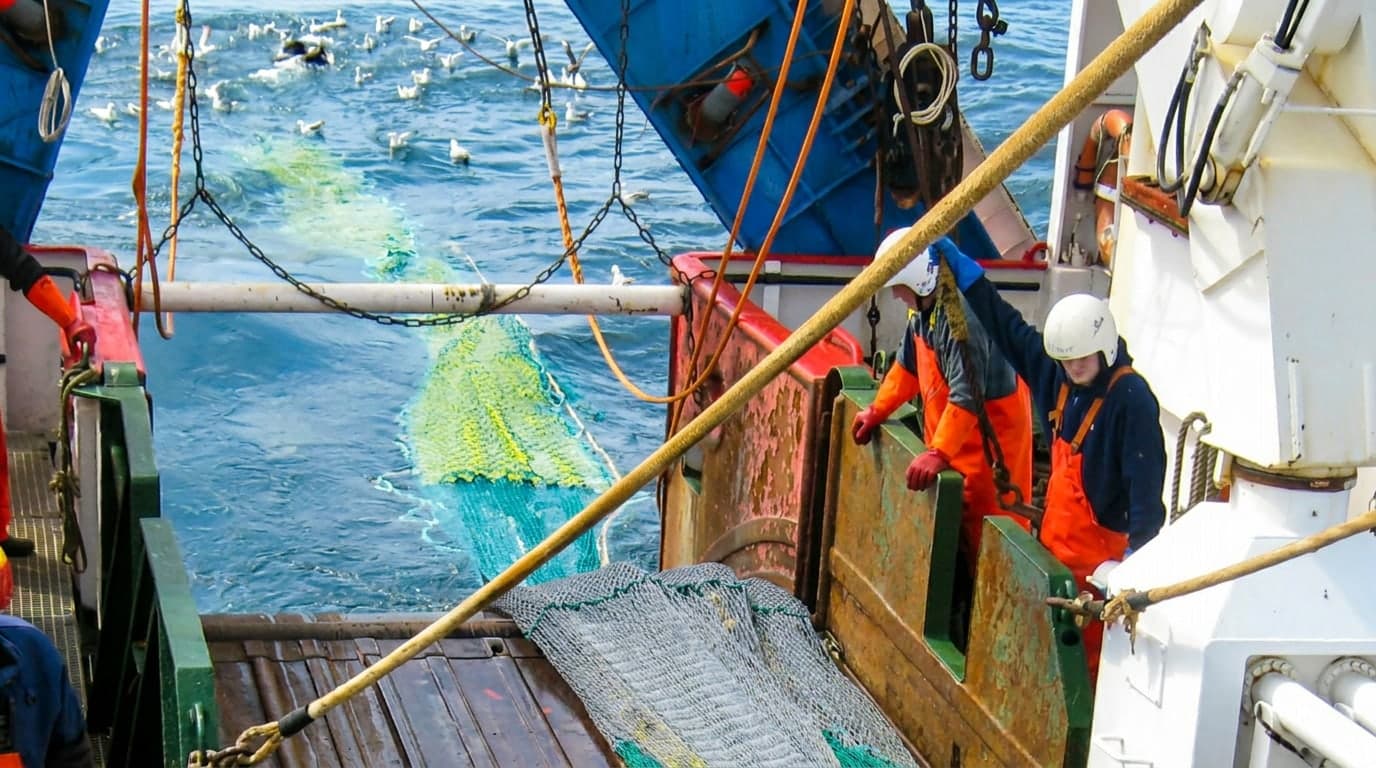
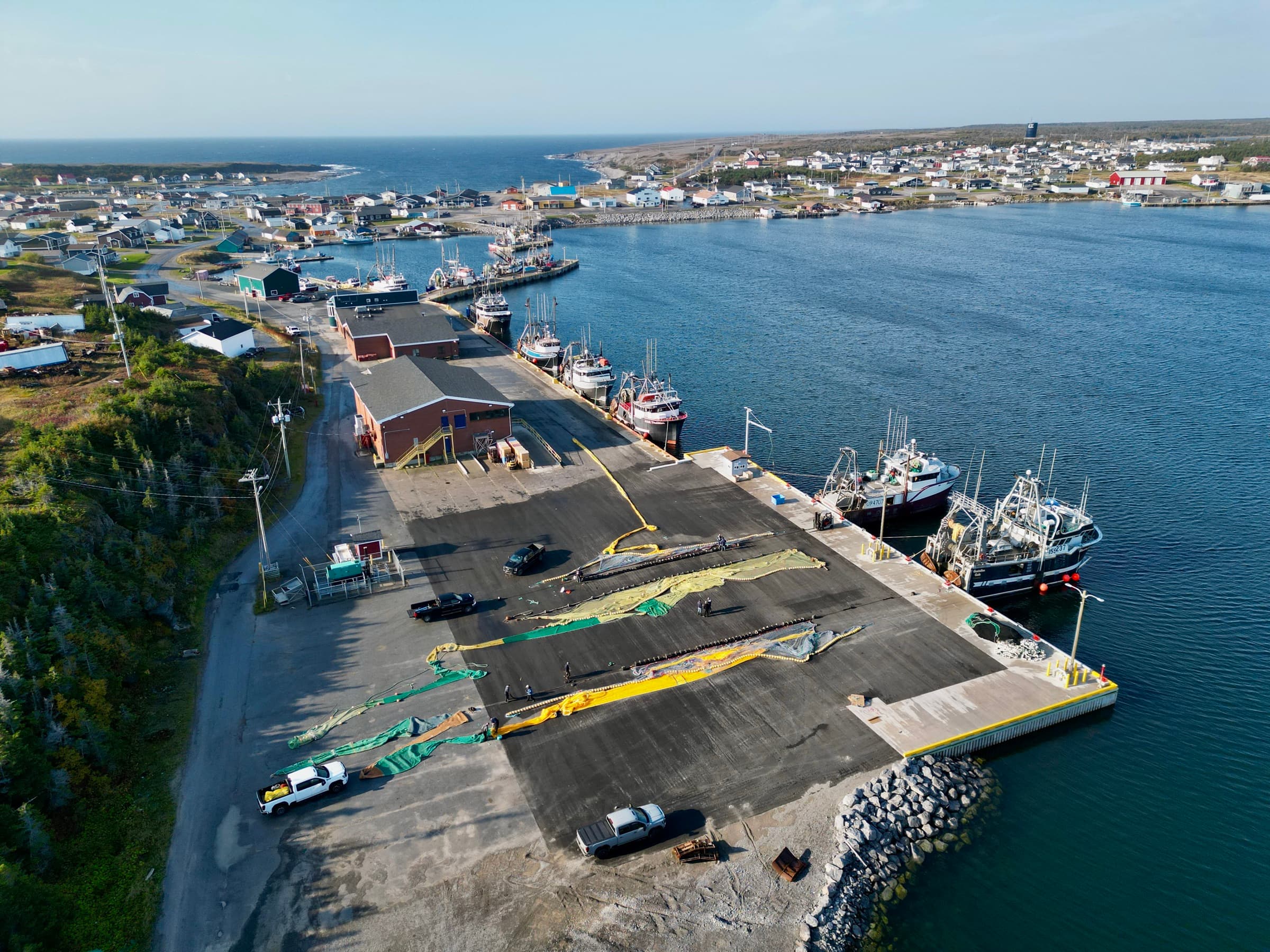
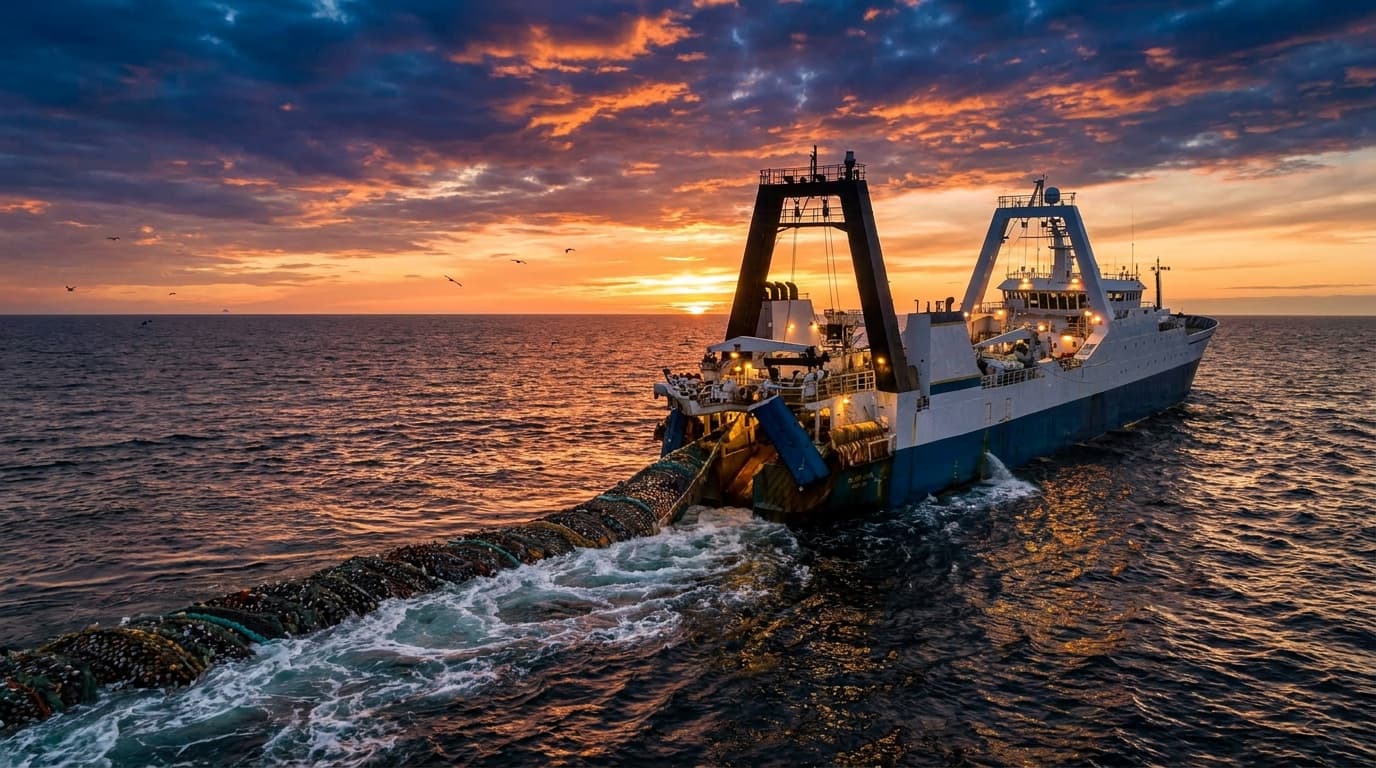
The trawl laid out along the wharf and worked over the stern, crew on the rail and crew on the ground. The last stage of the job, and the one the rest of it is for.
What you get back
A trawl leaves the loft as a system — netting, groundgear, doors and headline set up to each other and to your vessel. If it came in for a repair, it goes back with the damage fixed and the rig checked.
Built or repaired, hung to the headline, with groundgear and doors matched to it.
Steel and DynIce warps to length, marked and spliced — fitted on board if you want them fitted.
Field repairs at the wharf or on the water while the gear is working.
Process
One conversation starts it — we scope the job, do the work, and stand behind it through the season.
Vessel, horsepower, warp length, target species and the bottom you fish.
A new trawl designed to those numbers, or existing gear laid out and assessed in the loft.
Cut, hung and rigged, with doors and groundgear matched to the trawl.
Warps and doors fitted on board where you want them fitted, and adjusted after the first tow.
Panel swaps and field repairs while the gear is working.
Solutions
We supply the gear and we do the work. Both halves come from the same four shops.
Product range
Trawls, doors, netting, groundgear and floats — the components the loft rigs into a system.
Product range
DynIce and Dyneema rope, mooring lines, and towing systems for fishing, marine, and offshore.

Local support
Bring gear to the nearest shop or call — every request routes to the right crew, and in-season work is scheduled around your openings.
Find your branchFAQ
Send specs, photos, drawings, or inspection and testing requests. Your reply comes from the branch that will do the work.