Product range
Wire, Rigging & Lifting
Wire rope, thimbles, shackles and the deck rigging a towed gear system lands on.
Industries
Forty years of bottom-trawl development in Atlantic Canada, four shops that build and repair the gear, and a flume tank and a sea trial behind the designs that leave them.
Why us, for this
Hampidjan Canada — formerly Rope, Net & Twine — has been producing and developing bottom trawls in Atlantic Canada for more than forty years, and is the industry leader in shrimp trawling in the east. Over that time we have worked with over 700 harvesters, across shrimp, crab and whelk and the groundfish fleet: redfish, cod, yellowtail flounder, skate, Greenland halibut, capelin and mackerel.
The netting, the doors and the rope come from the Hampidjan Group's own factories. The design work, the cutting, the hanging, the rigging and the repair are done here, in our lofts, by people who have watched the gear come back in. That is the difference between a distributor and a gear maker: when a trawl does not fish the way it should, there is somebody in this company whose job it is to work out why.
What we do for the fleet
Each of these is work that happens in our own shops. Follow any one of them through to the trade or the range behind it.
Bottom, shrimp and midwater trawls — Gloria designs cut, hung and rigged to the vessel and the ground it tows over, then modified when the first trips say what it needs.
Pelagic and bottom doors, Thyborøn included, sized to the trawl they have to spread rather than bought on their own. Our Poly-Ice door brand merged with Thyborøn Skibssmedie in 2011, and we have supplied their doors in this region since.
Rockhopper discs, bobbins, bunts, spacers, toggles and chain, made up on the apron and measured to the design rather than to the last one that went out.
Single, double and triple grids built to what is being fished and what has to go back over the side.
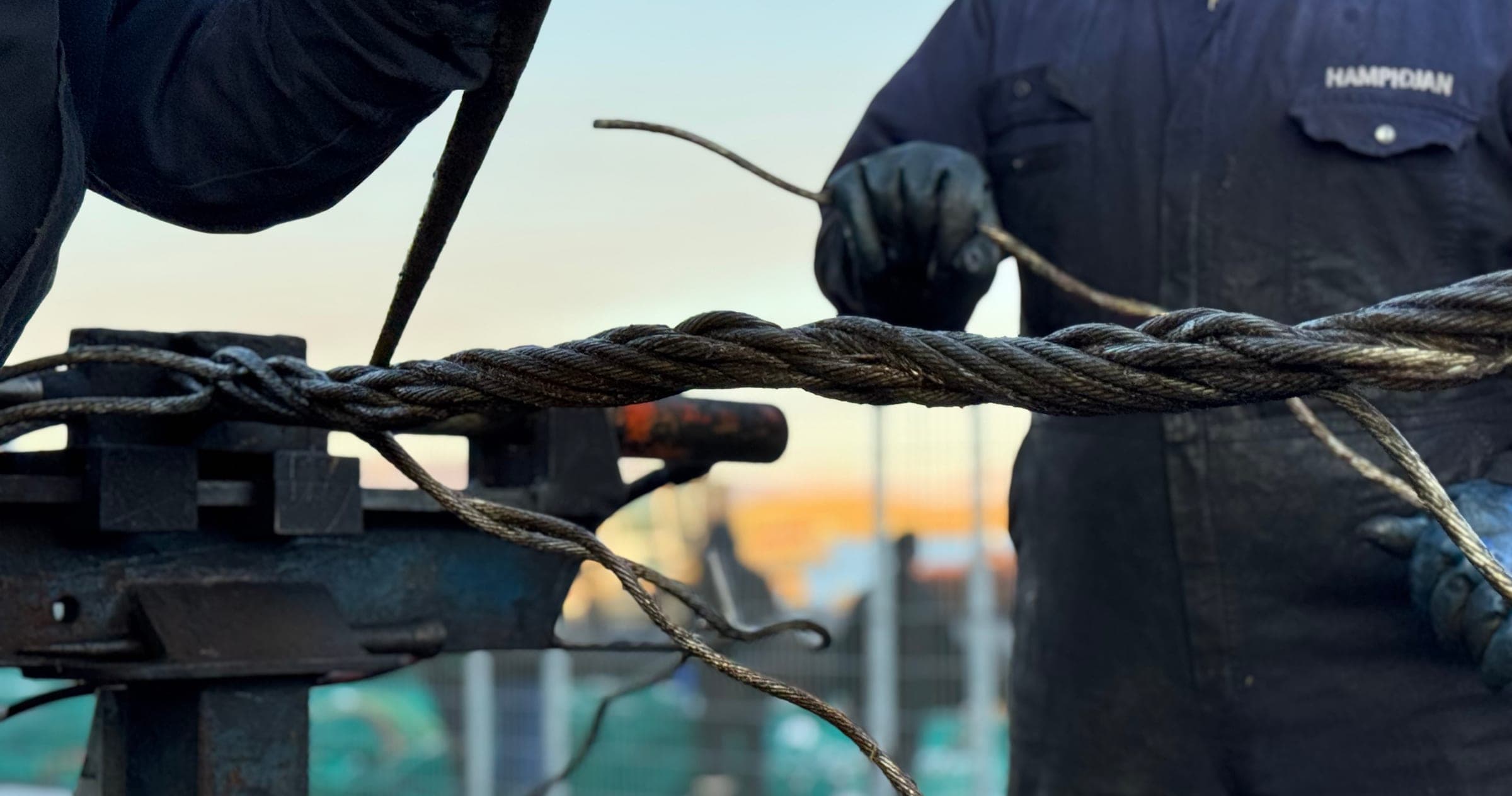
Cut to length, measured, marked, spliced and turned; new warps installed on the vessel, and your own wire repaired rather than replaced where it still has life in it.
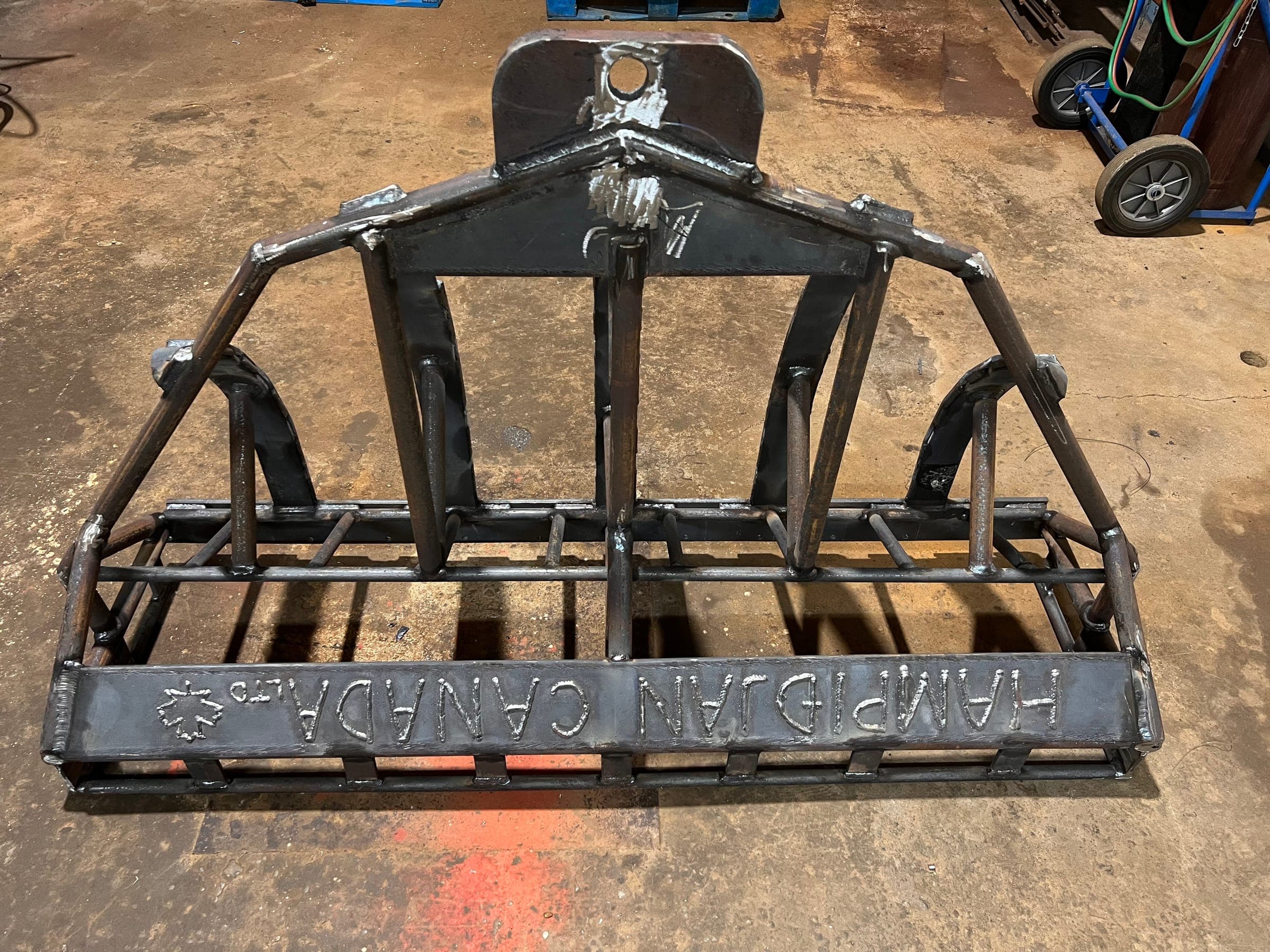
Cod, crab, lobster and whelk pots standard or customised; sea cucumber dredges built here on five-bar steel frames; scallop and mini dredges to order.
Panel swaps, belly and codend replacement, re-netting and field repair — because a trawl ashore in the middle of a quota is the expensive problem, not the netting.
On the floor
Every frame here is one of our own shops or one of our own jobs. None of it is a stock photograph.
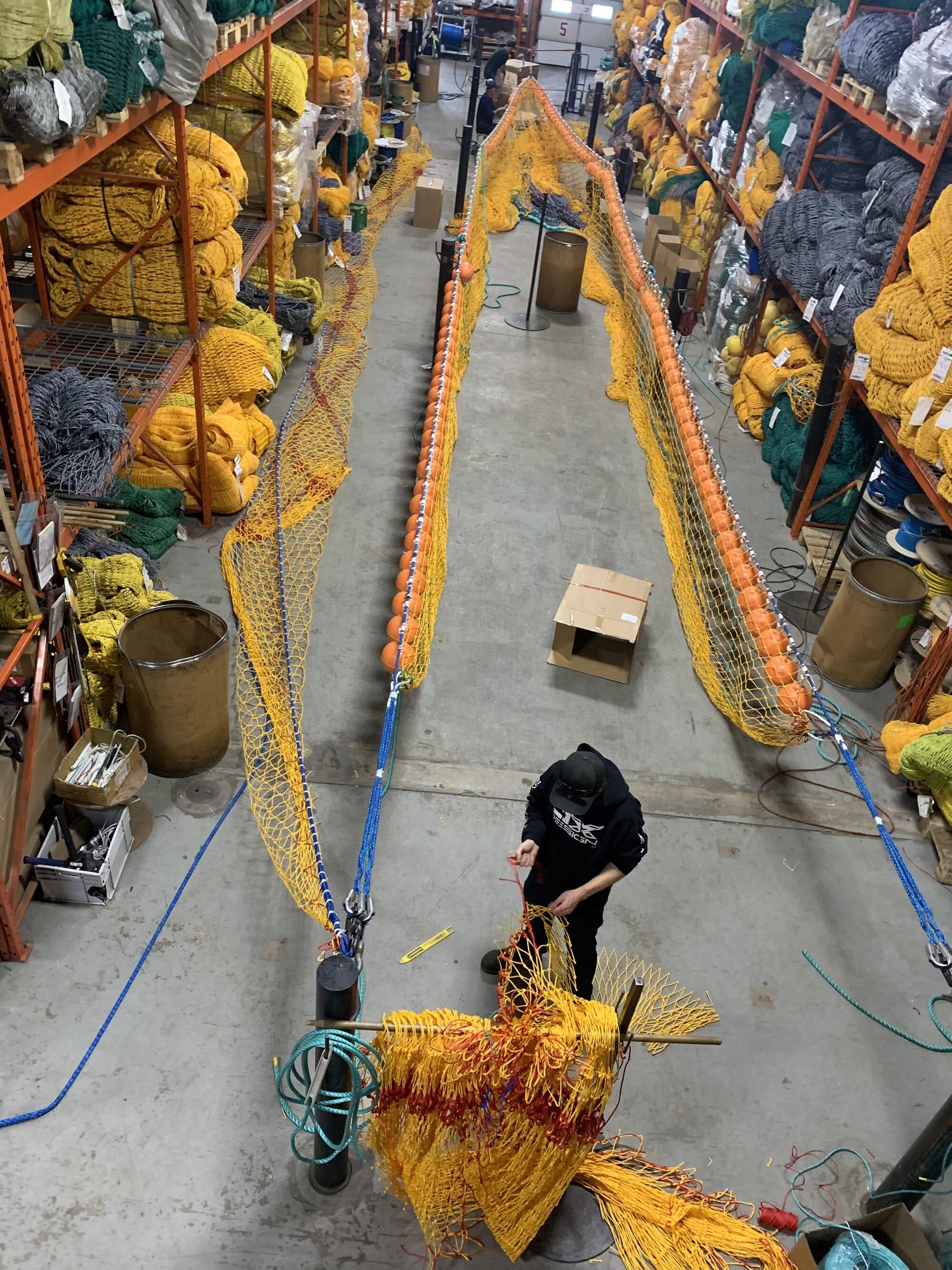
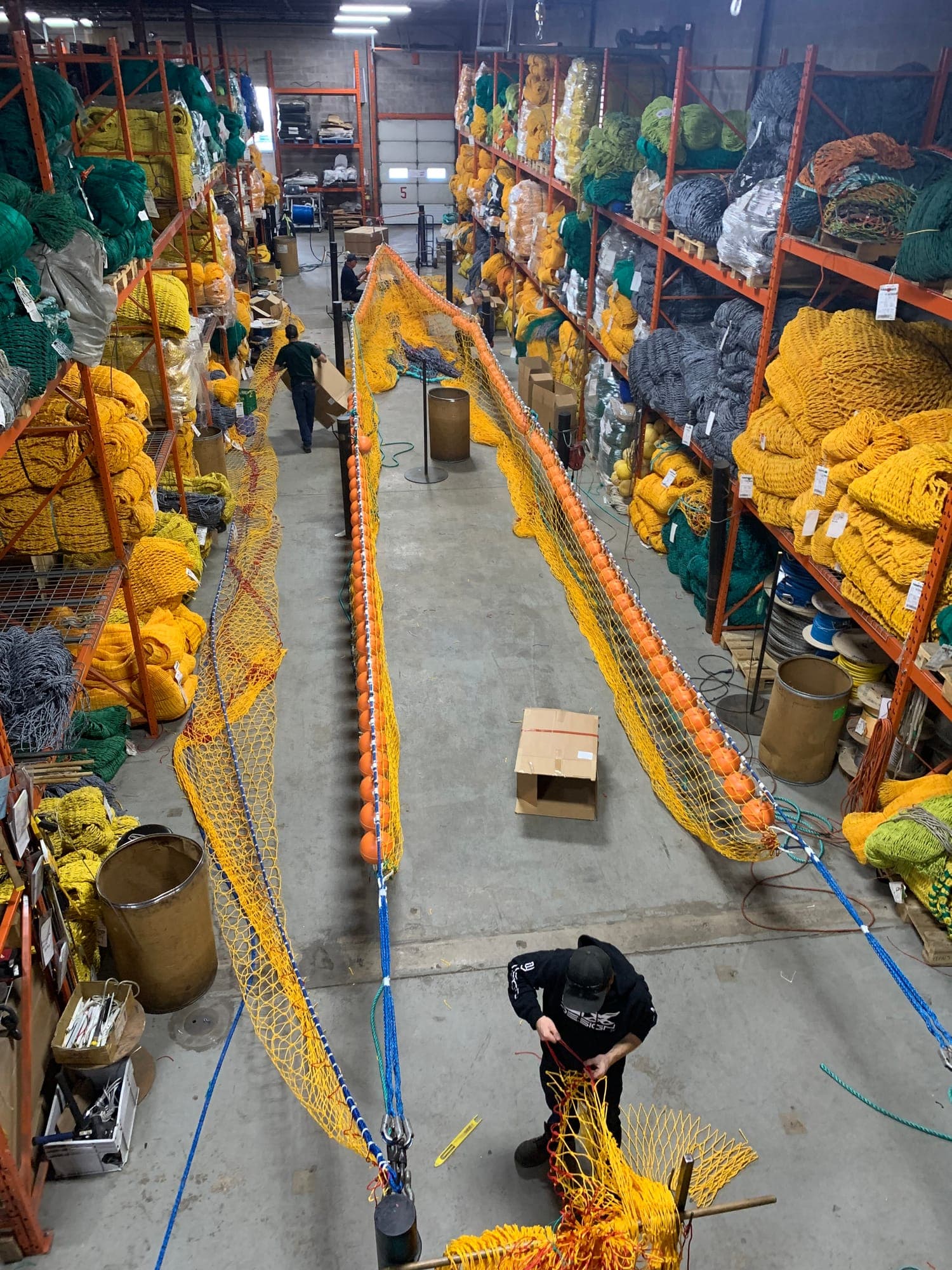
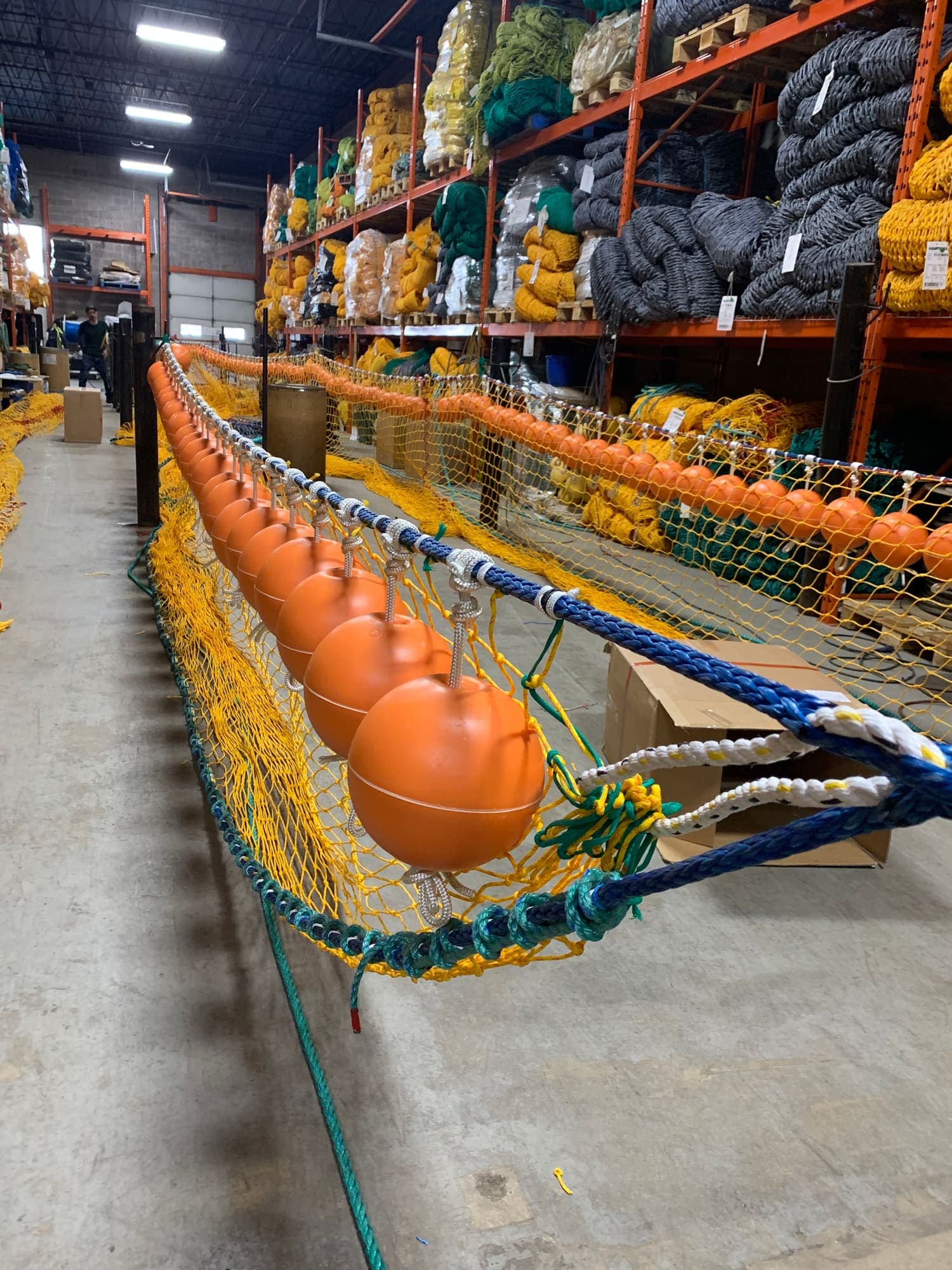
Enough clear floor to open a full trawl out flat, headline strung, panels hung and worked by hand — with the netting, twine and rope it is built from racked down both sides of the aisle.
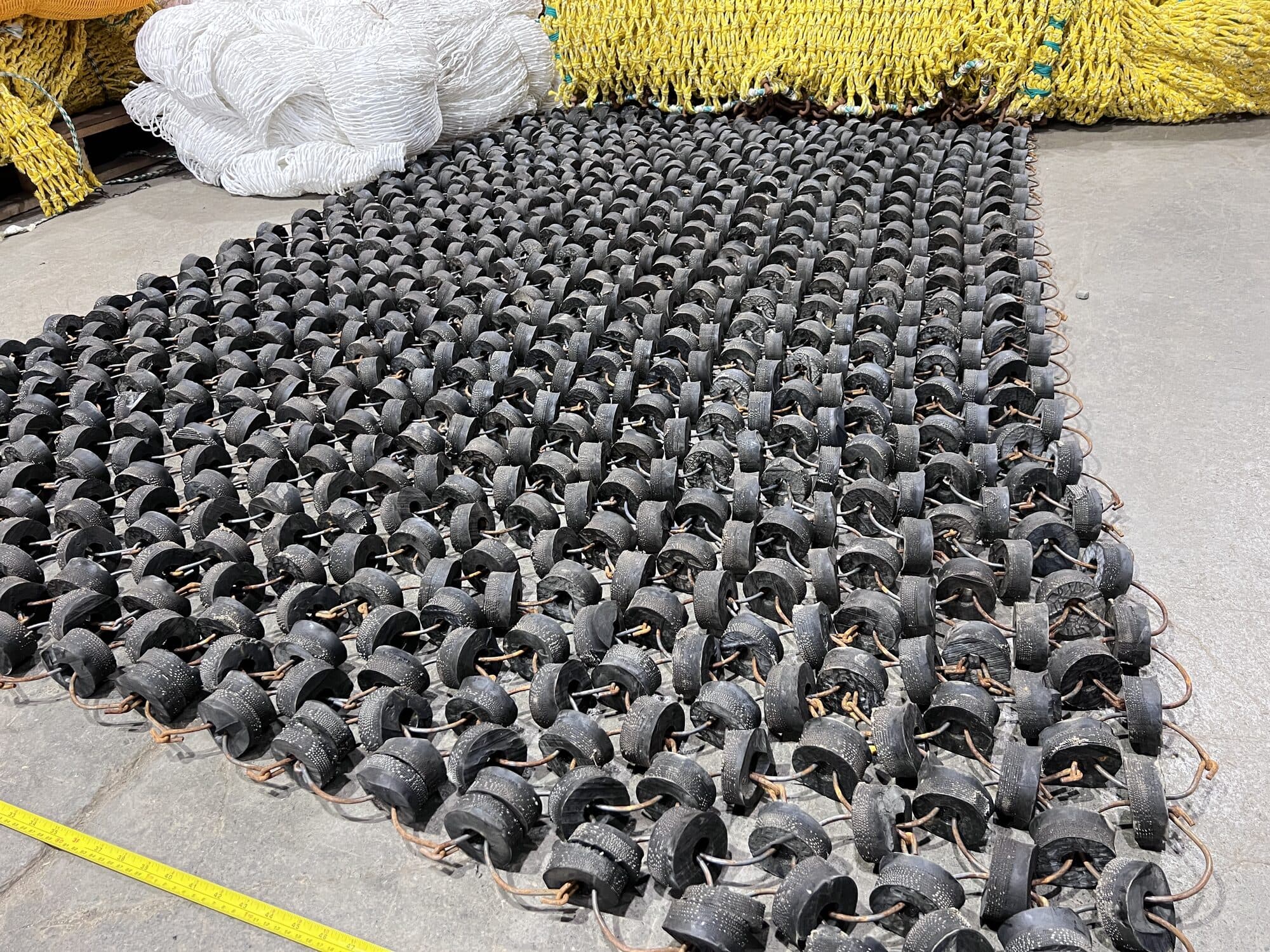
Rubber disc groundgear laid out flat on the apron with a tape run along it. Footgear is built to the design's spacing, and the only way to know it is right is to measure it before it goes on the sweep.
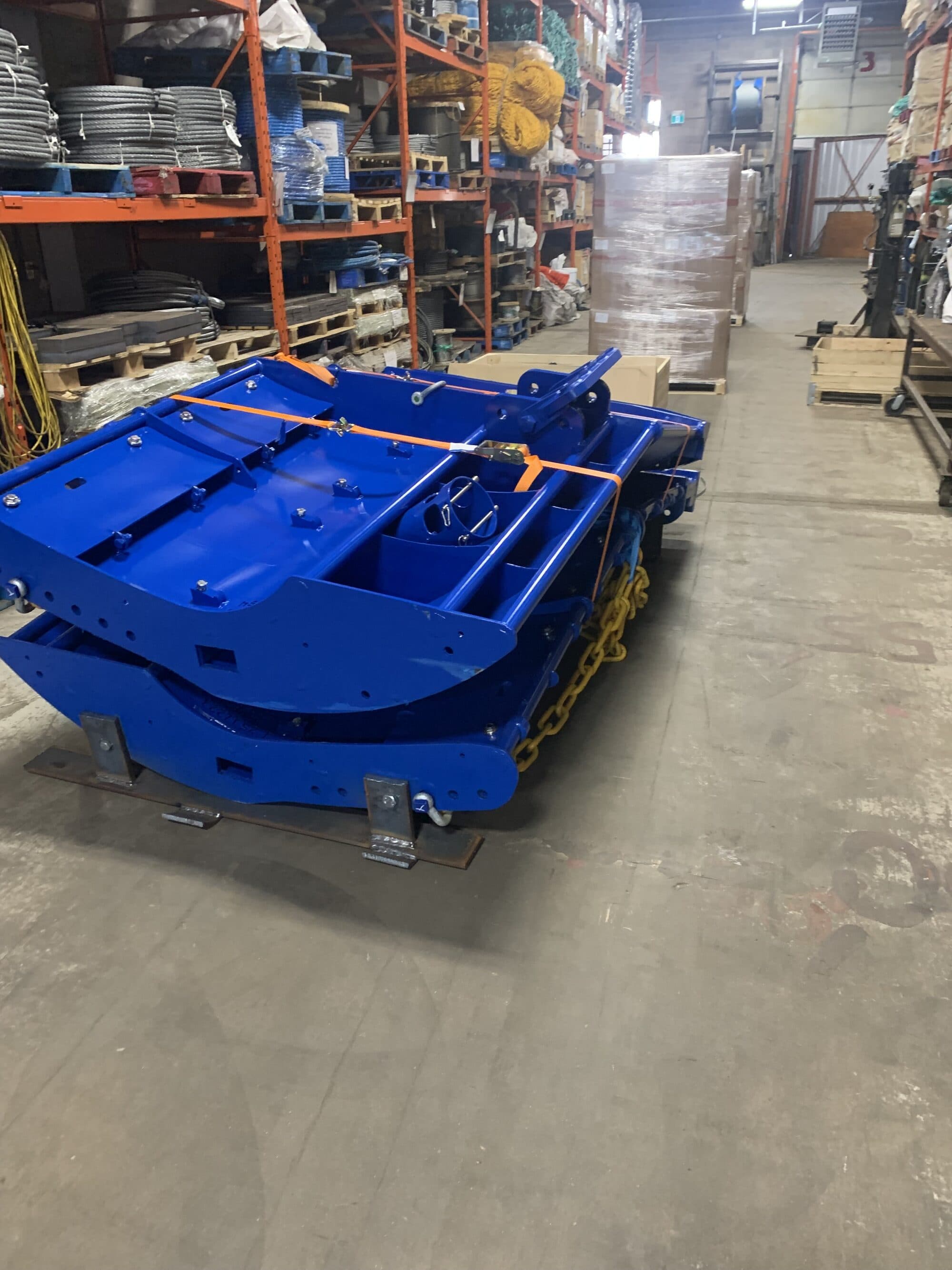
Thyborøn doors on the floor, strapped and waiting to be rigged to the trawl they will spread. Doors are sized to the gear, so they are stocked against the trawls we build rather than against a catalogue.
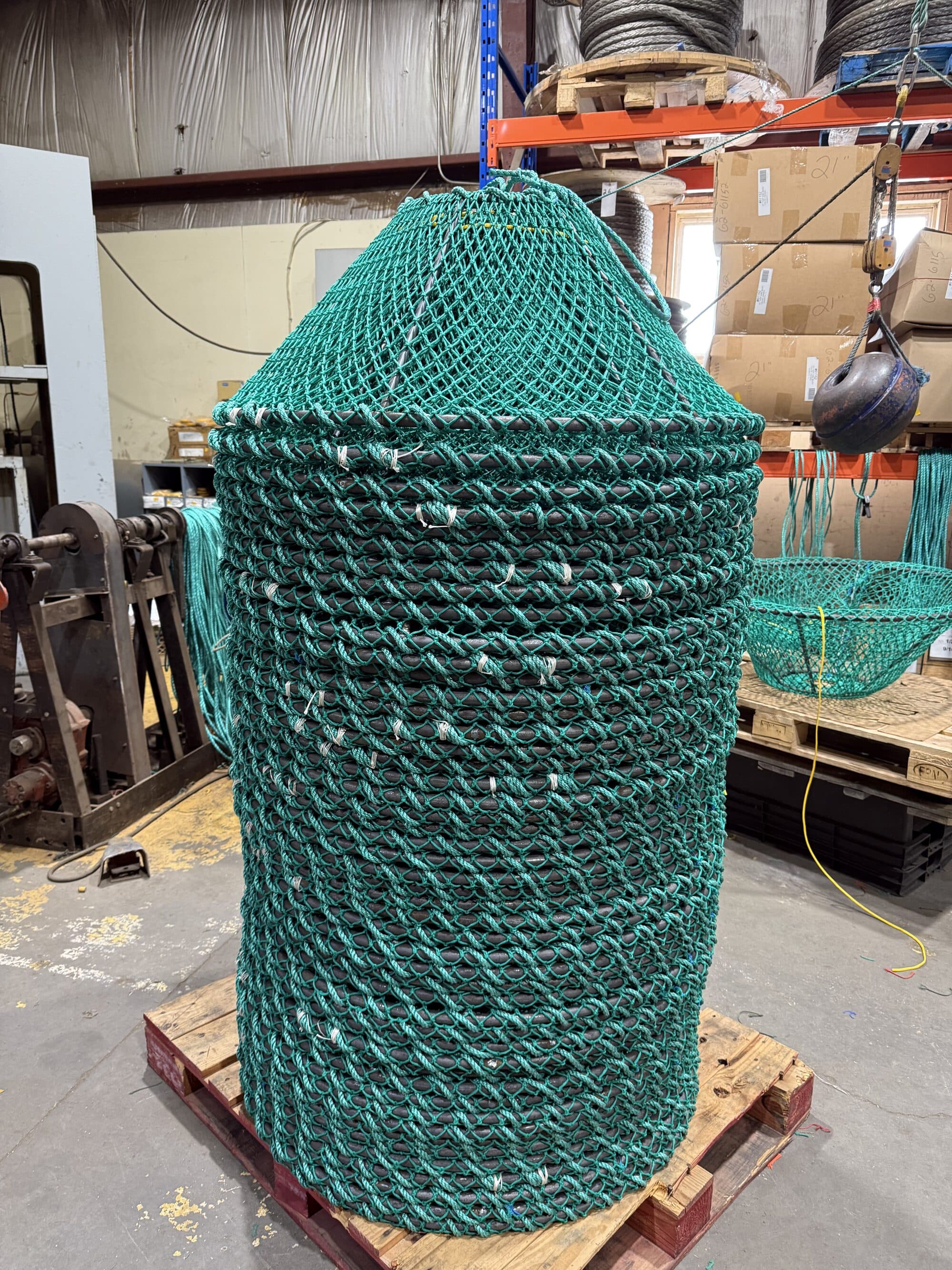
A column of pots nested on the pallet, each one netted over its ring and seized by hand with white twine. They are built to the species and the vessel that hauls them, and stacked the way they will be stowed on deck.
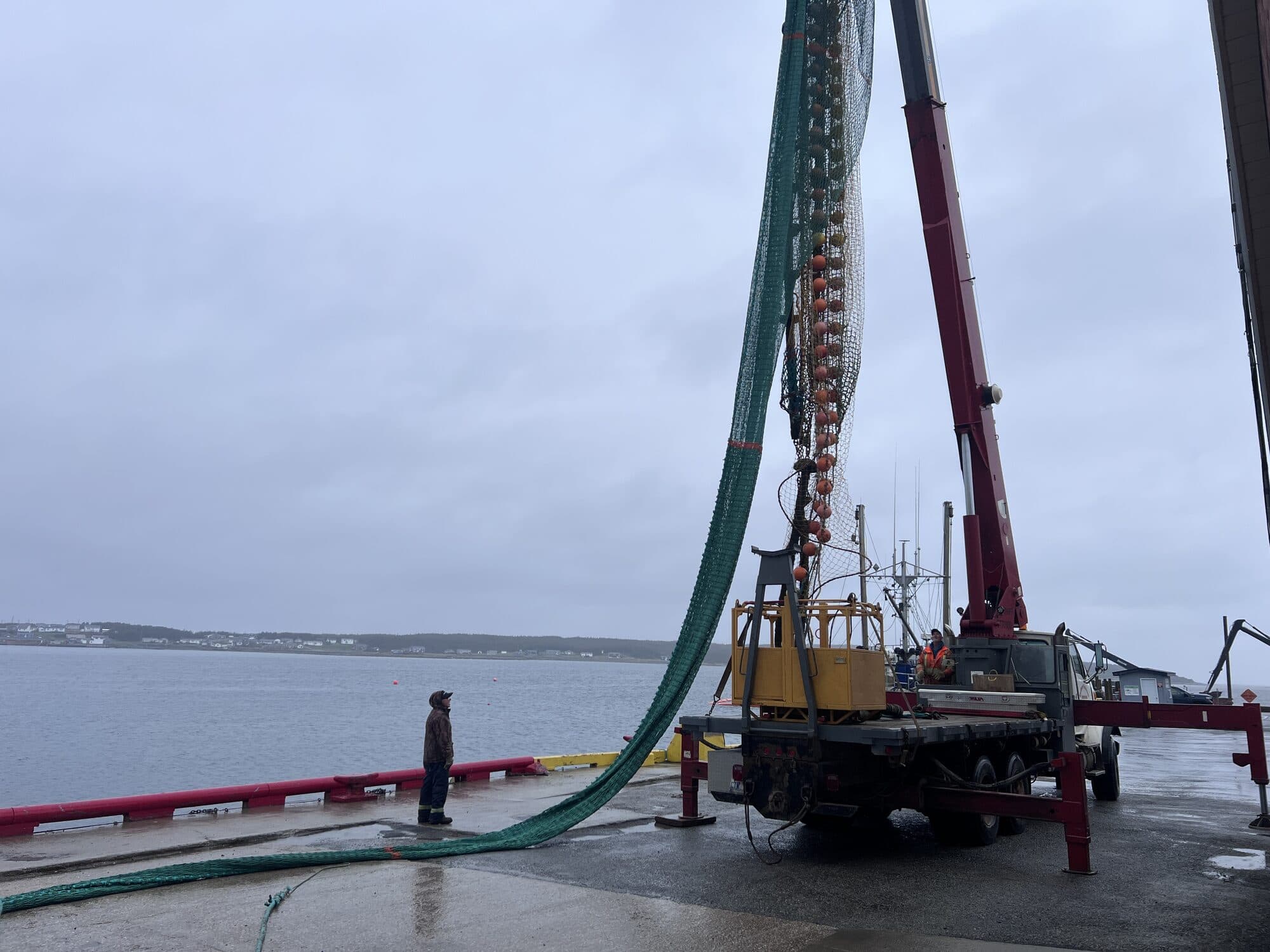
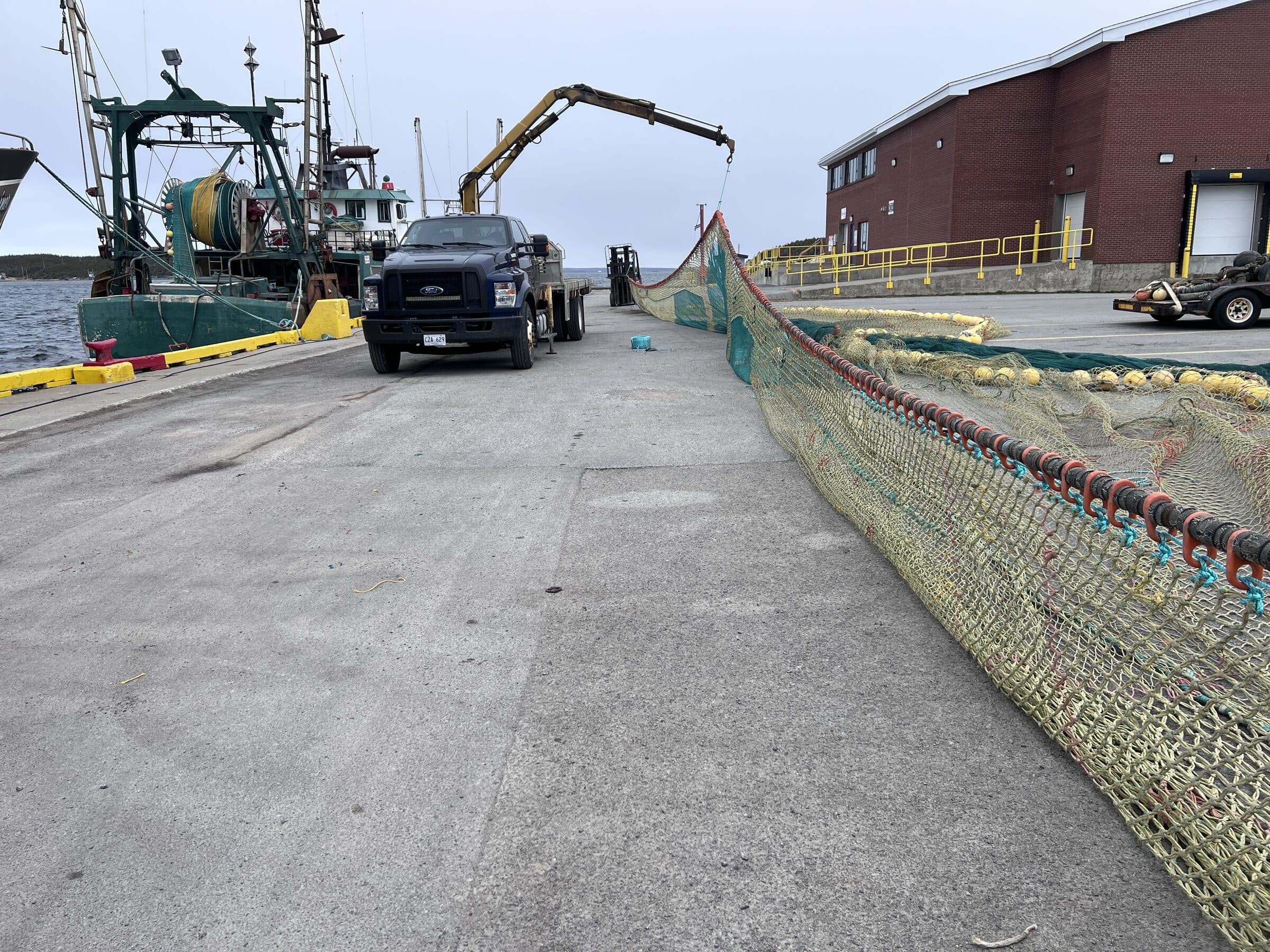
A trawl going aboard by boom truck at Port au Choix. Gear that is finished in the shop still has to get onto the boat, and that last hundred metres is part of the job.
Before the gear is cut
Gear development is a line of work here, not a brochure page. For forty years this company has run applied research and technology development with harvesters, fishermen's associations, government and academia across Atlantic Canada — on ecologically sustainable and fuel-efficient fishing gear, on fisheries value chains, and on getting new technology out of a trial and into a fleet.
A design goes through as much of this as it earns: numerical modelling of the trawl and the trawling system, a scaled model towed in the flume tank at Memorial University's Marine Institute in St. John's — the largest in the world — and then full-scale evaluation at sea, on a commercial vessel, on a working trip.
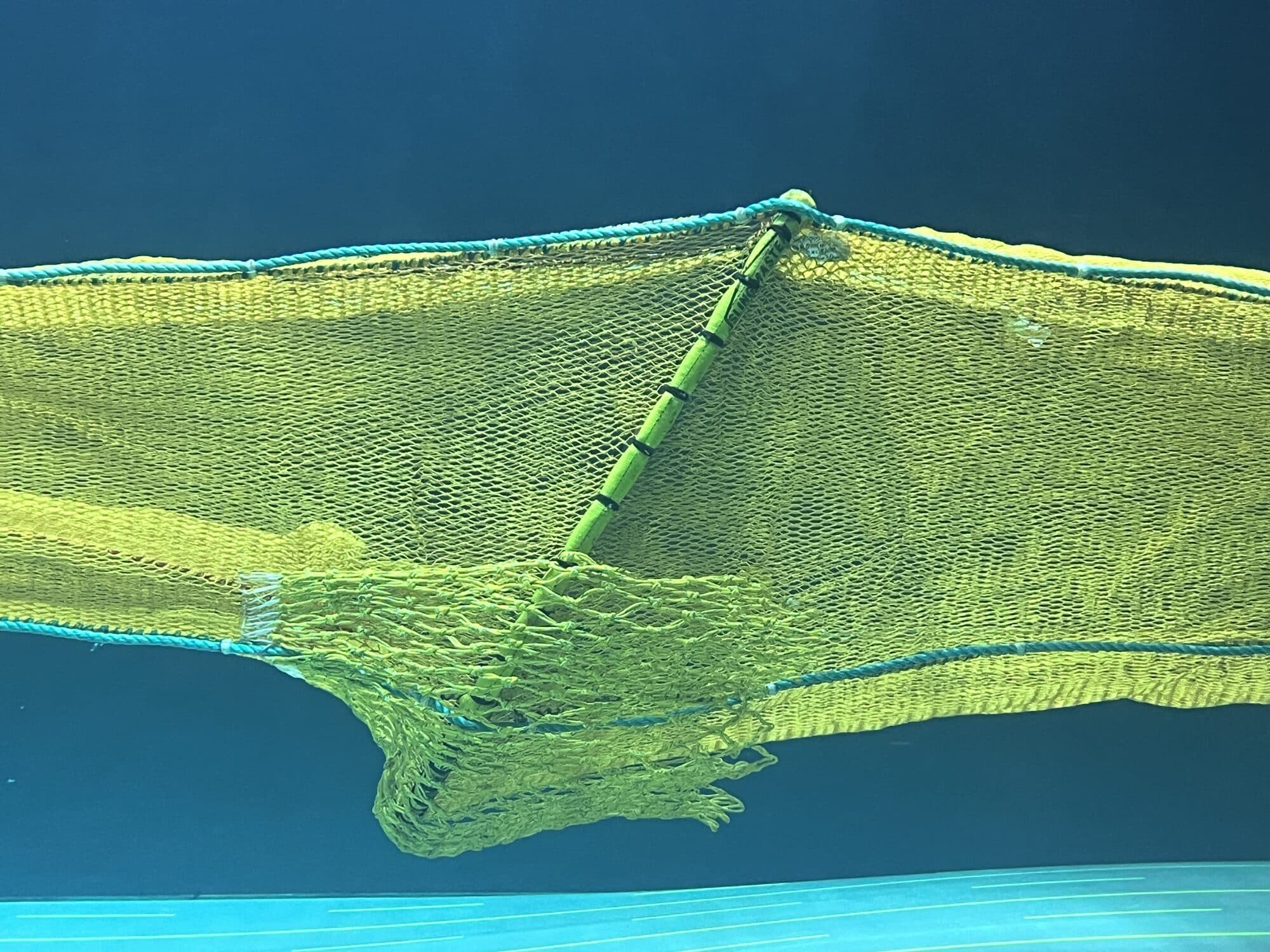
Innovative trawls and trawling systems modelled before anything is cut, with materials and door selection worked out against the design rather than after it.
Scaled models and individual gear components towed and filmed through the observation windows, so a change is watched rather than guessed at.
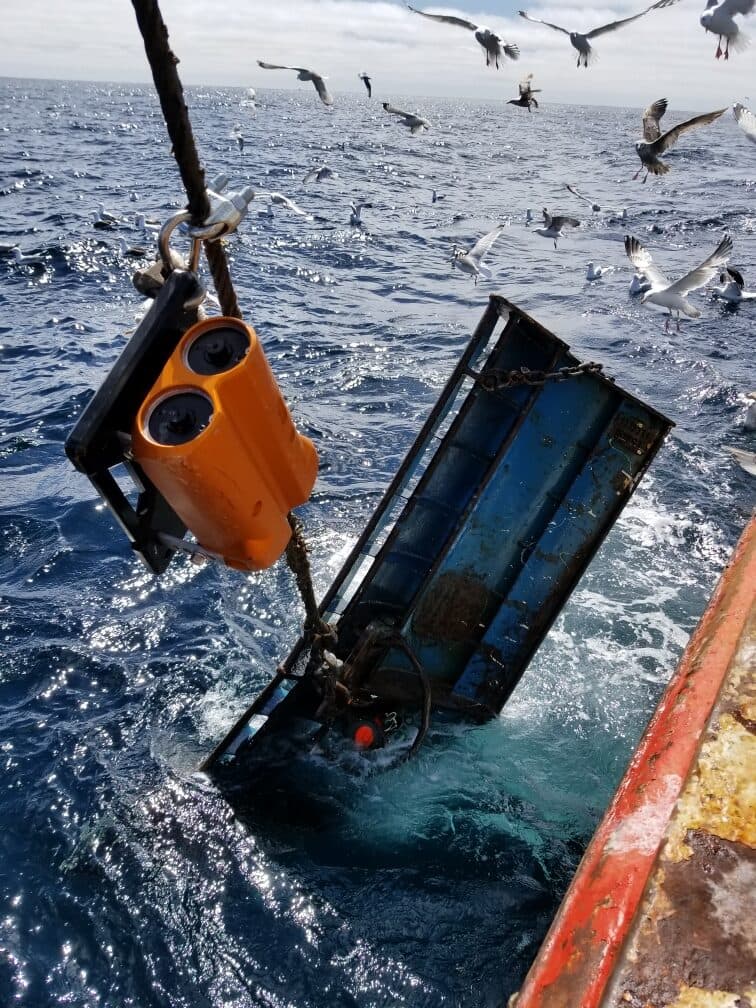
Trawls and trawling systems evaluated at sea on commercial fishing vessels — and fixed gear tested the same way, on real trips.
New gear developed, tested and then handed over: mentoring, advisory work and technology transfer for industry, government and academia, under non-disclosure where the work needs it.
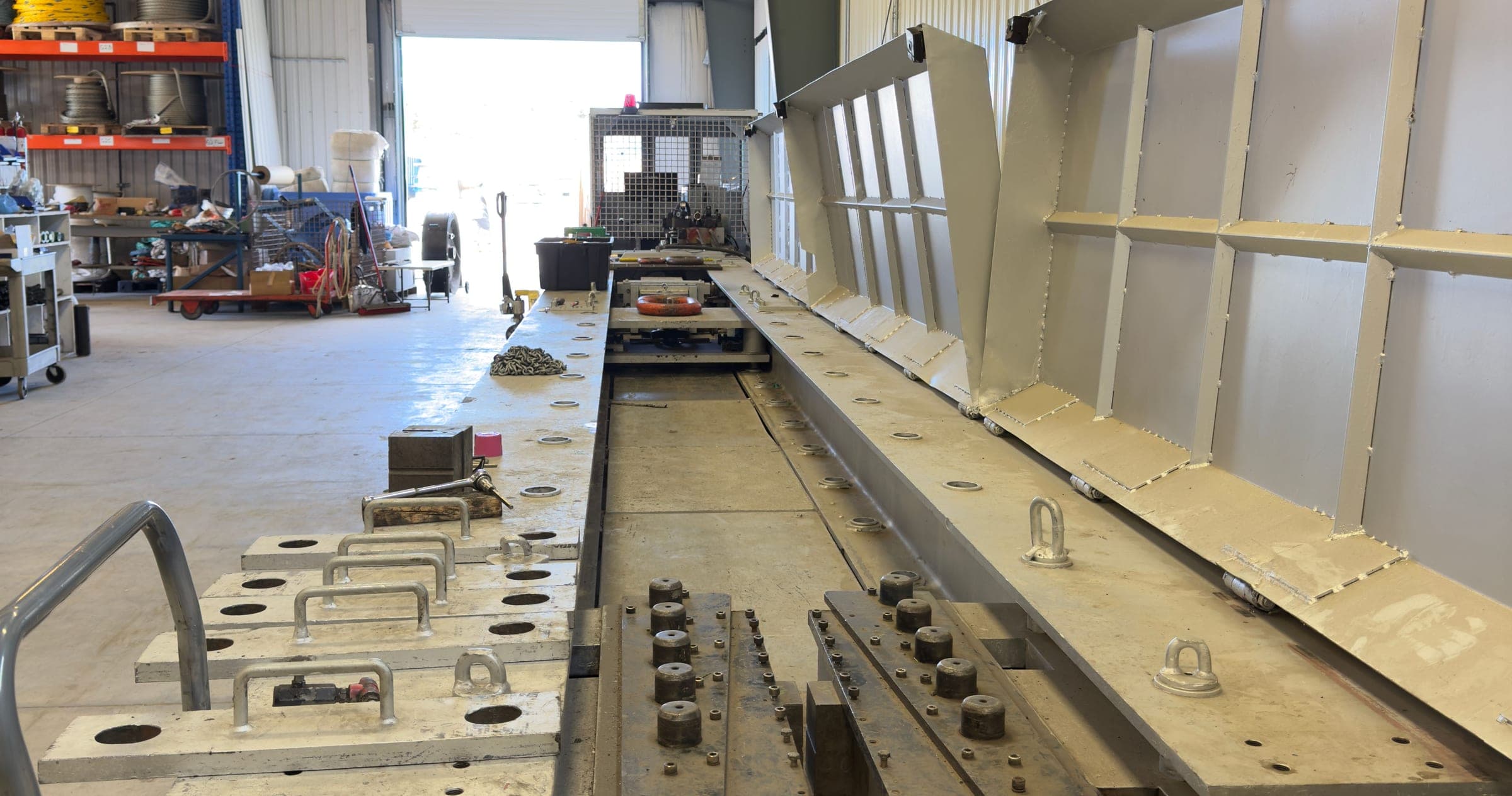
The flume tank is Memorial University's, at the Marine Institute in St. John's. We model in it; the 500,000 lb bed used for rigging and lifting assemblies is our own, at Paradise.
The range
Every line here is gear this company builds or supplies in Atlantic Canada, against the fisheries it was built for.
| Gear | Built from | Fisheries | Where the work happens |
|---|---|---|---|
| Bottom and shrimp trawls | Gloria designs; Magnet and Utzon netting | Shrimp, redfish, cod, flatfish, Greenland halibut | Net lofts — Spaniard's Bay, Dartmouth |
| Midwater and semi-pelagic trawls | Group netting and rope, rigged here | Capelin, mackerel, herring | Net lofts, then rigged to the vessel |
| Trawl doors | Thyborøn — pelagic and bottom | Matched to the trawl, not to the boat | Stocked and rigged at the branches |
| Groundgear and footgear | Rockhopper discs, bobbins, bunts, spacers, chain | Ground-dependent — hard bottom to mud | Made up on the apron, measured to the design |
| Sorting grids | Stainless bar, framed | Single, double or triple, to the species | Fabricated and fitted to the trawl |
| Warps | Steel wire, or DynIce | All towed gear | Cut, measured, marked, spliced, turned; installed on board |
| Pots and traps | Steel frame, rope and netting | Cod, crab, lobster, whelk | Standard or customised, built to the fishery |
| Dredges | Five-bar heavy-duty steel frame, netted | Sea cucumber, scallop | Fully manufactured on site; frames repaired and re-netted |
Scroll the table sideways for all 4 columns.
Netting, doors and rope are manufactured by the Hampidjan Group; the design, cutting, hanging, rigging and repair are done in our own shops.
Solutions
We supply it and we do the work on it. Both halves come out of the same four shops.
Product range
Wire rope, thimbles, shackles and the deck rigging a towed gear system lands on.
Product range
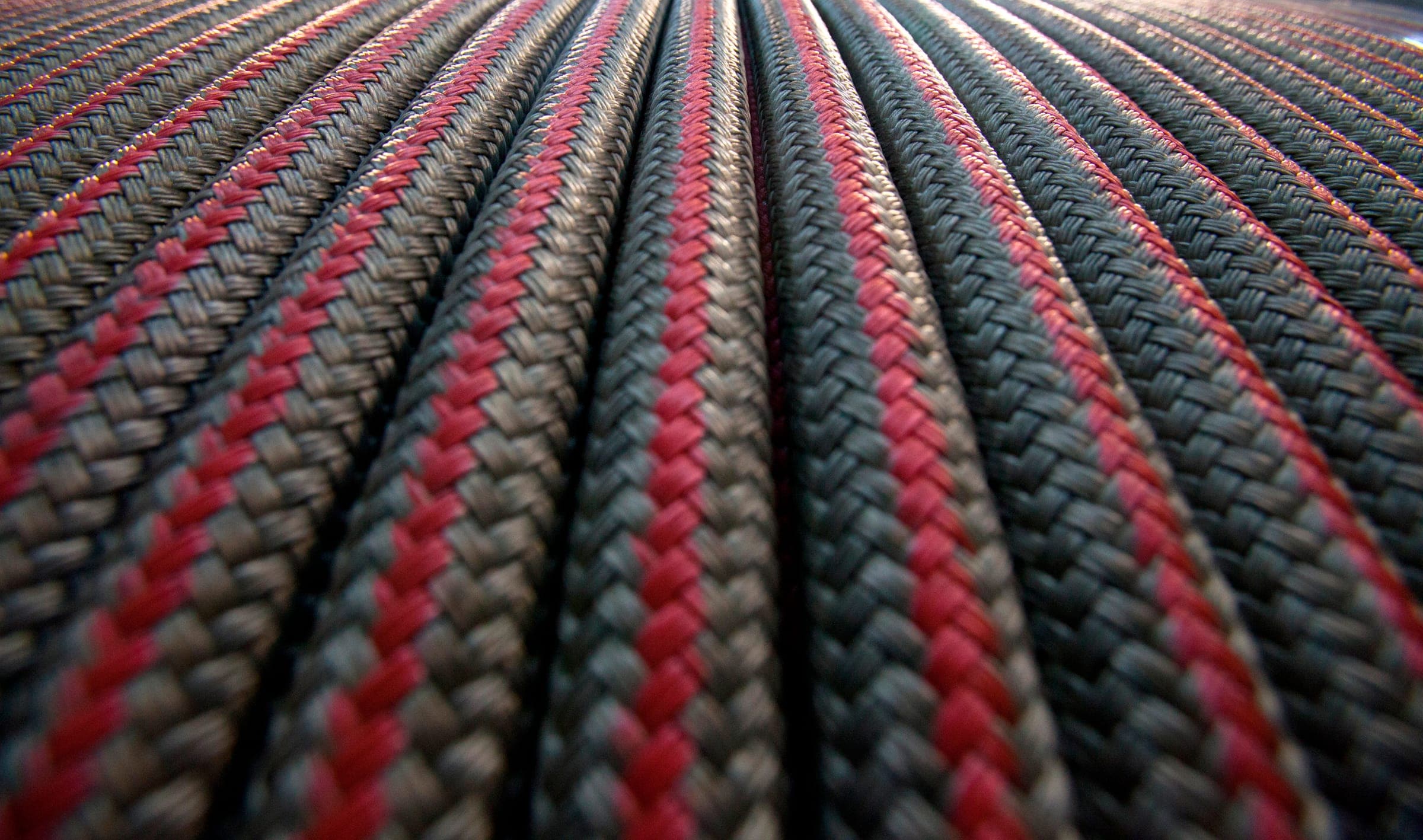
DynIce and steel warps, headline and sweep rope, and the cordage a trawl is hung on.
Service
Trawls designed, cut, hung, rigged and repaired — the trade this company was built on.
Service
Warps cut, measured, marked, spliced and turned; new wire installed on the vessel.
Service
Dredges, pots, sorting grids and scaled models — the gear that has no part number.
Service
Deck rigging and lifting gear inspected by hand, and proof tested when the job calls for it.
Four shops
For a fishing operation the network is not a list of addresses — it is where the floor space is, where the welder is, and how far the gear has to travel when the season is running.
FAQ
Send specs, photos, drawings, or inspection and testing requests. Your reply comes from the branch that will do the work.