Product range
Wire, Rigging & Lifting
Wire rope, slings, fittings, and lifting assemblies for marine, fishing, and industrial operations.
Services
Rope inspection, wire rope inspection and lifting gear inspection — hands-on, with component replacement and load testing when the job calls for it.
The service
Most of this work is physical. Our dedicated inspector goes over rope, wire, hardware and assemblies by hand and eye — wear, damage, deformation, broken or deteriorated components, and the mechanical defects that decide whether gear keeps working — using other inspection tools as the item requires.
Some of it earns a place on the 500,000 lb bed. A great deal of it never needs to go there. Where a component is worn or damaged it can be replaced with new before the equipment returns to service, and each item is supplied with the applicable test certificate and inspection documentation.
Scope
Worth knowing before you load the truck. If your job is on the right-hand side, call the shop anyway — we would rather point you somewhere useful than take the work.
Capabilities
Hands-on rope inspection, wire rope inspection and lifting gear inspection — mechanical condition assessment, component replacement, and proof or break testing on our own 500,000 lb bed.
Rope, wire, hardware and assemblies gone over by hand and eye — the bulk of the work.
Wear, deformation, and broken or deteriorated components, judged against how the gear is used.
Checked for broken wires, crush, corrosion and deformation.
Worn and damaged components identified and called out, with other inspection tools as the item requires.
Worn or damaged hardware replaced with new before the equipment goes back to service.
On the 500,000 lb bed, where the job calls for a number rather than a judgement.
On-site inspection available for supported work.
The bench
Two routes, and the first one covers most of the work. Testing is what you add when the job needs a number rather than a judgement.
| Gear | Hands-on inspection | On the bed | Goes back with |
|---|---|---|---|
| Wire rope and cable | Broken wires, crush, corrosion, deformation | Proof test where specified; break test on a sample | Test certificate and inspection documentation |
| Synthetic rope and spliced assemblies | Abrasion, cuts, splice condition, exposed strength member | Proof test on request; break test to prove a termination | Test certificate and inspection documentation |
| Rigging hardware — shackles, links, swivels, thimbles | Wear, deformation, pin and thread condition | Proof test where required | Test certificate and inspection documentation |
| Lifting gear — slings, roundslings, webbing | Cuts, wear, damaged fittings, legible markings | Proof test where required | Test certificate and inspection documentation |
| Complete assemblies | Component by component, including the fittings | Proof or break test, as specified | Test certificate and inspection documentation |
Scroll the table sideways for all 4 columns.
Worn or damaged components can be replaced with new before the item goes back to service. Bring the rating and the history if you have them — what the gear is rated to, and what it has been doing, changes how it is inspected.
The test bay
Every photograph below is our own bay. Most of what comes through it is handled, judged and sent back without ever going near the machine — and the machine is here for the jobs where a judgement is not enough.
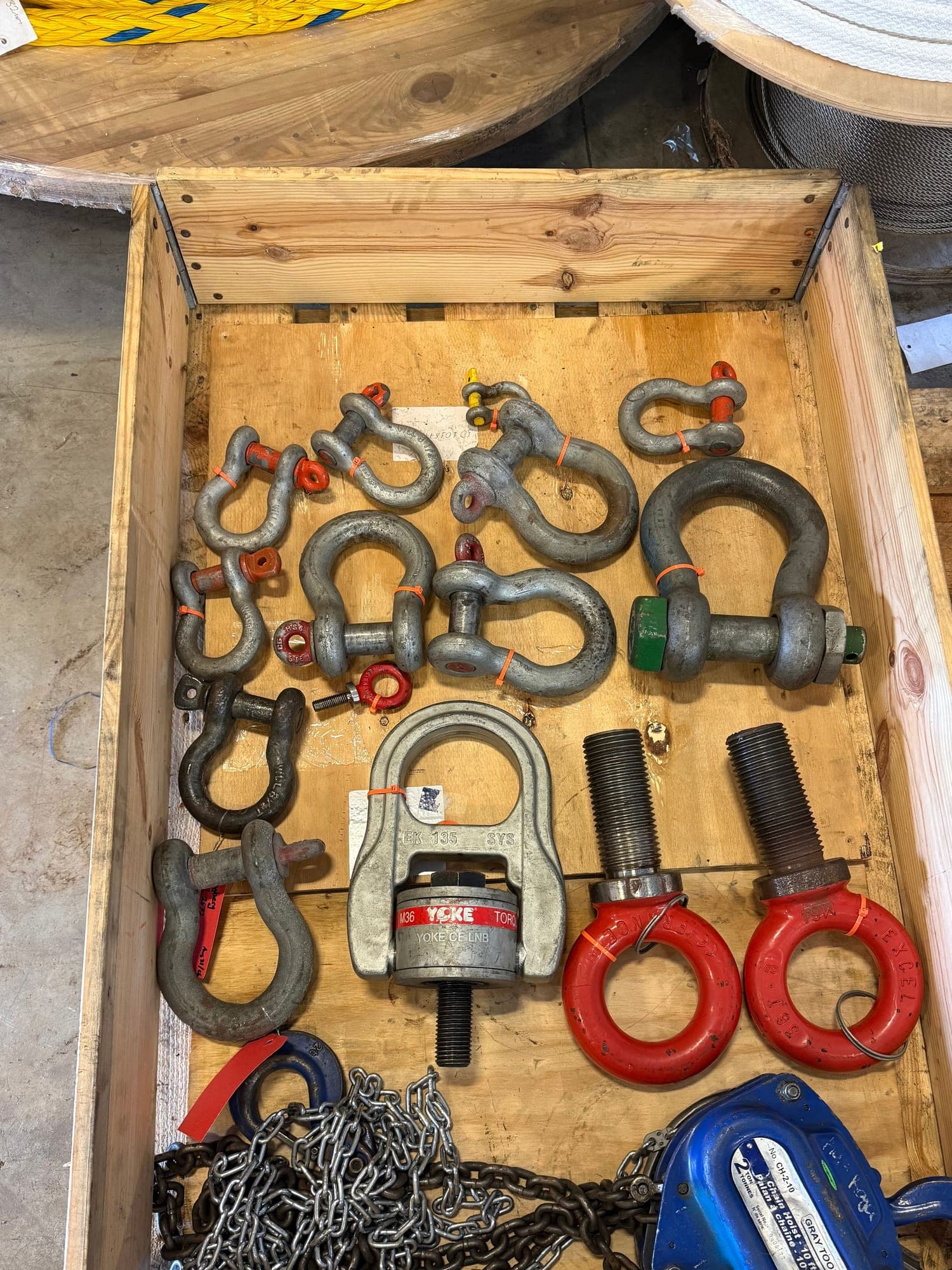
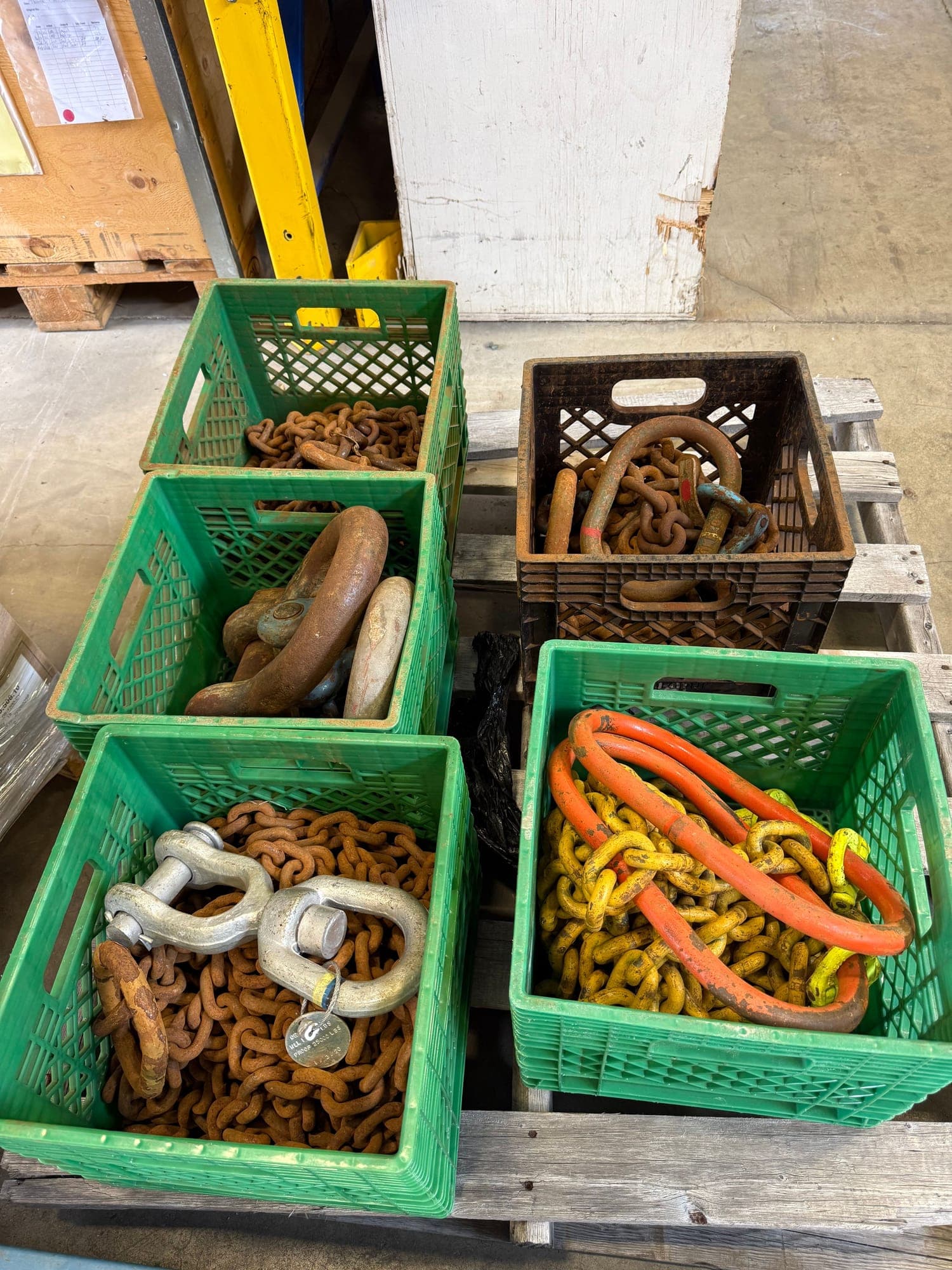
A customer's gear arrives as a crate of shackles, links, eye bolts and hoists, and our dedicated inspector looks at every piece in it on its own — pin and thread condition, legible markings, anything bent, worn or corroded. Most of a crate like this is settled here, at the bench, without the machine.
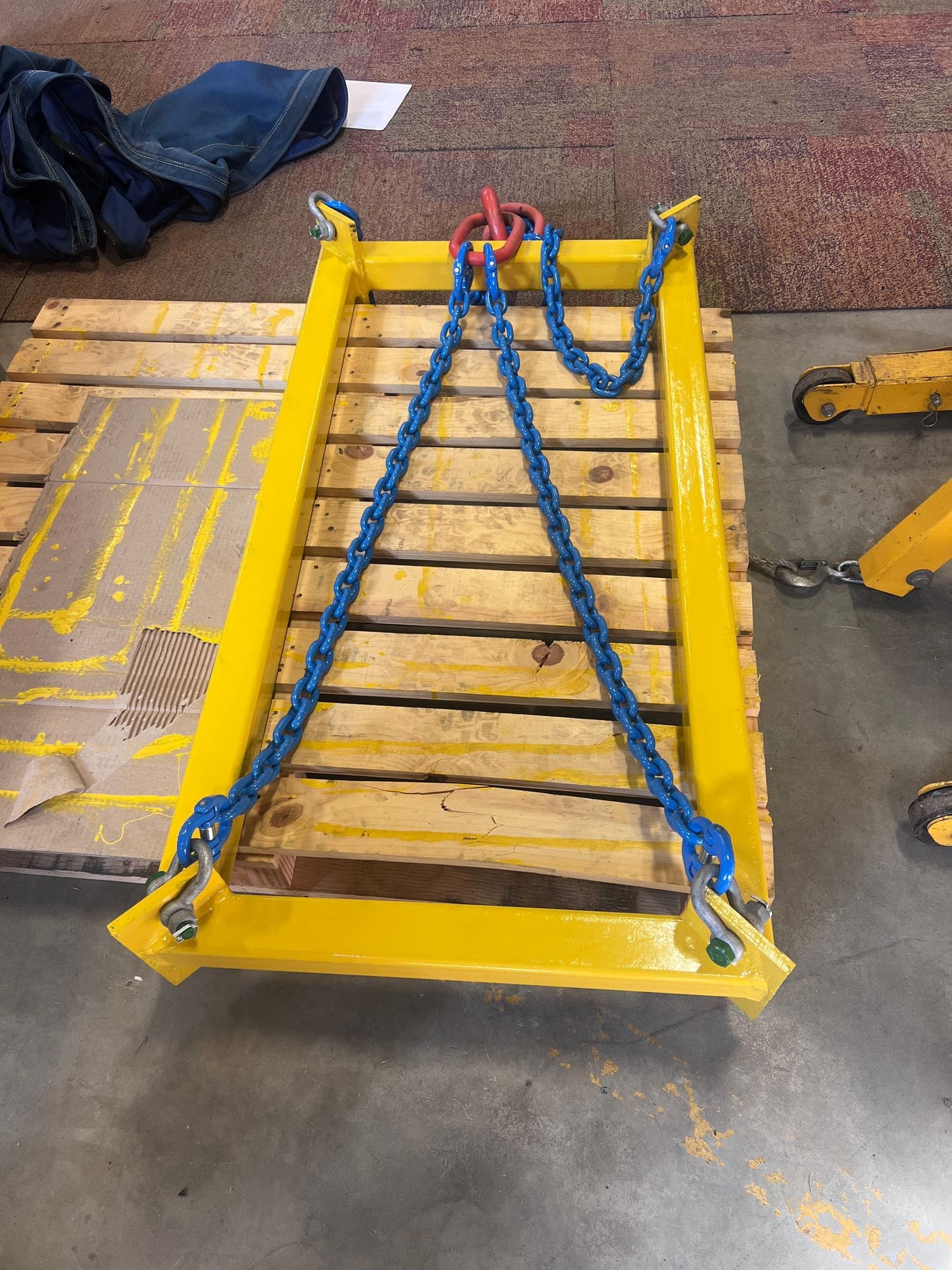
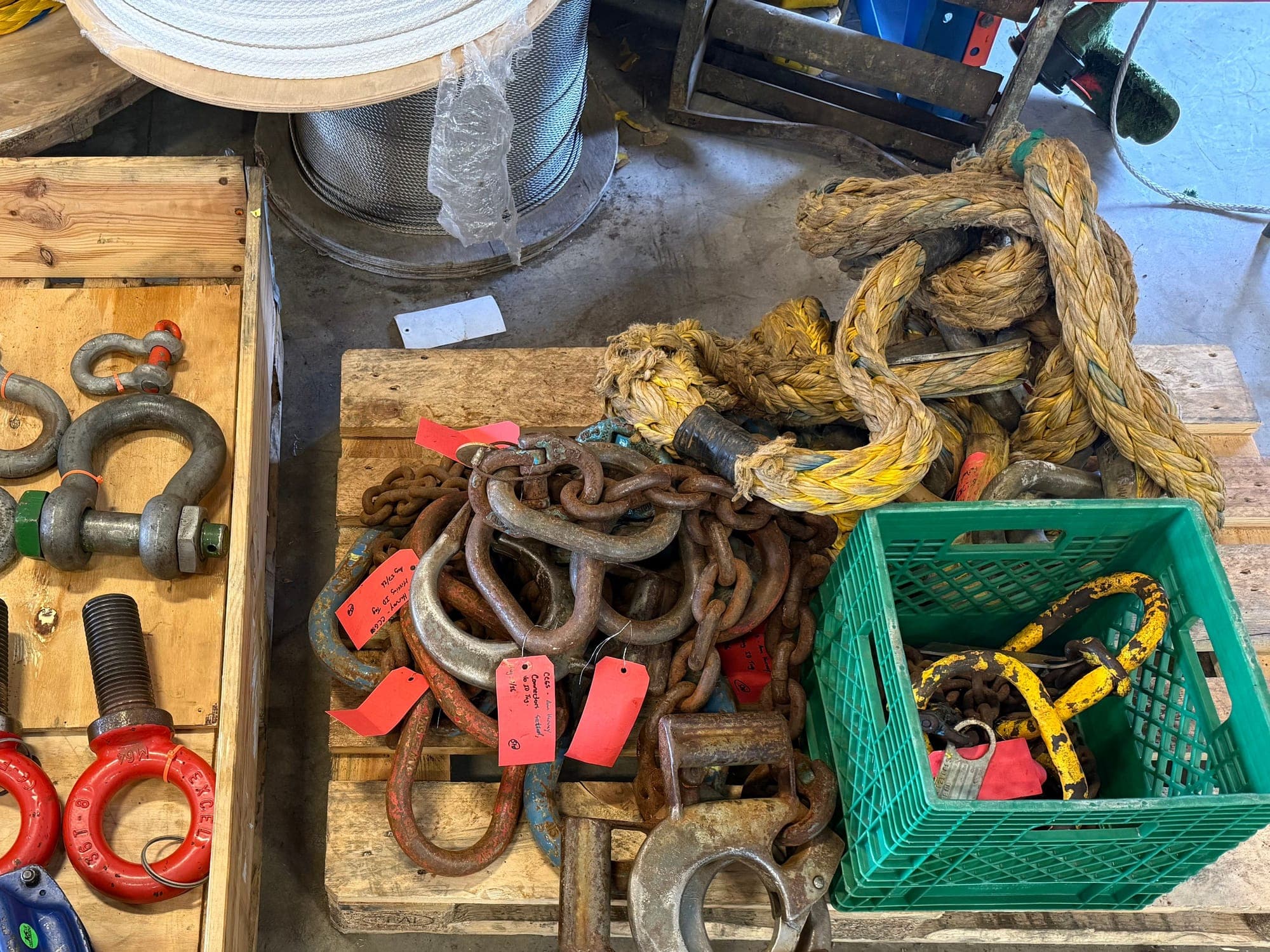
Finding it is half the job. A lifting frame back from service with new chain, new shackles and connectors fitted and the steel repainted — worn components changed out for new before the gear returns to work, rather than written down and handed back.
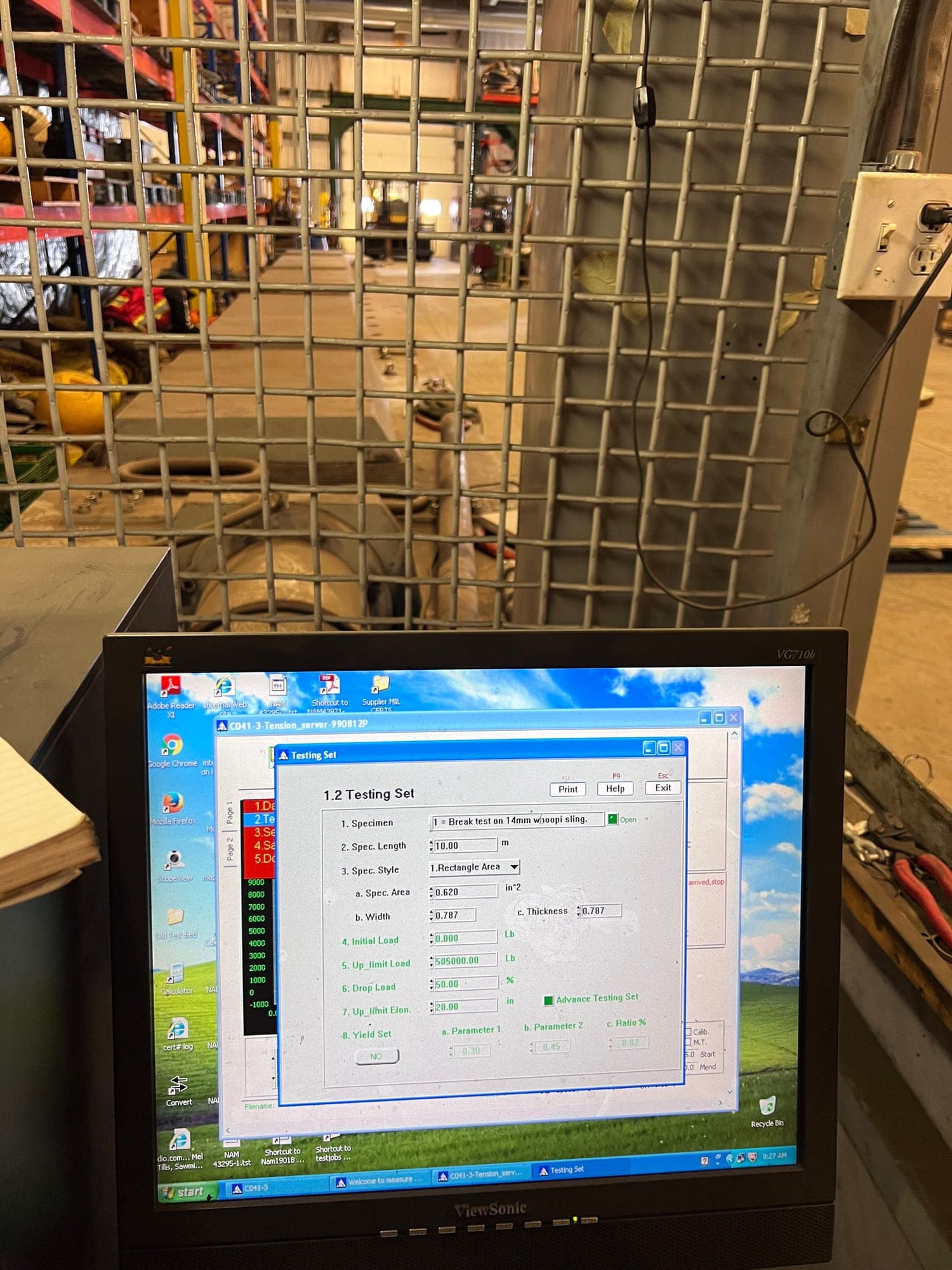
Specimen, length, initial load and upper limit go in before anything moves, and the trace records the load as it climbs. A break test is set up differently from a proof test, and the controller is where that difference is made.
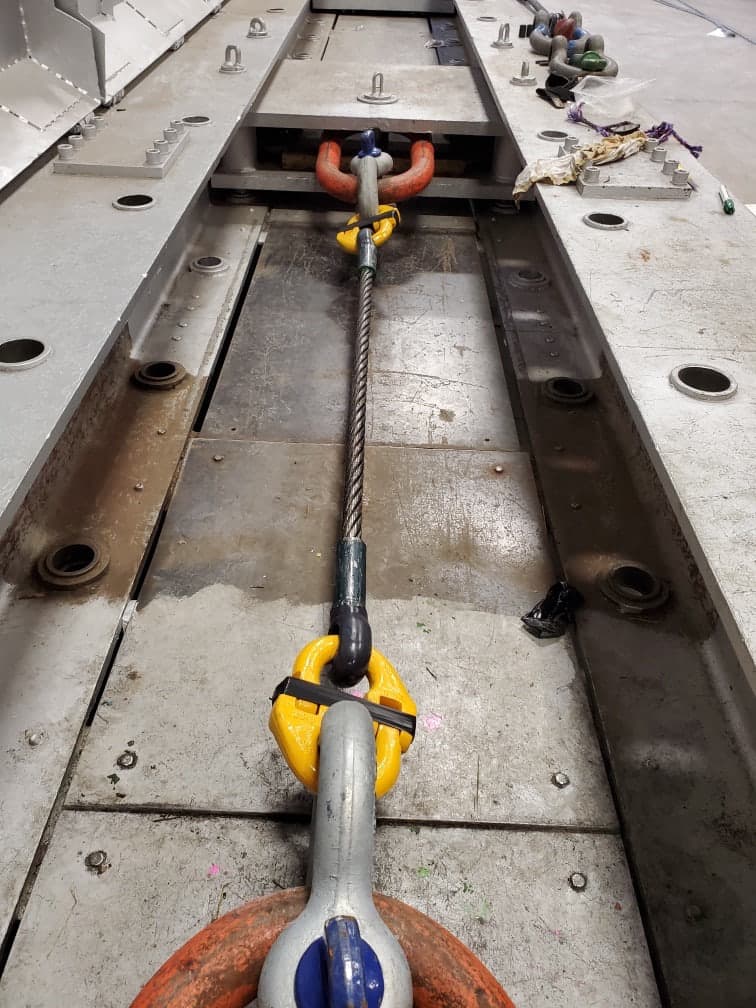
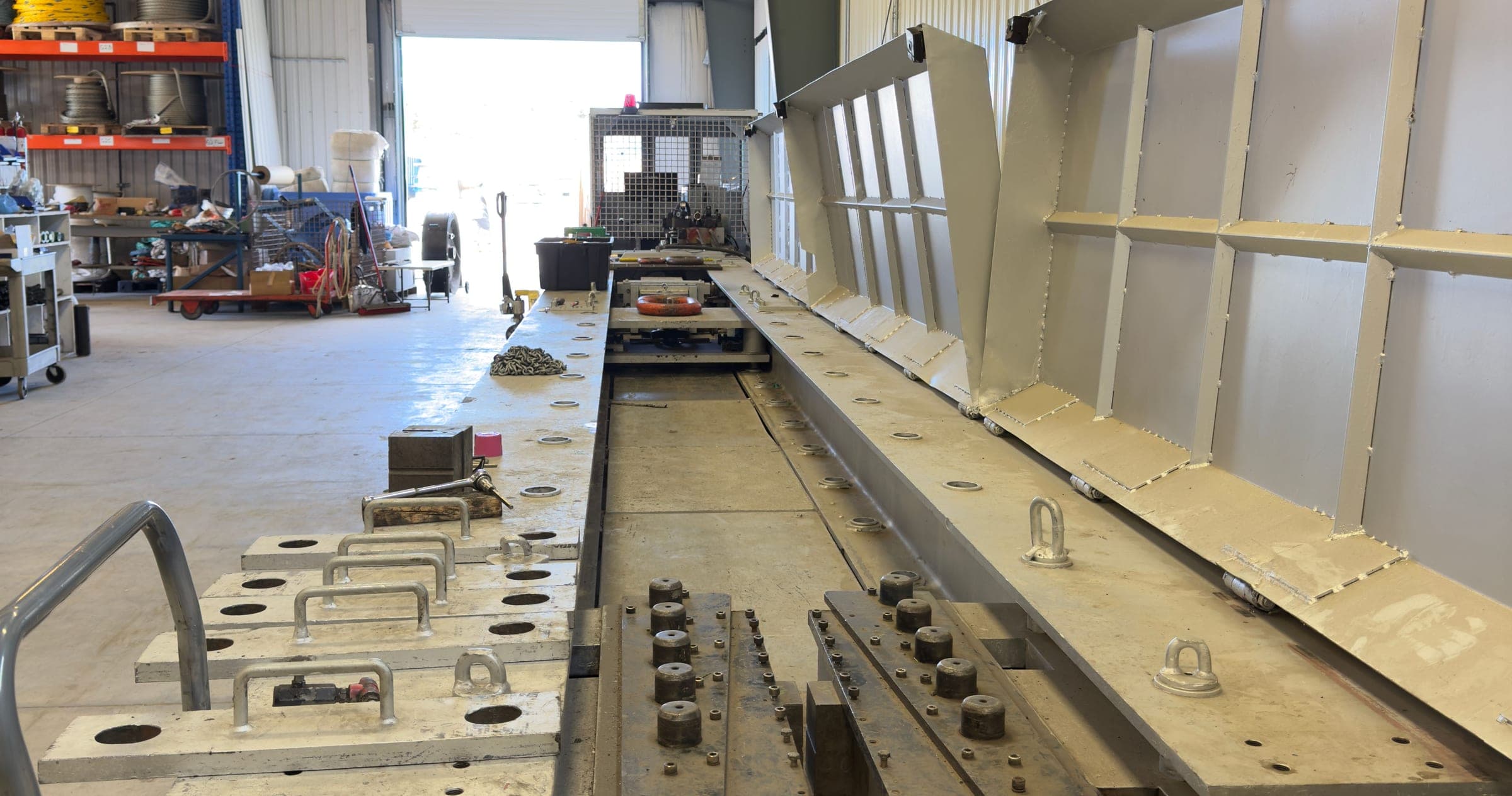
A wire rope assembly made off at both ends before any load goes on it — master link, bow shackle and anchor point at each end of the bed. How it is rigged is part of the test, because it decides what the number afterwards means.
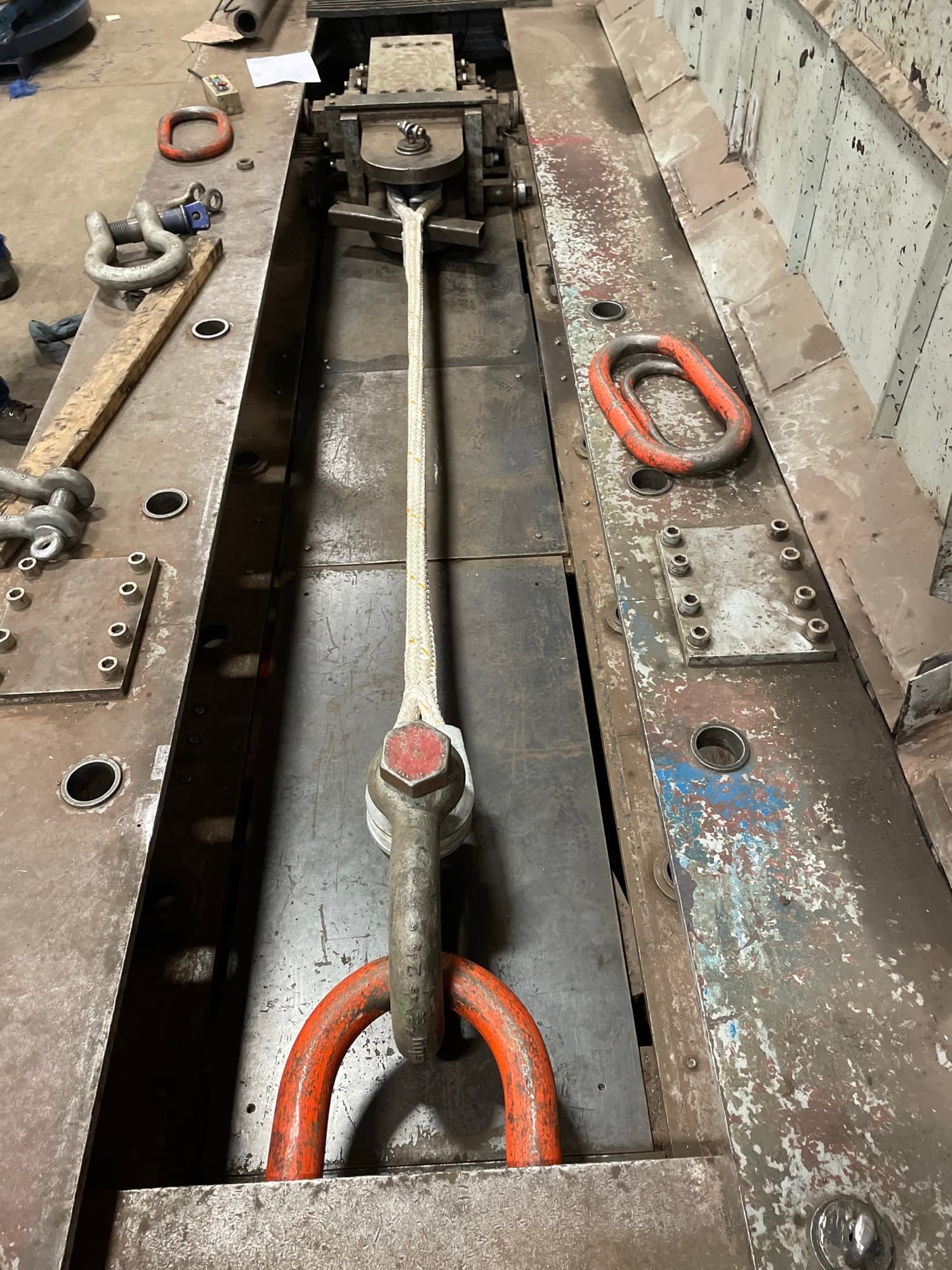
Powered carriage on a bolted steel bed, operated from a handheld pendant, with anchor points along both rails so the setup moves to suit the assembly. Photographed with a spliced synthetic assembly under load between a bow shackle and a master link — our own splicing work, on our own bed.
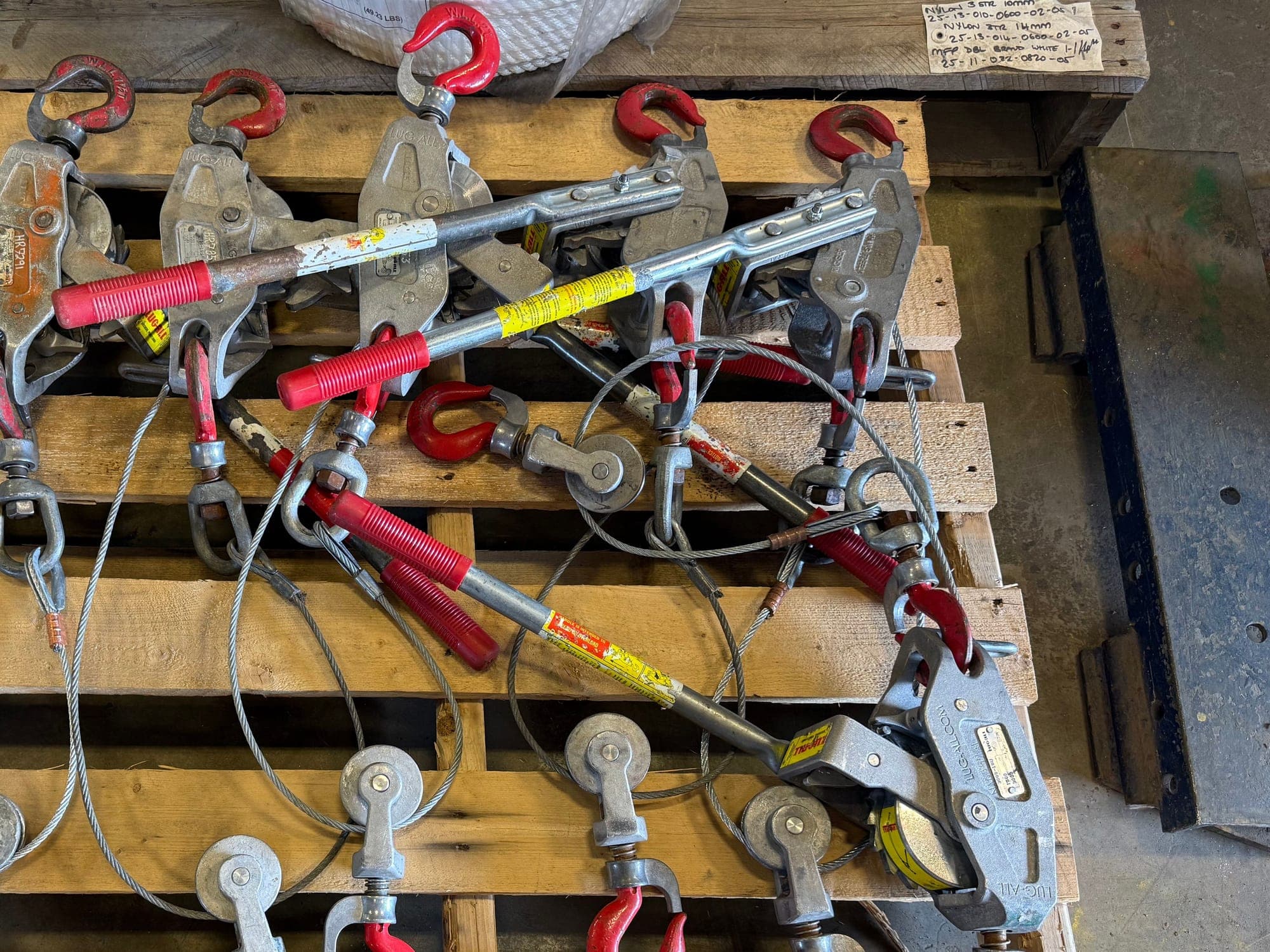
Wire rope pullers gone through as a batch — hooks, wire rope, pawls and gripping jaws. Worn or damaged parts are replaced as needed, including wire rope and handles, and each tool is documented before it goes back. What was inspected is recorded. What was not is not.
What you get back
Nothing leaves the bay on a verbal. What comes back is the item itself, any component we had to change out, and the documentation that records what was done to it.
Ready to go back to work — or withdrawn, and you are told exactly why.
Worn or damaged hardware replaced before the equipment returns to service.
The applicable documentation, issued by the inspector who did the work.
Process
One conversation starts it — we scope the job, do the work, and stand behind it through the season.
Tell us the gear, what it is rated to, and what it has been doing.
Hands and eye first — wear, deformation, broken or deteriorated components — with other tools as the item requires.
Worn or damaged components changed out for new where that is the right call.
Proof or break test on the 500,000 lb bed. Plenty of items never need this step.
The applicable test certificate and inspection documentation go back with the item.
Solutions
We supply the gear and we do the work. Both halves come from the same four shops.
Product range
Wire rope, slings, fittings, and lifting assemblies for marine, fishing, and industrial operations.
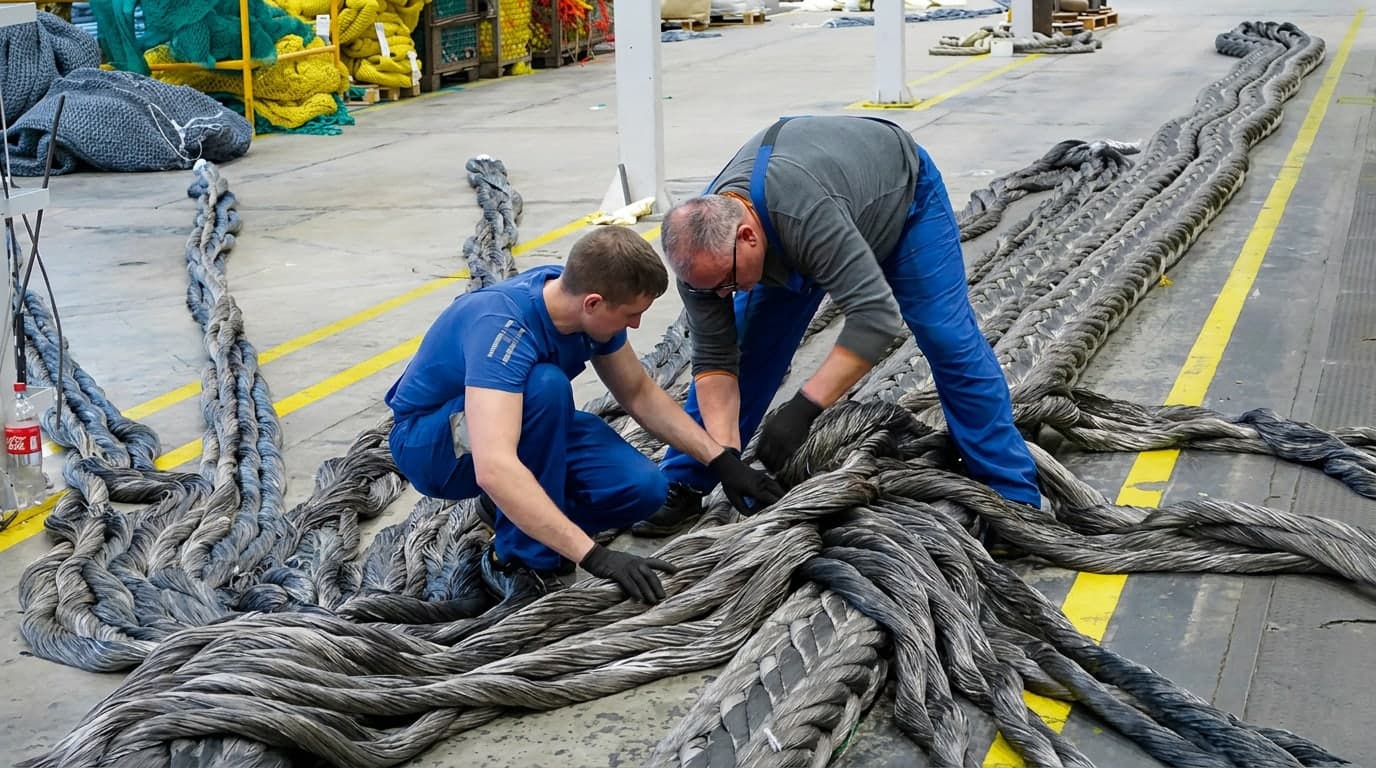
Product range
High-performance rope, mooring lines, and towing solutions for fishing, marine, and offshore.
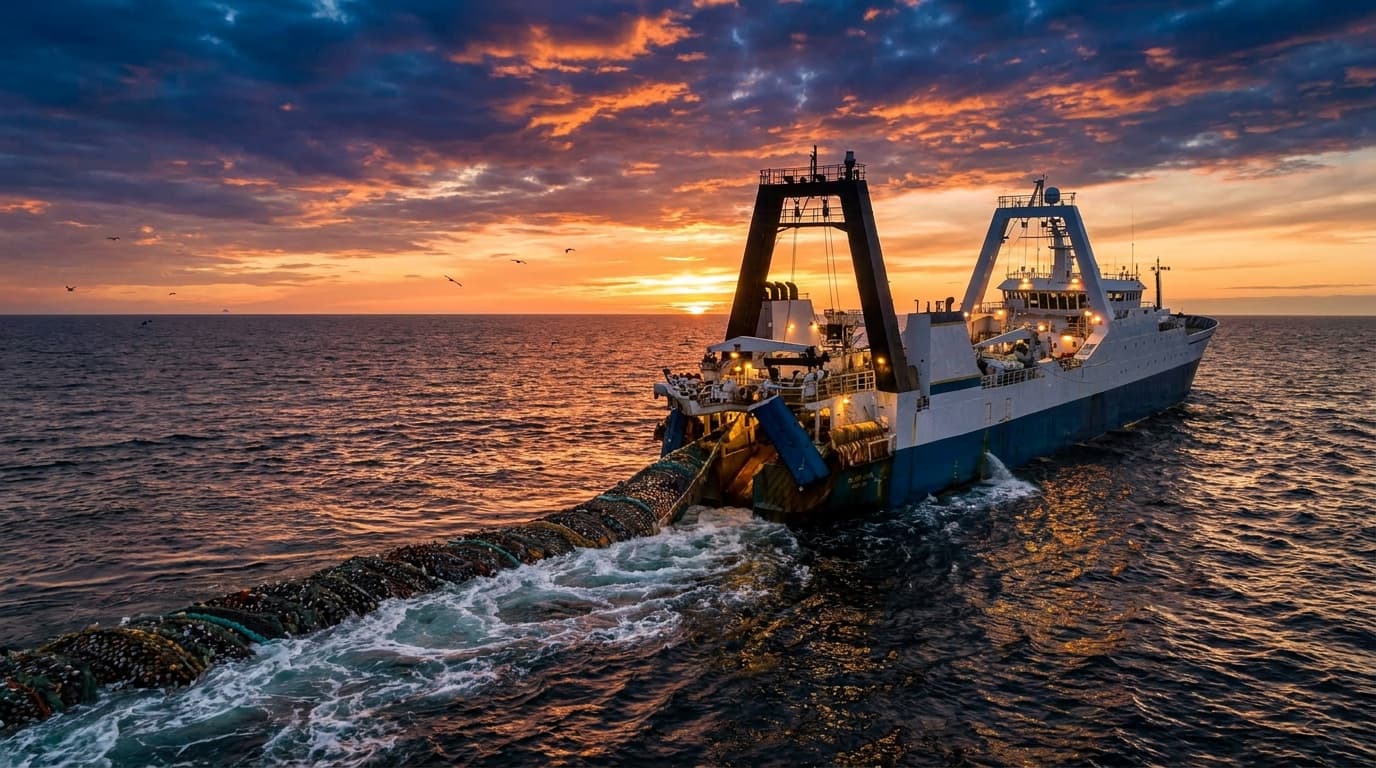

Local support
Bring gear to the nearest shop or call — every request routes to the right crew, and in-season work is scheduled around your openings.
Find your branchFAQ
Send specs, photos, drawings, or inspection and testing requests. Your reply comes from the branch that will do the work.