Product range
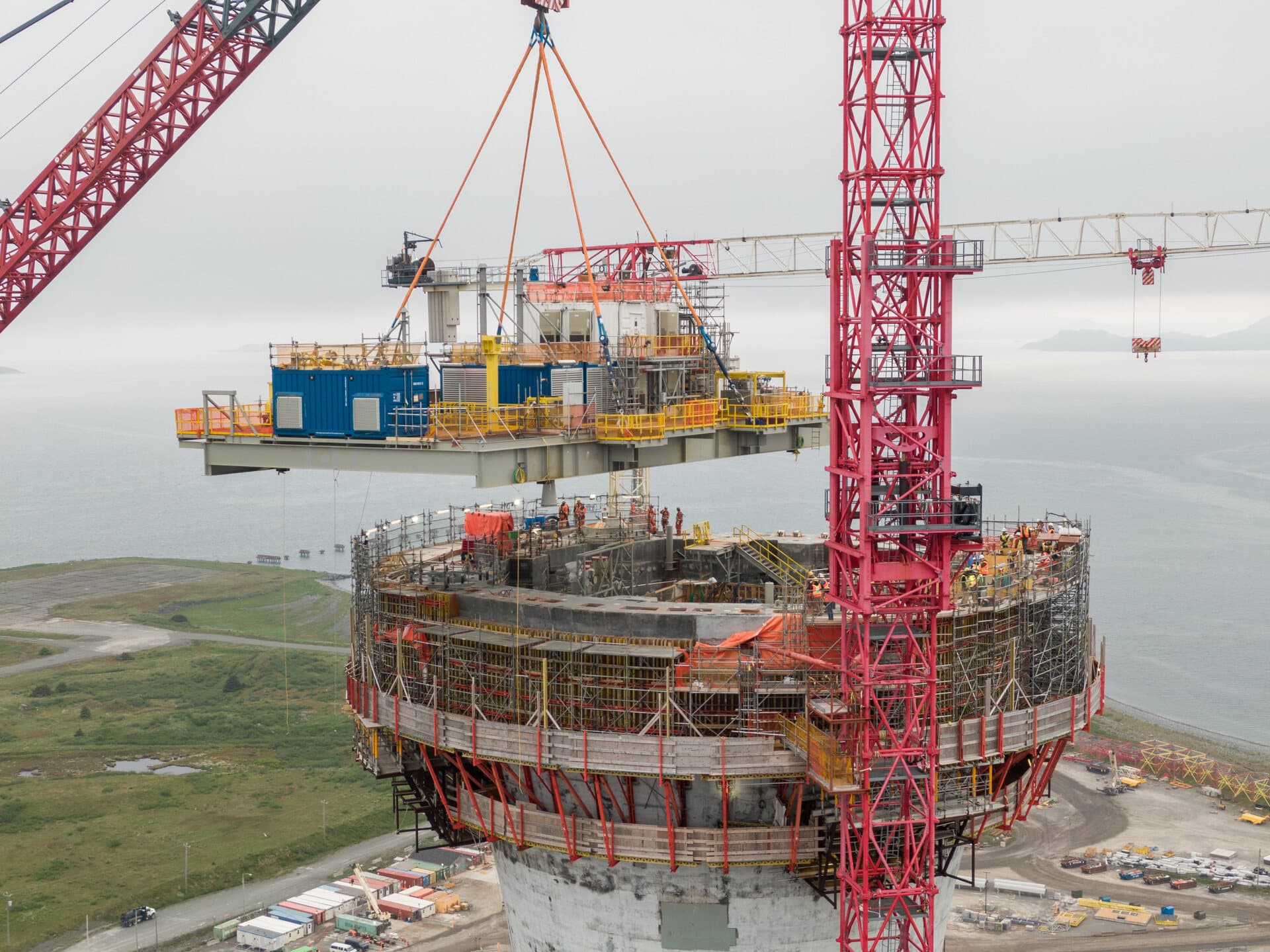
Wire, Rigging & Lifting
Wire rope, slings, thimbles and shackles for anchor legs, bridles and site lifting.
Industries
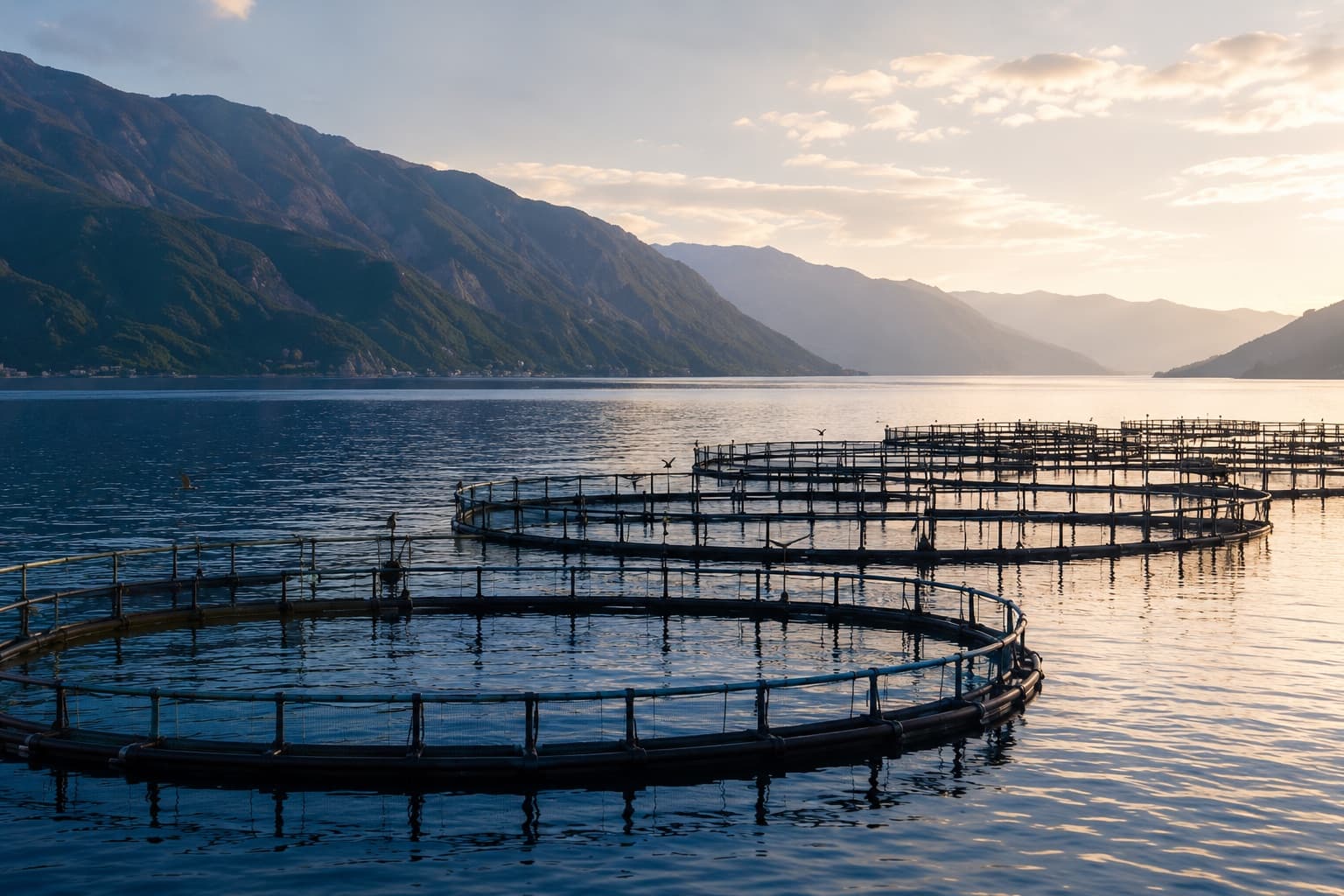
A farm is a mooring problem and a netting problem. Both are trades we already run at scale, spliced and hung in our own shops — and where an assembly has to be proof tested, the bed is ours.
Why us, for this
An aquaculture site is a mooring system with stock inside it. The grid, the bridles, the cage moorings, the predator net and the harvest gear are all made from the same four materials we splice, net, weld and test every day for the fishing fleet — and they fail in the same weather.
So we come at a farm from the trades rather than from a catalogue. Assemblies are made to a length and a load in our own shops. Netting is cut and hung in the same lofts that build trawls. And because the 500,000 lb bed is ours, sitting at Paradise, a termination can be proved before it is trusted rather than quoted from somebody else's table.
What we do for a site
Exposed sites punish the weakest termination on the system. These are the pieces we make, prove and maintain.
Bridles, grid lines, cage moorings and anchor legs assembled to the site plan — rope, wire or a combination, spliced and terminated by hand to the length the plan calls for.
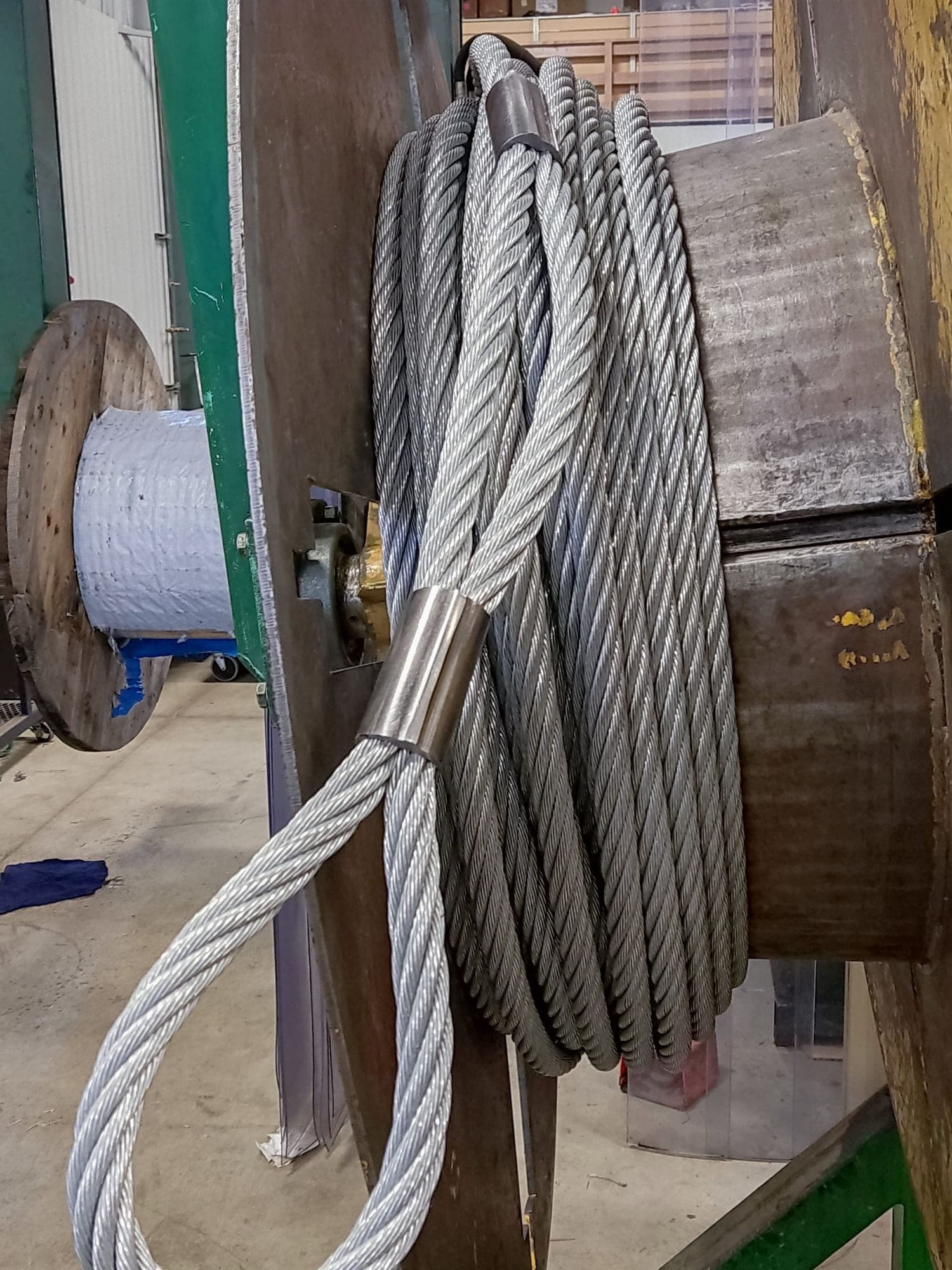
Rope and wire spliced in all dimensions, eyes covered on manufacture where you want them protected, and wire clamped in the press where a mechanical termination is the right answer.
Supplied, cut, hung and rigged — and repaired. Netting is the trade this company has run longest, and a predator net is a netting job before it is an aquaculture product.
Rigging and lifting assemblies pulled on our own 500,000 lb bed, with a test certificate issued for each item stating what was tested and to what load.
Hands-on inspection of rope, wire and lifting gear, with site inspection available for supported work — because a mooring is inspected in place, not on a bench.
Flotation, shackles, thimbles, chain and the hardware a grid lands on, stocked at the counters and made up into assemblies here.
Oyster and mussel supplies — tumblers, spat catchers, crates, cages and knives — alongside the moorings that hold the lines.
Netted frames, sorting and holding structures, covers and custom canvas — built to the drawing or to measurements taken on site.
What an assembly is made to
Aquaculture assemblies are made to order, so the useful specification is not a part number — it is what the assembly is built from and how it is finished.
| Assembly | Made from | Terminated | Proved |
|---|---|---|---|
| Grid and bridle lines | Rope to the site plan — including DynIce and Dyneema constructions | Hand-spliced eyes, covered on manufacture where specified | Proof tested on our bed where the job calls for it |
| Anchor legs and mooring assemblies | Wire rope, rope, or a combination | Hand splice, or clamped in the press | Test certificate issued per item, on request |
| Cage netting | Netting cut and hung in the loft | Laced, roped and hung to the frame | Fitted and checked before it leaves |
| Predator nets | Netting to the site's mesh and depth | Roped and rigged to the cage | Repaired and re-hung in service |
| Lifting gear for the site | Slings, shackles, thimbles, chain | Made up to the load | Inspected by hand; pulled on the bed to 500,000 lb capacity |
Scroll the table sideways for all 4 columns.
Splicing reduces a rope's strength against the table figure — Hampidjan's own rope tables allow for up to 10%. Assemblies are sized with that accounted for, and the bed is next door when it needs proving rather than assuming.
In the shops
These are our own shops rather than anybody's site — we will not show you somebody else's farm. Netting, flotation, splicing, testing: this is where the gear is made, terminated, proved and recorded.
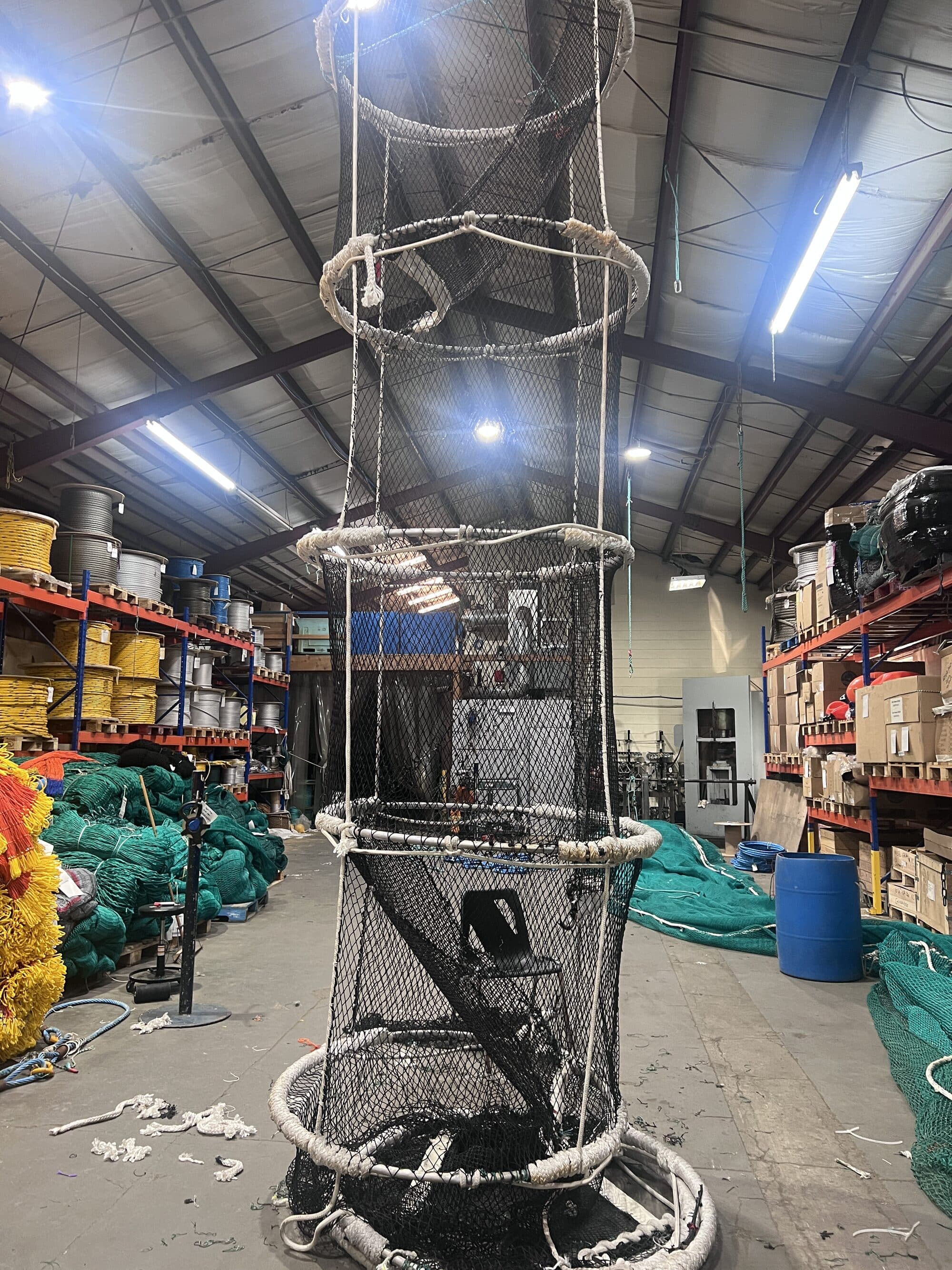
A netted enclosure made up in the shop — mesh hung to its hoops and roped off by hand, standing among the netting it was built from. Netting is where this company started, and a net that has to hold stock is cut and hung to the same standard as one that has to hold a catch.
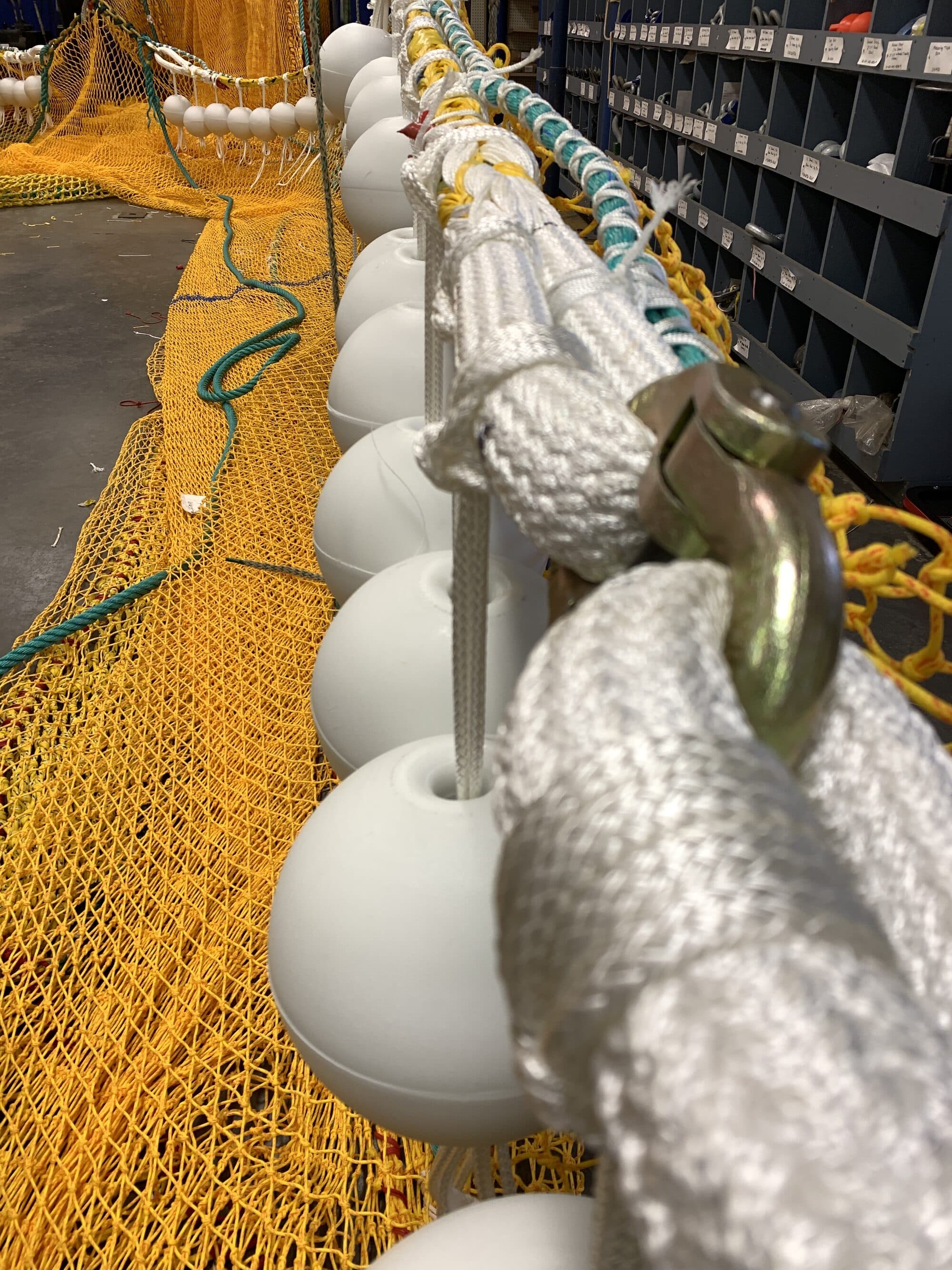
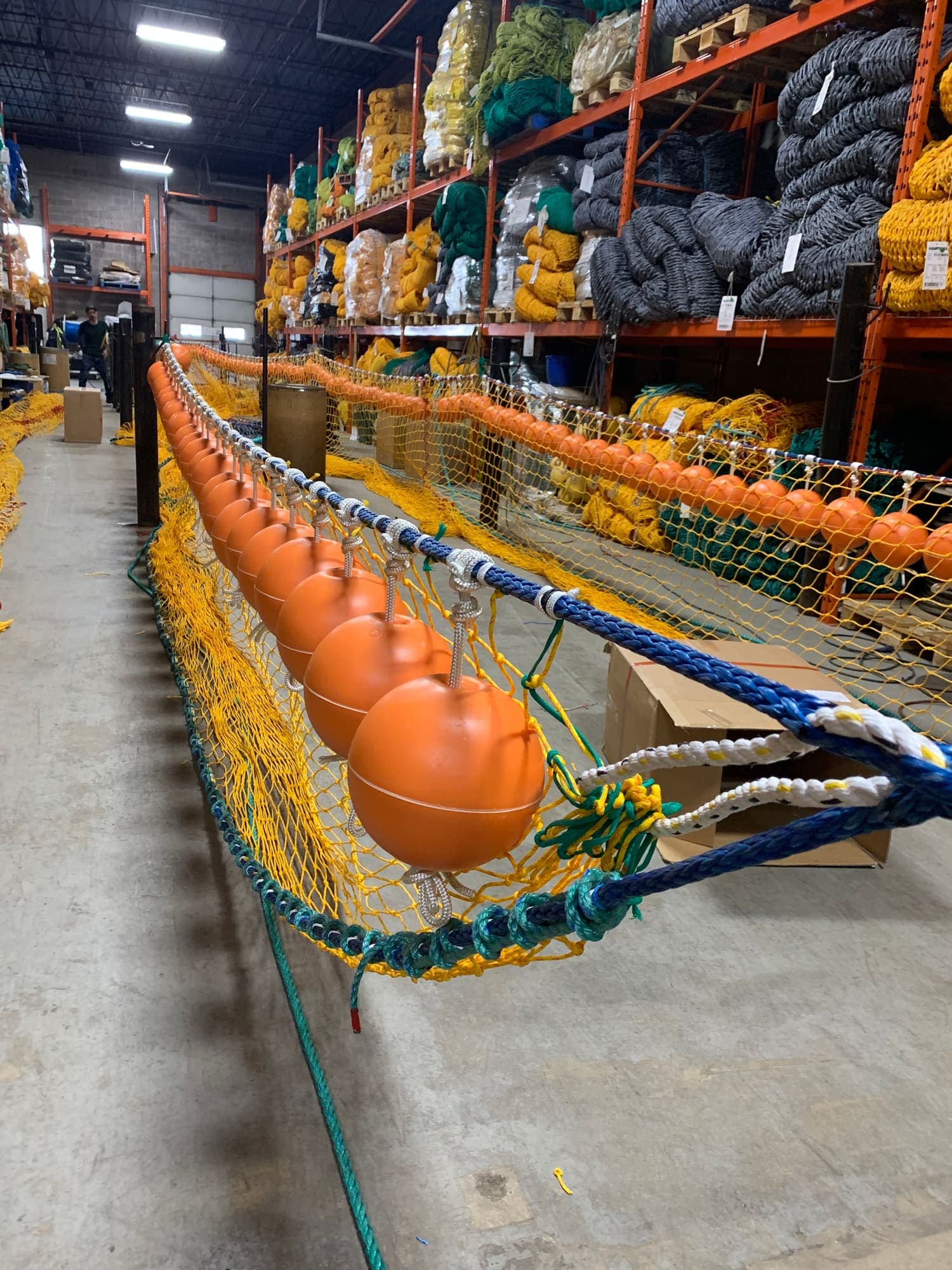
A float line with its hardware made off — floats threaded on braided rope, a galvanised shackle joining the run, netting laid out alongside. Grid lines and cage moorings are made up the same way, to the lengths the site plan calls for.
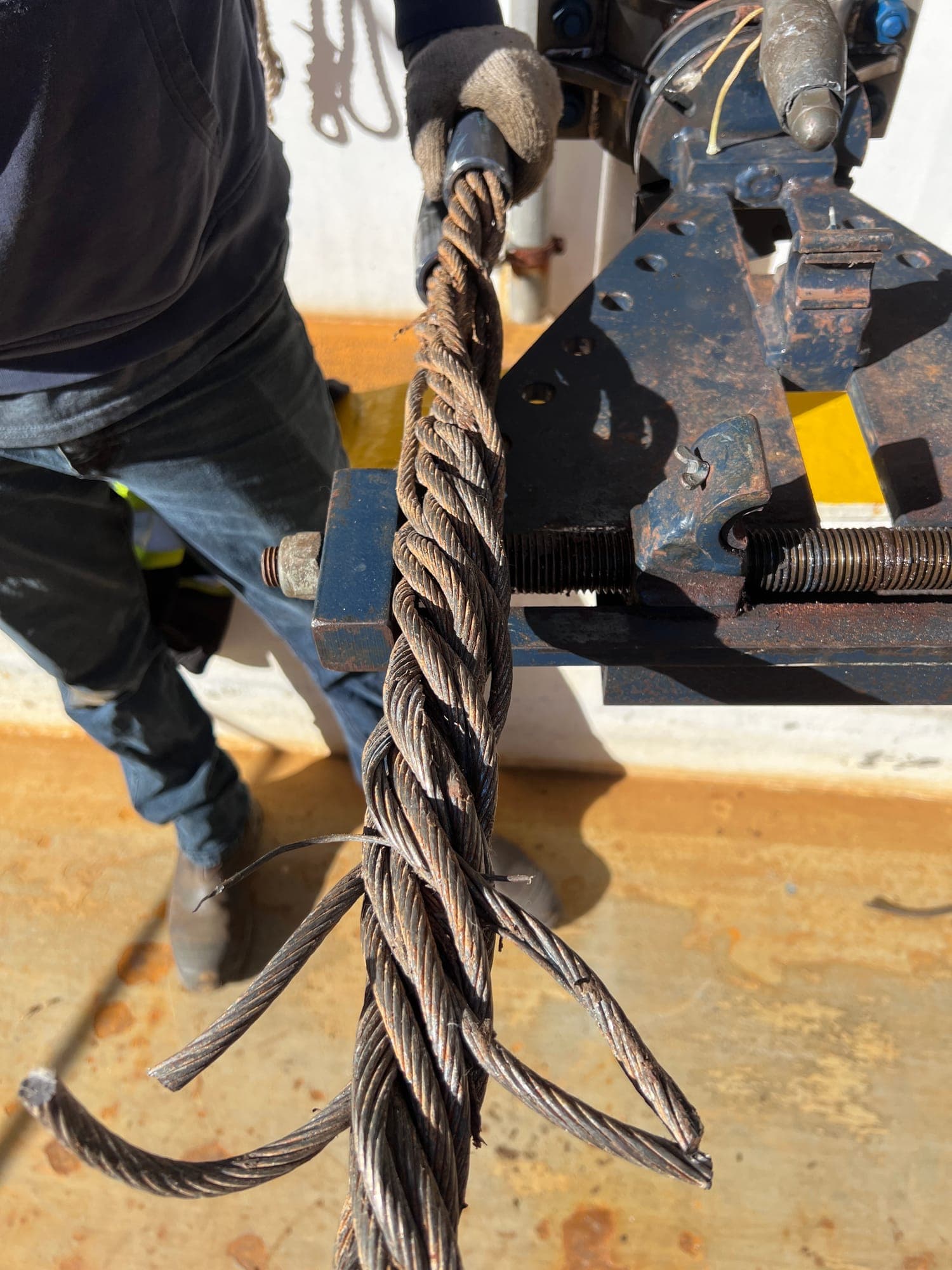
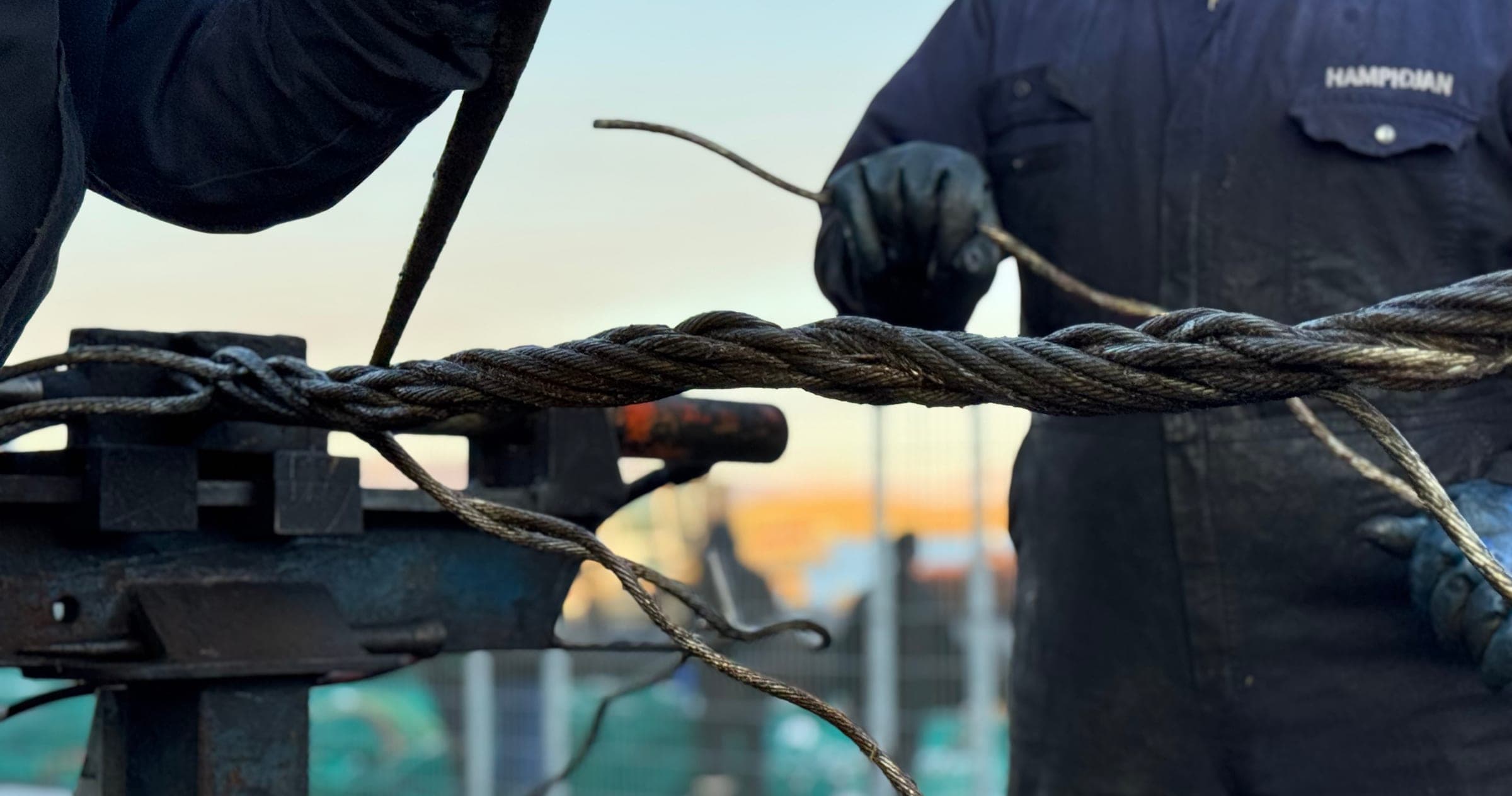
A heavy wire rope clamped in the vice with its strands opened out, tucked back into the rope one at a time. It is slow, and it is the termination we reach for when the assembly has to be inspected in service — and where a pressed ferrule is the right answer instead, that is done in this building too.
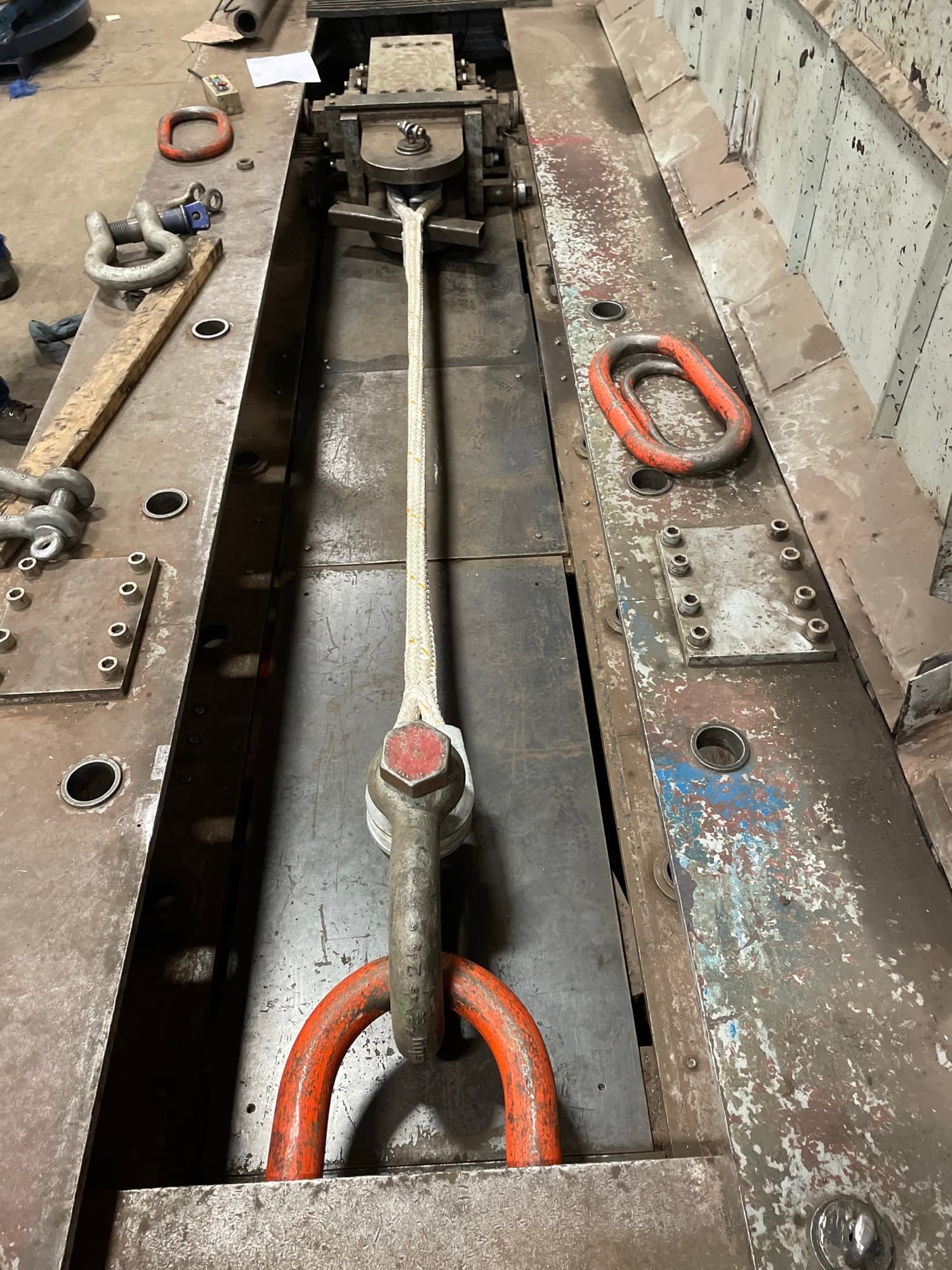
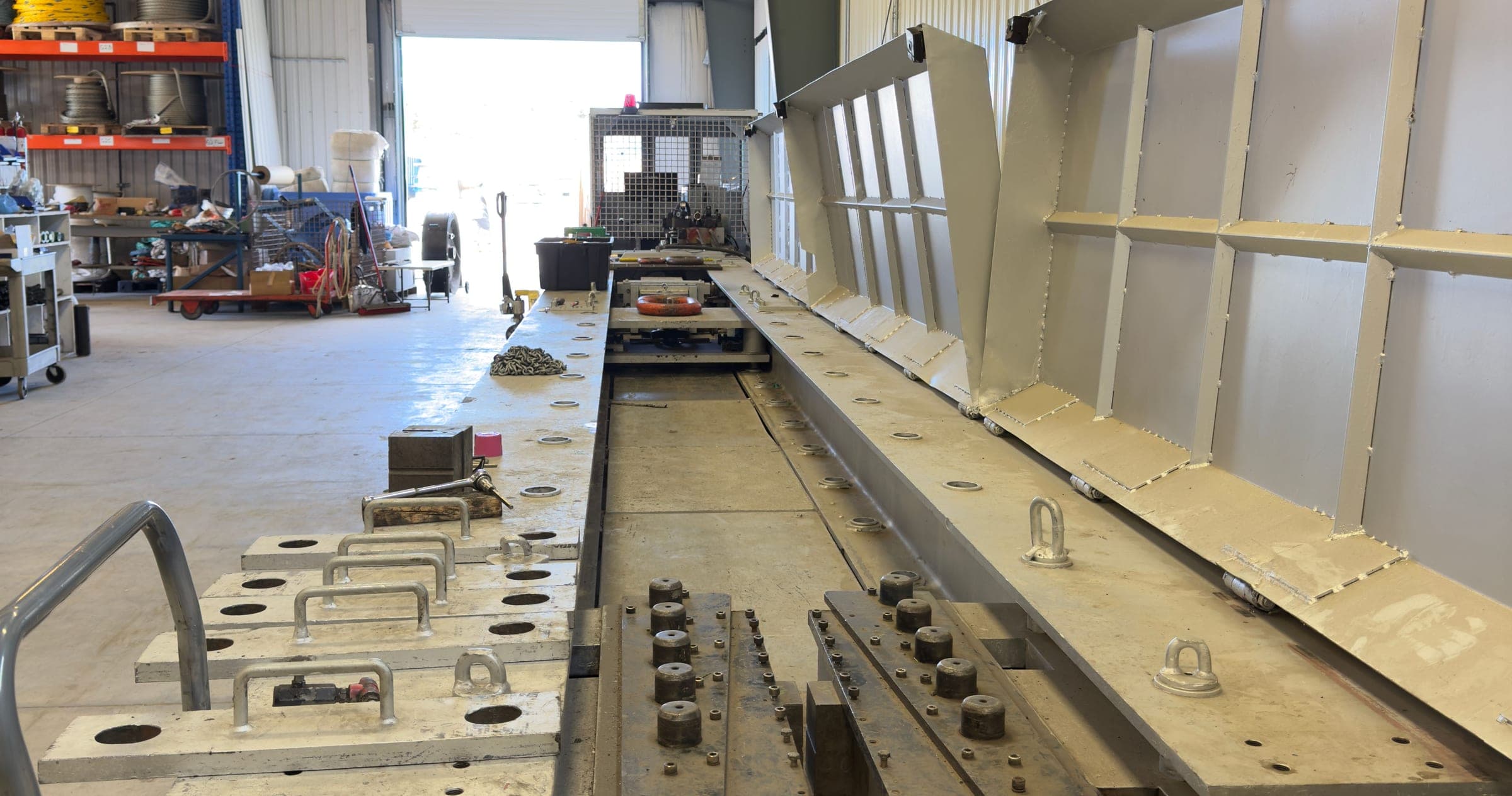
A spliced assembly under load on our 500,000 lb bed at Paradise, made off to a master link through a bow shackle. The number on the certificate is one we watched, not one we looked up.
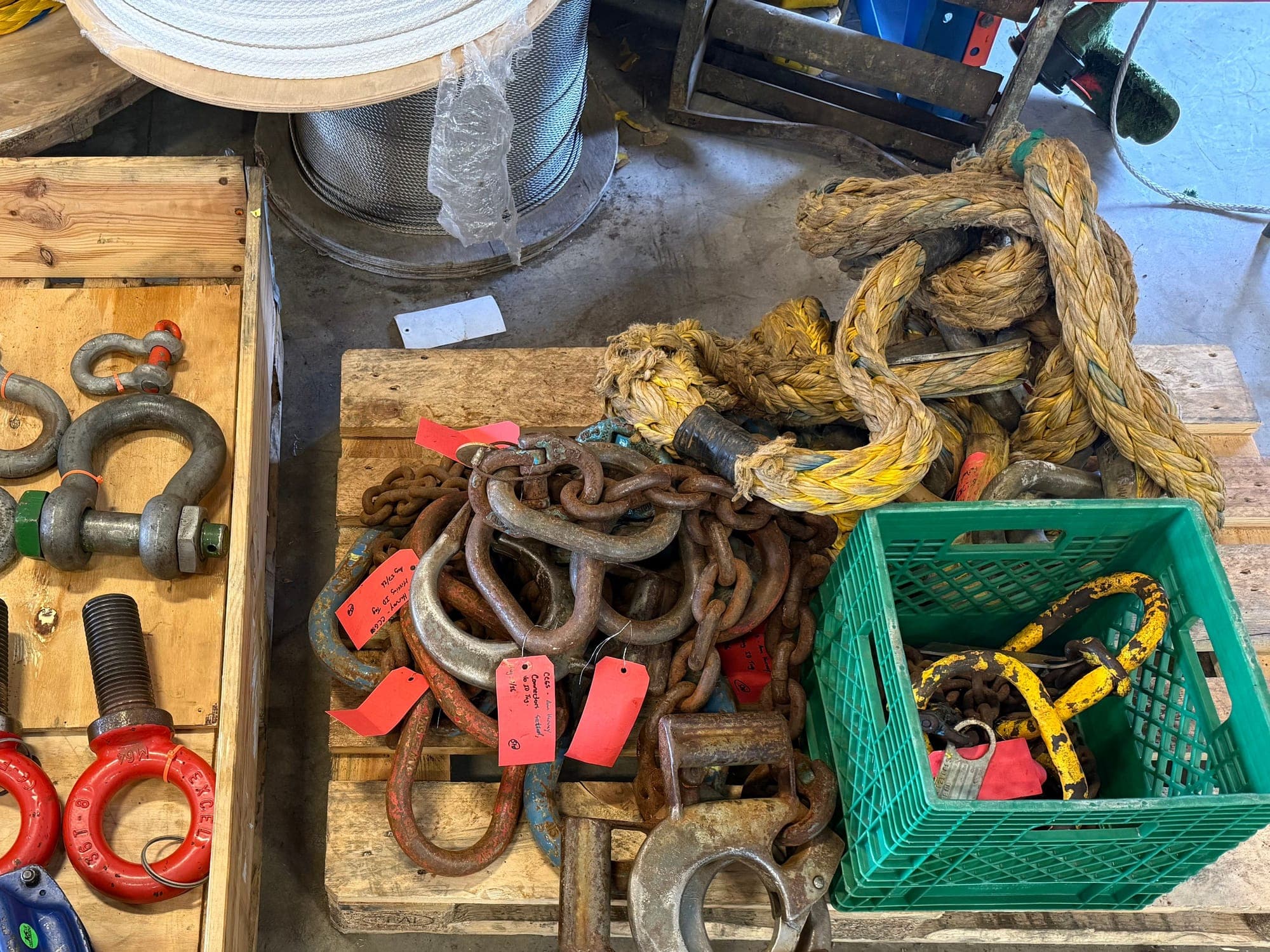
Chain, shackles, eye bolts and slings, inspected item by item and going back with a tag tied to each one — so a site's mooring and lifting equipment can be run as a programme with a record behind it instead of a memory.
Four shops
Aquaculture sites are a long way from a supplier, and the gear that fails is rarely the gear you planned to replace. Four branches with walk-in counters means the shackle, the rope or the netting is a drive away rather than a freight order.
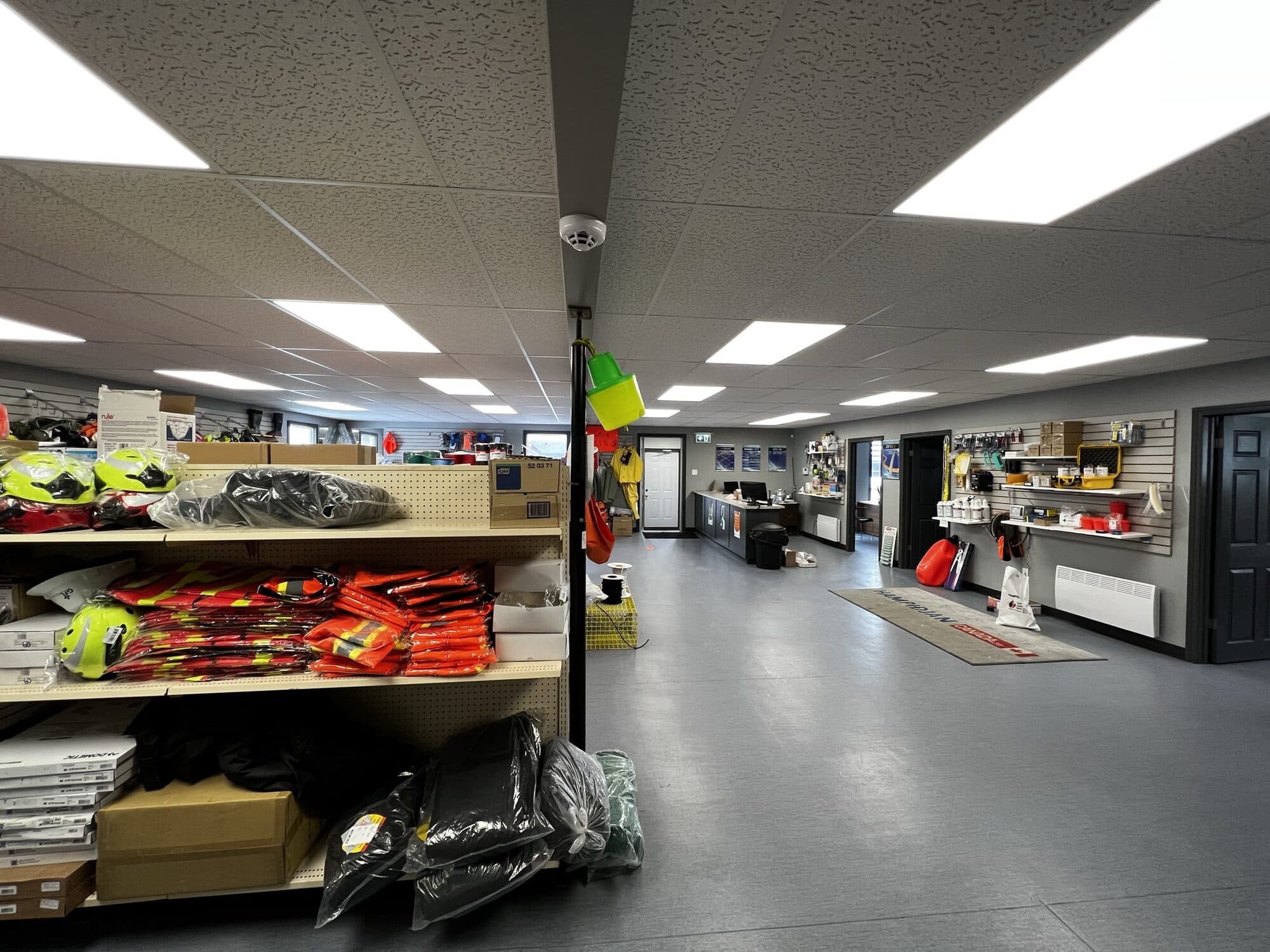
Rope, netting, rigging hardware, flotation and safety gear off the shelf at Paradise, Spaniard's Bay, Port au Choix and Dartmouth.
One company, four buildings. A job that needs the loft, the welder and the bed is moved between them rather than split between suppliers.
Development
Most of what a farm needs exists. The interesting work is the rest of it — a frame for a handling problem nobody has solved, a net to a mesh nobody stocks, a sampling tool for a monitoring programme.
That is the same technical capacity this company applies to fishing gear: design and construction of prototypes, customised research technologies and sampling tools, customised canvas for industrial and scientific applications, and environmental monitoring and field sampling. A technical team works on applied research and commercial development here, and we work under non-disclosure where the development is sensitive.
Built from a drawing, a sketch or the broken thing — in steel, rope, netting or canvas, whichever the problem needs.
Customised research technologies and specialised sampling tools, built to the scale a study needs.
Monitoring and field sampling work, alongside the gear built to carry it out.
Consultancy for industry, government and academia on technical problems in rope, wire and prototype construction.
Solutions
The gear is stocked and the assemblies are made here. Both come out of the same four shops.
Product range
Wire rope, slings, thimbles and shackles for anchor legs, bridles and site lifting.
Product range
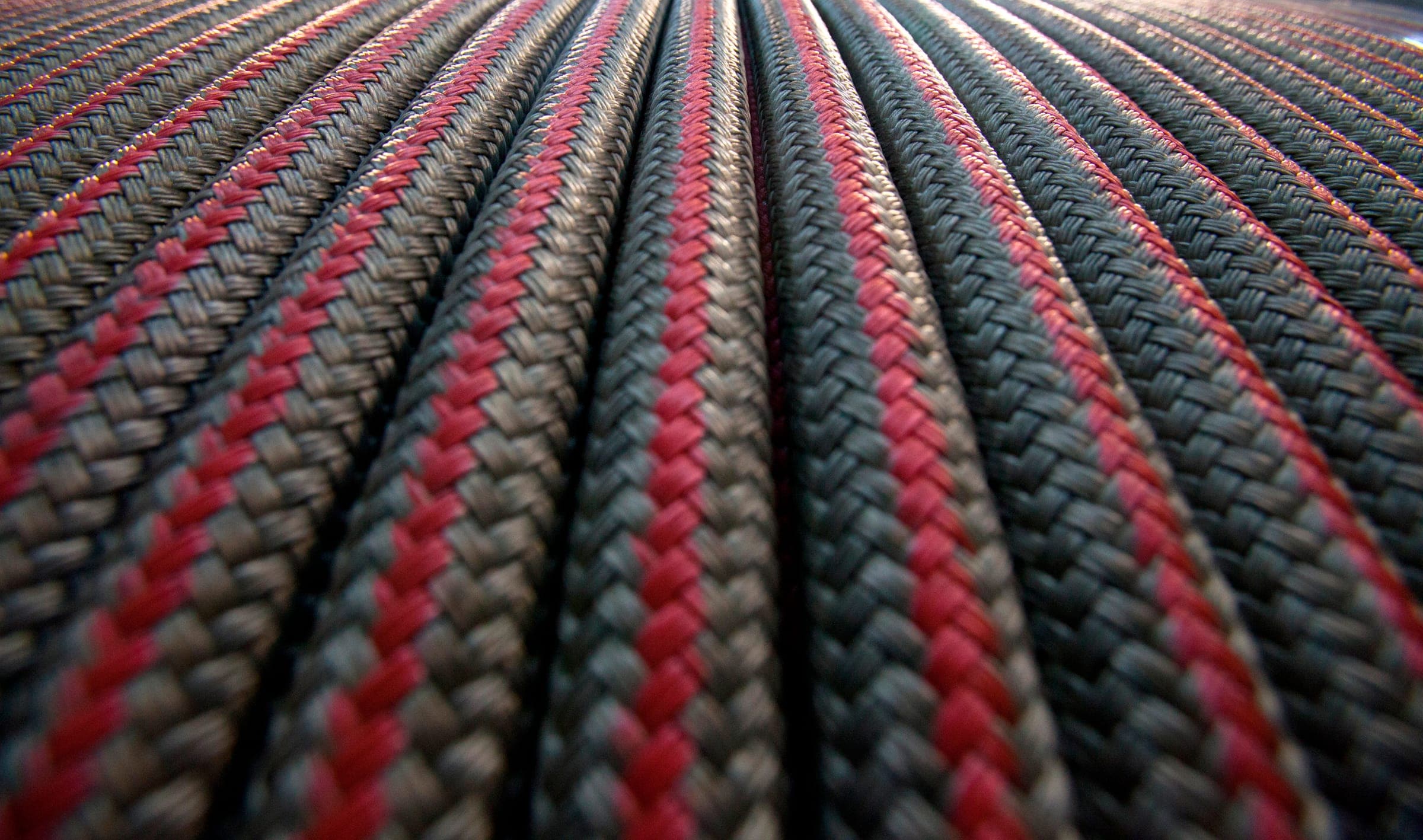
DynIce and Dyneema constructions, mooring rope and the cordage a grid is built from.
Service
Rope and wire spliced in all dimensions, made to a length and a load, terminated by hand or in the press.
Service
Hands-on inspection, site inspection for supported work, and proof testing on our own bed.
Service
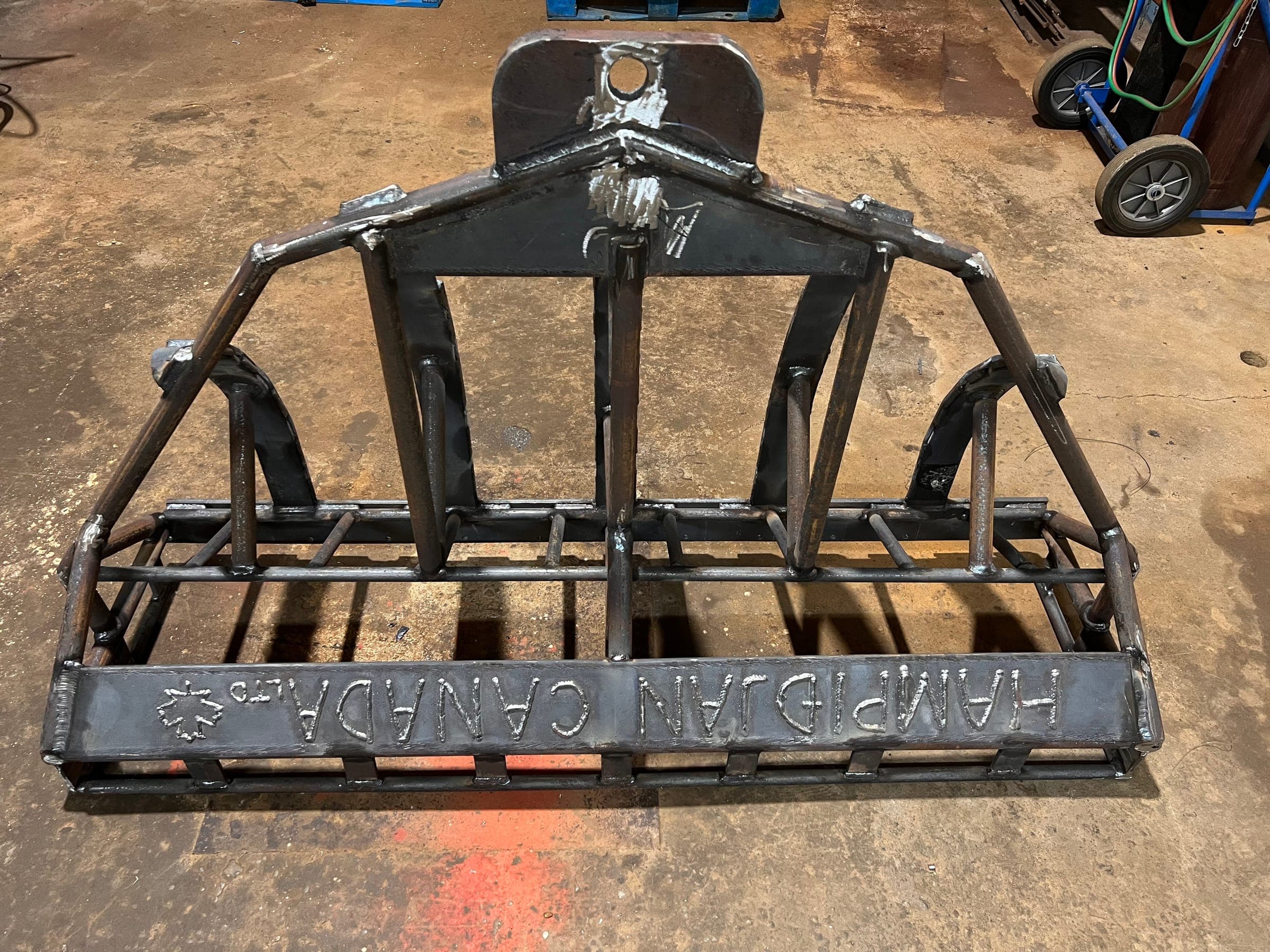
Netted frames, handling structures and one-off site equipment built to your drawing or ours.
Service
Netting cut, hung, rigged and repaired in the same lofts that build trawls.
FAQ
Send specs, photos, drawings, or inspection and testing requests. Your reply comes from the branch that will do the work.